
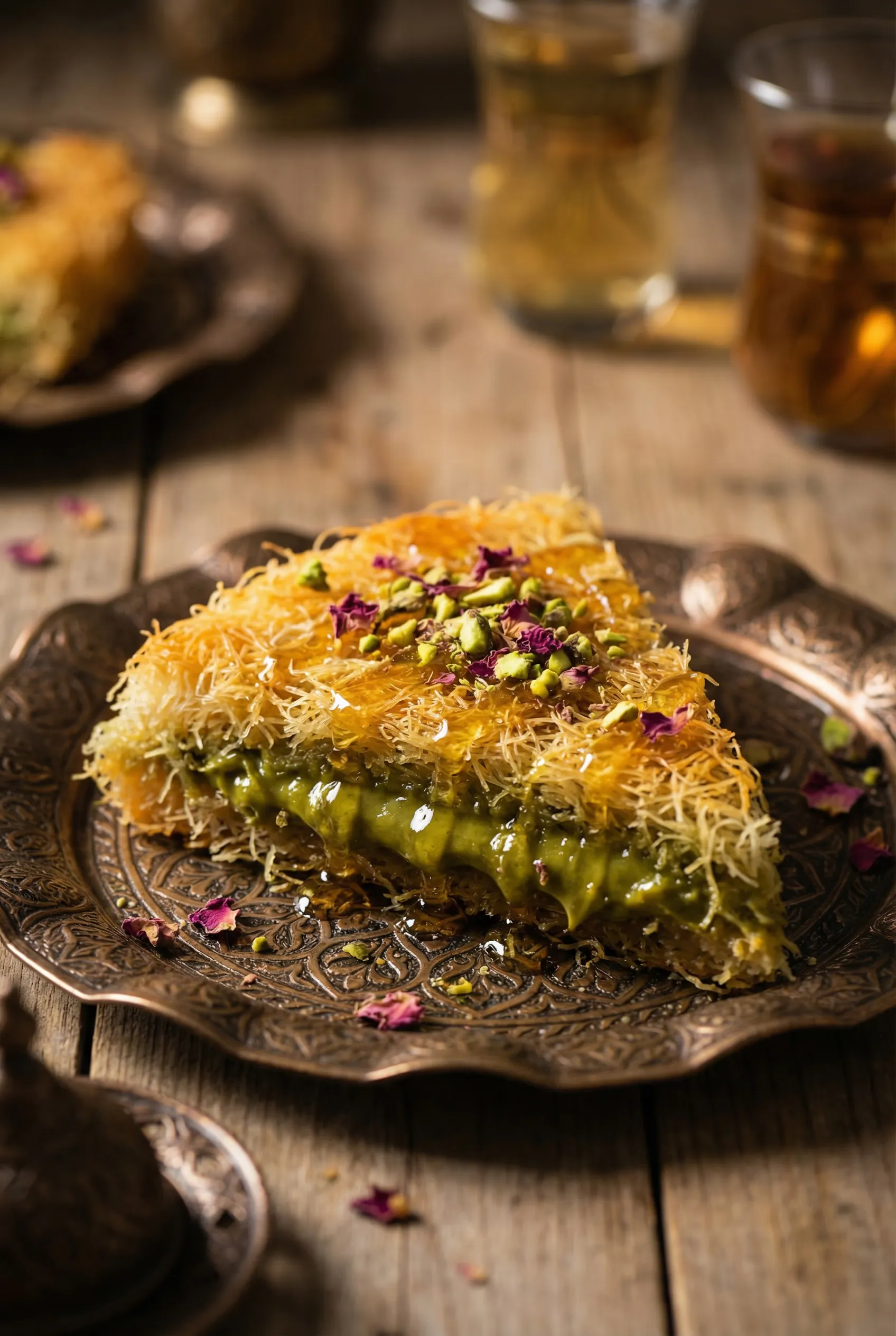
The Story Behind This Recipe
The first time I tasted kunafa was at a tiny pastry shop in the backstreets of Amman, Jordan, during a trip I took between positions at Le Cinq. I had spent years constructing elaborate French desserts — layered entremets with mirror glazes, tarts with perfect pastry cream piped in mathematical precision — and then a man handed me a plate of shredded pastry soaked in syrup with a molten cheese filling, and I realized that some of the most extraordinary desserts in the world have no need for precision at all. They need fire, butter, sweetness, and soul.
That trip changed how I think about dessert. The French tradition taught me technique, but the Middle Eastern tradition taught me generosity. Kunafa is not delicate. It is lavish — dripping with butter, soaked in fragrant syrup, stuffed until it overflows. When the pistachio cream version started going viral through the Dubai chocolate bar craze, I was not surprised. The combination of shatteringly crispy kataifi pastry, bright green pistachio cream, and floral rose syrup is one of the most perfect flavor-texture combinations in all of pastry. It hits every note: crunchy, creamy, sweet, nutty, floral.
My version honors the traditional technique — shredded kataifi tossed in butter and baked until deeply golden — but fills it with a pistachio cream that I developed using ricotta as a base, which gives it a lighter, more luscious texture than the traditional ashta cream. I add just enough rose water to perfume without overwhelming, and I finish with a shower of crushed pistachios and dried rose petals because a dessert this special deserves to look as stunning as it tastes. Every time I pull a pan of this from the oven and pour the syrup over the crackling hot pastry, listening to it hiss and absorb, I am right back in that Amman pastry shop — surrounded by the smell of butter and sugar and the sound of people enjoying something truly beautiful.
Before You Start
- Thaw the kataifi properly. Frozen kataifi needs at least 2 hours at room temperature or overnight in the refrigerator to thaw. Working with it frozen or partially frozen causes it to clump and break unevenly.
- Make the syrup first and chill it. The syrup must be cold or at room temperature when poured over the hot kunafa. Hot syrup on hot pastry makes it soggy instead of crispy. Make it at least 30 minutes before baking.
- Use a food processor for the pistachio cream. A blender can overwork the pistachios into butter. Pulse in a food processor for the right creamy-but-textured consistency.
- Do not skimp on butter. Every strand of kataifi needs to be coated in melted butter to crisp properly. Underbuttered kunafa bakes unevenly and stays pale and chewy.
- Have a 9-inch round cake pan or oven-safe skillet ready. Traditional kunafa is baked in a round pan and flipped after baking so the bottom becomes the top — this gives you that gorgeous golden crust.
Instructions
Step 1: Make the Sugar Syrup
Combine granulated sugar, water, and lemon juice in a small saucepan over medium-high heat. Stir until the sugar dissolves completely. Once it reaches a boil, stop stirring and let it simmer for 8-10 minutes until the syrup thickens slightly and coats the back of a spoon. Remove from heat, stir in rose water, and transfer to a heat-safe container. Refrigerate until completely cool — at least 30 minutes. The lemon juice prevents crystallization, and the rose water adds the floral signature that defines this dessert.
Step 2: Prepare the Pistachio Cream
In a food processor, pulse pistachios until they form a fine, slightly sandy texture — about 15-20 pulses. Do not process continuously or they will turn to pistachio butter. Add ricotta, powdered sugar, vanilla extract, almond extract, and a pinch of sea salt. Pulse 8-10 more times until combined into a smooth, spreadable cream with tiny pistachio flecks throughout. The color should be a beautiful pale green. Taste and adjust sweetness if needed. Set aside.
Step 3: Prepare the Kataifi
Preheat your oven to 375°F (190°C). Unwrap the thawed kataifi and place it in a large bowl. Use your fingers to gently pull apart and separate the strands — they tend to clump together. Pour the melted butter over the strands and work it through with your hands, tossing and separating until every strand is glistening and coated. This step takes 3-4 minutes of patient hand-tossing. The kataifi should feel slick and pliable, not dry or stiff.
Step 4: Layer the Kunafa
Take slightly more than half of the buttered kataifi and press it firmly into the bottom and slightly up the sides of a 9-inch round cake pan or oven-safe skillet. Use your palms and fingertips to compress it into an even, compact layer about half an inch thick. The tighter you pack this bottom layer, the crispier and more structurally sound it will be when flipped.
Spread the pistachio cream evenly over the kataifi base, leaving about a half-inch border around the edges. The cream should be a smooth, even layer about three-quarters of an inch thick.
Top with the remaining kataifi, spreading it evenly and pressing down gently to seal the edges. The top layer should be slightly looser than the bottom — this gives it a wispy, shatteringly crispy texture.
Step 5: Bake Until Deeply Golden
Place the pan on the center rack and bake for 25-30 minutes until the top is deeply golden brown — not pale gold, but a rich amber color. The edges will be the darkest, and you should hear a faint sizzle from the butter crisping the strands. If the top is browning too quickly, tent loosely with foil for the last 10 minutes. The aroma of toasted butter and pistachio will fill your kitchen.
Step 6: Flip and Soak
Remove from the oven and let it rest for 2 minutes — no longer, or it will stick. Place a large serving plate upside down on top of the pan. In one confident motion, flip the pan and plate together. The kunafa should release onto the plate with the deeply golden, compressed bottom now facing up as the beautiful presentation side. If any pieces stick, gently press them back into place.
Immediately pour the cold sugar syrup slowly and evenly over the hot kunafa. You will hear an immensely satisfying hiss and crackle as the cold syrup meets the hot pastry. Pour it in stages, letting each pour absorb before adding more. The kunafa will drink in the syrup and become glossy and fragrant. Use about three-quarters of the syrup — you can always add more, but you cannot take it away.
Step 7: Garnish and Serve
Scatter crushed pistachios generously over the top. Add dried rose petals if using — they add a gorgeous pop of pink against the gold and green. Let the kunafa rest for 5 minutes to allow the syrup to distribute evenly, then cut into wedges. Serve warm. The exterior should shatter under your fork with an audible crunch, giving way to the creamy, nutty pistachio filling and a rush of floral sweetness.
Ingredient Substitutions
| Ingredient | Substitute | Notes |
|---|---|---|
| Kataifi dough | Shredded phyllo or very thin hand-pulled phyllo strips | Kataifi is ideal; shredded phyllo works but the texture is slightly different |
| Pistachios | Cashews or blanched almonds | Flavor will change but the technique is identical; cashews give a milder cream |
| Ricotta | Mascarpone or cream cheese | Mascarpone is richer; cream cheese is tangier — both make excellent filling |
| Rose water | Orange blossom water | Orange blossom gives a citrus-floral note instead of rose; equally traditional |
| Unsalted butter | Ghee | Ghee produces an even crispier result and is more traditional in Middle Eastern baking |
| Powdered sugar | Granulated sugar (in the cream) | Blend granulated fine in a spice grinder; powdered dissolves more smoothly |
Chef’s Tips
- The flip is everything — commit to it. Hesitating during the flip causes the kunafa to break apart. Press the plate firmly against the pan, grip both tightly, and flip in one decisive motion. Practice with an empty pan if you are nervous.
- Do not skip the lemon juice in the syrup. It prevents crystallization and keeps the syrup smooth and pourable. Without it, the syrup can turn grainy as it cools and leave a gritty texture on the kunafa.
- Cold syrup on hot pastry is the rule. This is the most important principle of all syrup-soaked pastries in the Middle Eastern tradition. Hot syrup on hot pastry creates a soggy mess. The temperature contrast allows the pastry to absorb the syrup while maintaining its crunch.
- Press the bottom kataifi layer firmly. The firmer you pack the base, the crisper and sturdier it will be after baking and flipping. Use the flat bottom of a measuring cup to compress it evenly.
- Toast a few extra pistachios for garnish. Spread them on a baking sheet and toast at 325°F (165°C) for 5-6 minutes until fragrant and slightly darker. Toasted pistachios have a deeper, nuttier flavor and more satisfying crunch.
Meal Prep & Storage
- Best served warm. Kunafa is at its absolute peak within 30 minutes of baking, when the pastry is still crackling and the cream is molten.
- Room temperature: Covered loosely with foil, kunafa stays good for up to 24 hours at room temperature. The pastry loses some crunch but the flavor remains excellent.
- Reheating: Warm slices in a 350°F (175°C) oven for 8-10 minutes to revive the crispness. A microwave will make it soggy — avoid it.
- Refrigerator: Stores for up to 3 days in an airtight container. Reheat in the oven before serving.
- Freezer: Freeze unbaked assembled kunafa (without syrup) wrapped tightly in plastic wrap and foil for up to 1 month. Bake from frozen, adding 10 minutes to the bake time, and soak with syrup after baking.
- Make the components ahead. The syrup keeps refrigerated for 2 weeks, the pistachio cream for 3 days. Assemble and bake fresh for best results.
Pairing Suggestions
- Drink: Strong Turkish coffee or a glass of sweet mint tea — the bitterness of the coffee or the cooling mint balances the intense sweetness beautifully.
- Side: A small scoop of vanilla ice cream or thick clotted cream (ashta) on the side turns this into a truly indulgent dessert course.
- Fruit: Fresh pomegranate arils scattered alongside add jewel-toned color and tart juicy bursts that cut through the richness.
- Wildcard: A thin drizzle of tahini over the finished slices adds a subtle savory depth that makes the pistachio cream sing.
Frequently Asked Questions
Where do I buy kataifi dough? Look for kataifi (also spelled kadaifi or knafeh dough) in the freezer section of Middle Eastern, Greek, or Turkish grocery stores. Many well-stocked international supermarkets carry it as well. It is typically sold in one-pound packages. If you cannot find it locally, it is available online from specialty food retailers.
Can I make this without flipping it? Yes. If the flip makes you nervous, simply bake it and serve it right-side up. The top will be golden and crispy, and it will taste just as delicious — the presentation will just be slightly more rustic rather than having the smooth, compressed golden surface on top.
Why did my kunafa turn out soggy? The three most common causes are: using warm syrup on warm pastry (always use cold syrup), not using enough butter on the kataifi strands, or underbaking. The kunafa should be deeply golden brown — if it looks pale when you pull it out, give it another 5 minutes.
Can I use a different nut for the cream filling? Absolutely. Cashews create a milder, sweeter cream. Almonds give a more neutral base. Walnuts add earthiness but can taste slightly bitter — blend them with a tablespoon of honey to compensate. The technique remains identical regardless of the nut.
How sweet is this dessert? Kunafa is traditionally quite sweet, which is balanced by the bitterness of Turkish coffee served alongside it. If you prefer less sweetness, reduce the granulated sugar in the syrup to three-quarters of a cup and use only half the syrup on the kunafa. You can always pour more over individual slices.
What is rose water and can I leave it out? Rose water is a fragrant distillation of rose petals used extensively in Middle Eastern, Persian, and South Asian desserts. It adds a floral, perfumed quality that is integral to traditional kunafa. You can substitute orange blossom water for a different floral note, or omit it entirely for a simpler flavor — but I strongly recommend including it, as it elevates the dessert from good to extraordinary.