
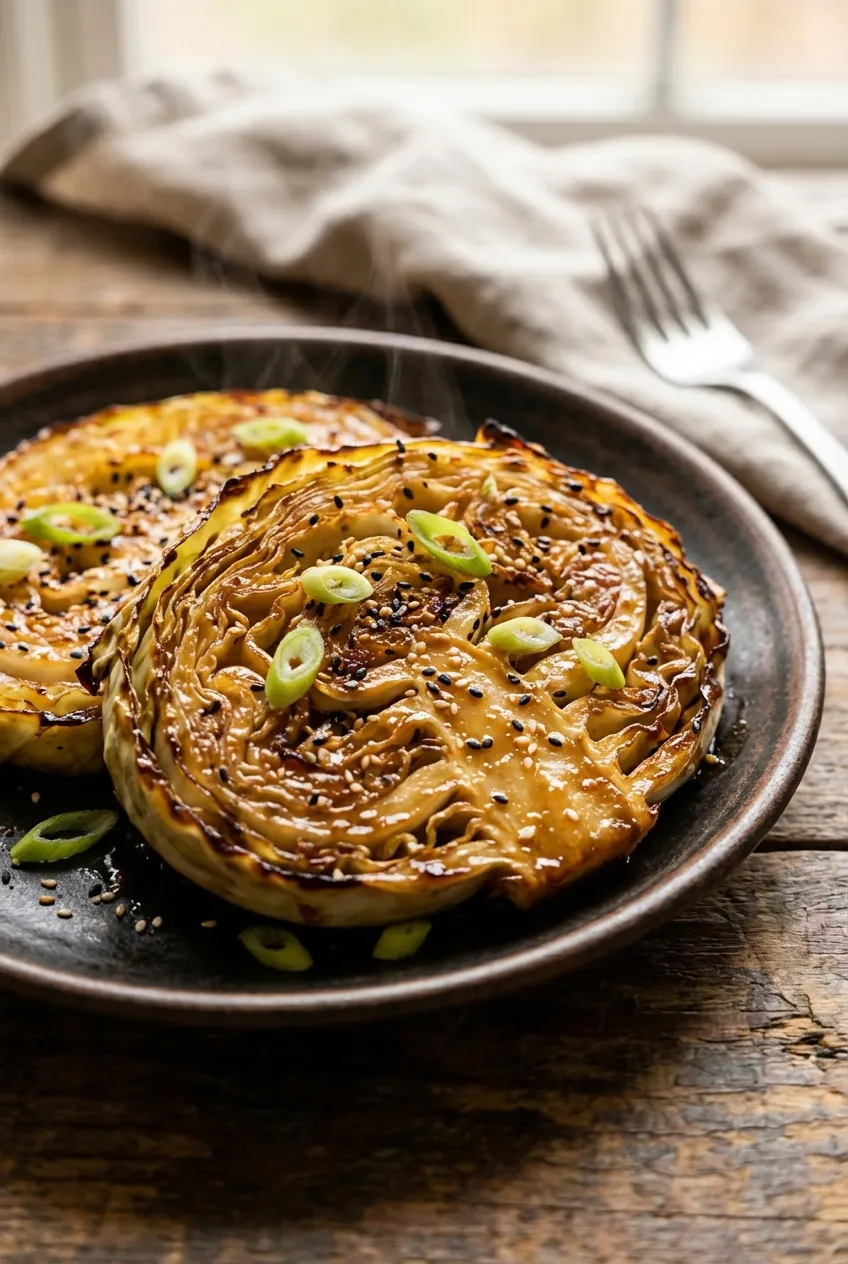
The Story Behind This Recipe
I have been waiting for the world to catch up with cabbage. Growing up in Mumbai, cabbage was everywhere — stir-fried with mustard seeds and curry leaves for patta gobi, shredded into kachumber salads, tucked into street food frankies. It was never glamorous, but it was always there, reliable and delicious. When I moved to New York to study nutrition at Cornell, I was surprised by how little respect cabbage got in American kitchens. It was slaw. It was an afterthought. It was the vegetable people apologized for serving.
That has changed, and I could not be happier about it. Cabbage is having a proper moment — trending on every food platform, popping up on restaurant menus, and finally getting treated like the culinary powerhouse it has always been. This recipe is my tribute to that awakening. The technique comes from Japanese teppanyaki, where thick wedges of cabbage are seared on a blazing hot griddle until charred and sweet. The miso butter glaze borrows from the same tradition — white miso has this incredible ability to amplify the natural sweetness and nuttiness that develops when cabbage caramelizes. Combined with melted butter, it creates a sauce that is savory, sweet, and deeply satisfying in a way that surprises people who think of cabbage as boring.
As someone trained in both nutritional science and plant-based culinary arts at the Natural Gourmet Institute, this recipe represents everything I believe in: a humble, affordable vegetable transformed through proper technique and thoughtful seasoning into something that can anchor an entire meal. No apologies necessary. Cabbage deserves the center of the plate, and this recipe proves it.
Before You Start
- Choose a heavy, dense head of cabbage. You want a cabbage that feels heavy for its size with tightly packed leaves. Loose, leafy heads fall apart when cut into steaks. Press the cabbage — it should feel firm and solid, not spongy.
- Cut the steaks thick. Each steak should be at least 1 inch thick, cut through the core so the leaves stay attached. The core is what holds the steak together — if you cut it out, the leaves separate into a pile of individual pieces.
- Preheat your oven fully. This recipe relies on high heat to caramelize the cabbage, so give your oven a full 20 minutes at the target temperature. A properly preheated oven is the difference between caramelized and steamed.
- Make the miso butter first. Having the glaze ready to go means you can work quickly once the cabbage comes out of the initial roast. Timing is tight — you want to apply the glaze while the steaks are still hot.
- Use white (shiro) miso, not red. White miso is sweeter and more delicate, which complements the cabbage without overpowering it. Red miso is too salty and aggressive for this application.
Instructions
Step 1: Prepare the Cabbage Steaks
Preheat your oven to 425°F (220°C) with a rack in the center position. Line a large rimmed baking sheet with parchment paper.
Remove any wilted or damaged outer leaves from the cabbage. Place the cabbage on a cutting board, stem-side down. Using a large, sharp chef’s knife, cut the cabbage in half through the core. From each half, cut two 1-inch-thick steaks from the center, slicing parallel to the cut face. Each steak should have a section of core holding the leaves together. You will get 4 steaks from one head — the outer pieces that fall apart can be saved for slaw or stir-fry.
Step 2: Make the Miso Butter Glaze
In a small bowl, whisk together the melted butter, miso paste, rice vinegar, mirin, sesame oil, grated garlic, grated ginger, and red pepper flakes until completely smooth. The miso may resist combining at first — keep whisking until you have a uniform, glossy sauce with no lumps. Taste it: you should get a wave of buttery richness, then umami from the miso, then a gentle heat from the pepper flakes. Set aside.
Step 3: Sear the Cabbage
Heat the neutral oil in a 12-inch cast iron skillet or heavy oven-safe pan over medium-high heat until the oil just begins to shimmer, about 2 minutes. Working in batches if needed, carefully place the cabbage steaks flat-side down in the skillet. Press them gently with a spatula to ensure full contact with the pan. Sear without moving for 4-5 minutes until the bottom surface develops a deep, golden-brown char. You should hear a steady sizzle — if it is quiet, your pan is not hot enough. Carefully flip each steak and sear the second side for 3-4 minutes. The cabbage should have beautiful dark caramelized patches across both faces.
Step 4: Glaze and Roast
Transfer the seared cabbage steaks to the prepared baking sheet. Spoon roughly half of the miso butter glaze over the top of each steak, letting it seep down between the leaves. Use the back of the spoon or a pastry brush to spread it evenly across the surface.
Roast in the preheated oven at 425°F (220°C) for 20-25 minutes, until the cabbage is tender all the way through when pierced with a knife — there should be almost no resistance — and the edges are deeply caramelized and starting to crisp. The miso glaze will darken and become fragrant, filling your kitchen with a warm, nutty aroma.
Step 5: Apply the Second Glaze
Remove the baking sheet from the oven. Spoon the remaining miso butter glaze over the hot cabbage steaks. The residual heat will melt the butter immediately, and the glaze will pool around the base of each steak, mixing with the roasting juices to create a concentrated pan sauce.
Step 6: Garnish and Serve
Transfer the cabbage steaks to a serving platter or individual plates, spooning any pan juices over the top. Scatter generously with toasted sesame seeds, sliced scallions, and crispy fried shallots. Finish with a pinch of flaky sea salt and a few grinds of black pepper. Serve immediately while the edges are still crispy and the center is buttery-soft. Each bite should give you crunch from the char, creaminess from the tender inner leaves, and a deep umami richness from the miso butter.
Ingredient Substitutions
| Ingredient | Substitute | Notes |
|---|---|---|
| White miso paste | Yellow miso or chickpea miso | Yellow miso is slightly stronger but works well. Chickpea miso is soy-free and milder. Avoid red miso — too intense for this dish. |
| Unsalted butter | Vegan butter or coconut oil | Vegan butter (like Miyoko’s) keeps it plant-based with minimal flavor change. Coconut oil adds a subtle sweetness that works nicely. |
| Mirin | Dry sherry or rice wine with a pinch of sugar | Use equal parts. Mirin’s sweetness is essential to balancing the miso’s salt, so add a small pinch of sugar if substituting. |
| Rice vinegar | Apple cider vinegar | Apple cider vinegar is slightly more assertive but brings a similar fruity acidity. Use the same amount. |
| Green cabbage | Savoy cabbage or napa cabbage | Savoy has more delicate leaves and cooks faster — reduce oven time by 5 minutes. Napa is too loose for steaks; use wedges instead. |
| Crispy fried shallots | Toasted panko breadcrumbs or crushed rice crackers | Both add crunch. Toasted panko with a drizzle of sesame oil is an excellent textural substitute. |
| Sesame oil | Perilla oil or walnut oil | Both are nutty and aromatic. Perilla oil is common in Korean cooking and adds a distinctive earthy flavor. |
Chef’s Tips
- The sear is everything. Do not skip the stovetop step and just throw the cabbage straight in the oven. The direct contact with a screaming-hot cast iron pan creates a Maillard crust that the oven alone cannot replicate. That char is where most of the flavor lives — deep, sweet, almost smoky. Without it, you just have roasted cabbage. With it, you have a steak.
- Do not move the cabbage while it sears. The temptation to peek and adjust is strong. Resist it. The cabbage needs uninterrupted contact with the hot pan to develop that caramelized crust. If you nudge it, you break the contact and restart the browning process. Set it and forget it for a full four to five minutes.
- Double-glaze for maximum impact. Applying the miso butter in two stages — once before roasting and once after — builds layers of flavor. The first coat caramelizes in the oven and becomes deeply savory. The second coat, applied to the hot-from-the-oven steaks, stays glossy and bright, giving you both cooked-down depth and fresh umami punch in every bite.
- Save the outer leaves. The loose outer pieces that fall away when you cut the steaks are not waste. Toss them with a little sesame oil and soy sauce and roast them alongside the steaks for crispy cabbage chips, or shred them into a quick Asian-style slaw.
- This recipe scales easily for a crowd. Two heads of cabbage yield 8 steaks. Make a double batch of the miso butter, use two sheet pans, and rotate them halfway through roasting. It is an impressive vegetarian centerpiece for dinner parties.
Meal Prep & Storage
- Refrigerator: Store roasted cabbage steaks in an airtight container for up to 4 days. The texture softens but the flavor deepens overnight as the miso butter permeates the leaves.
- Reheating: Reheat in a 400°F (200°C) oven for 8-10 minutes until warmed through and the edges re-crisp slightly. You can also reheat in a hot skillet with a splash of water and a lid to steam-crisp them. Avoid the microwave — it makes the cabbage watery.
- Freezing: Roasted cabbage steaks can be frozen for up to 2 months in airtight containers. Thaw overnight in the fridge and reheat in the oven. The texture will be softer than fresh, but the flavor holds up well.
- Make-ahead miso butter: The miso butter glaze can be prepared up to 5 days ahead and stored in the fridge. Bring to room temperature or gently warm before using — it needs to be pourable to coat the steaks evenly.
Pairing Suggestions
- Grain: Steamed short-grain white rice or brown rice is the natural base. The rice soaks up the miso butter pan juices beautifully, and the neutral grain lets the cabbage be the star. Alternatively, soba noodles tossed in a little sesame oil work wonderfully.
- Protein: A soft-boiled egg with a jammy yolk placed on top of each cabbage steak turns this into a complete meal. For a heartier option, pan-seared tofu or grilled salmon with a similar miso glaze creates a cohesive flavor theme.
- Drink: A dry, unoaked Riesling or a cold Japanese lager (Asahi or Sapporo) complements the umami richness of the miso without competing. For non-alcoholic, try a sparkling yuzu drink or genmaicha tea.
- Side salad: A bright, crunchy cucumber salad dressed with rice vinegar, a touch of sugar, sesame seeds, and a hit of chili oil provides a refreshing contrast to the warm, rich cabbage steaks.
Frequently Asked Questions
Can I grill the cabbage steaks instead of oven-roasting? Yes, and grilling adds a wonderful smoky dimension. Preheat your grill to medium-high heat (around 400°F / 200°C). Brush the steaks with neutral oil, grill for 5-6 minutes per side with the lid closed until charred and tender, then brush generously with the miso butter glaze during the last 2 minutes. The open flame creates an even more dramatic char than the cast iron pan.
My cabbage steaks fell apart during cutting. What went wrong? The most common reason is cutting too far from the core. Each steak needs a section of the central core to act as the spine holding all the leaves together. Cut your steaks from the center of each half, where the core is thickest. If the outer pieces fall apart, save them for a different use — only the center cuts make proper steaks.
Is this recipe vegan? It is vegetarian as written, but easily made vegan by substituting the butter with vegan butter or refined coconut oil. Check that your miso paste is vegan as well — most are, but some contain bonito (fish) dashi. The crispy shallots are typically vegan, but check the label if store-bought.
Can I use red cabbage instead of green? Red cabbage works but has a slightly different texture — it is denser and takes longer to become tender. Add 5-7 minutes to the roasting time and check doneness with a knife. The color is stunning, though — deep purple with caramelized edges — and it looks absolutely beautiful on the plate.
What is white miso, and where do I find it? White miso (shiro miso) is a fermented soybean paste that has been aged for a shorter period than red or dark miso, giving it a milder, sweeter flavor. You can find it in the refrigerated section of most grocery stores near the tofu, or in any Asian supermarket. Once opened, it keeps in the fridge for up to a year. It is one of the most versatile ingredients in a plant-based kitchen — use it in dressings, marinades, soups, and glazes.
How do I make my own crispy fried shallots? Thinly slice shallots into rings, toss them in a light coating of cornstarch, and fry in 325°F (165°C) neutral oil for 4-6 minutes, stirring frequently, until deep golden brown. Drain on paper towels and season with a pinch of salt immediately. They crisp up further as they cool. Store in an airtight container at room temperature for up to a week.