
The Story Behind This Recipe
The first time I encountered matcha was during a pastry exchange program in Kyoto, three years after graduating from l’École Nationale Supérieure de Pâtisserie. I was already a confident pastry chef by then — I had worked the dessert station at Le Cinq in Paris, I had won the Coupe de France. I thought I understood flavor. Then a tea master in Uji whisked a bowl of ceremonial matcha for me, and I realized I had been missing an entire dimension.
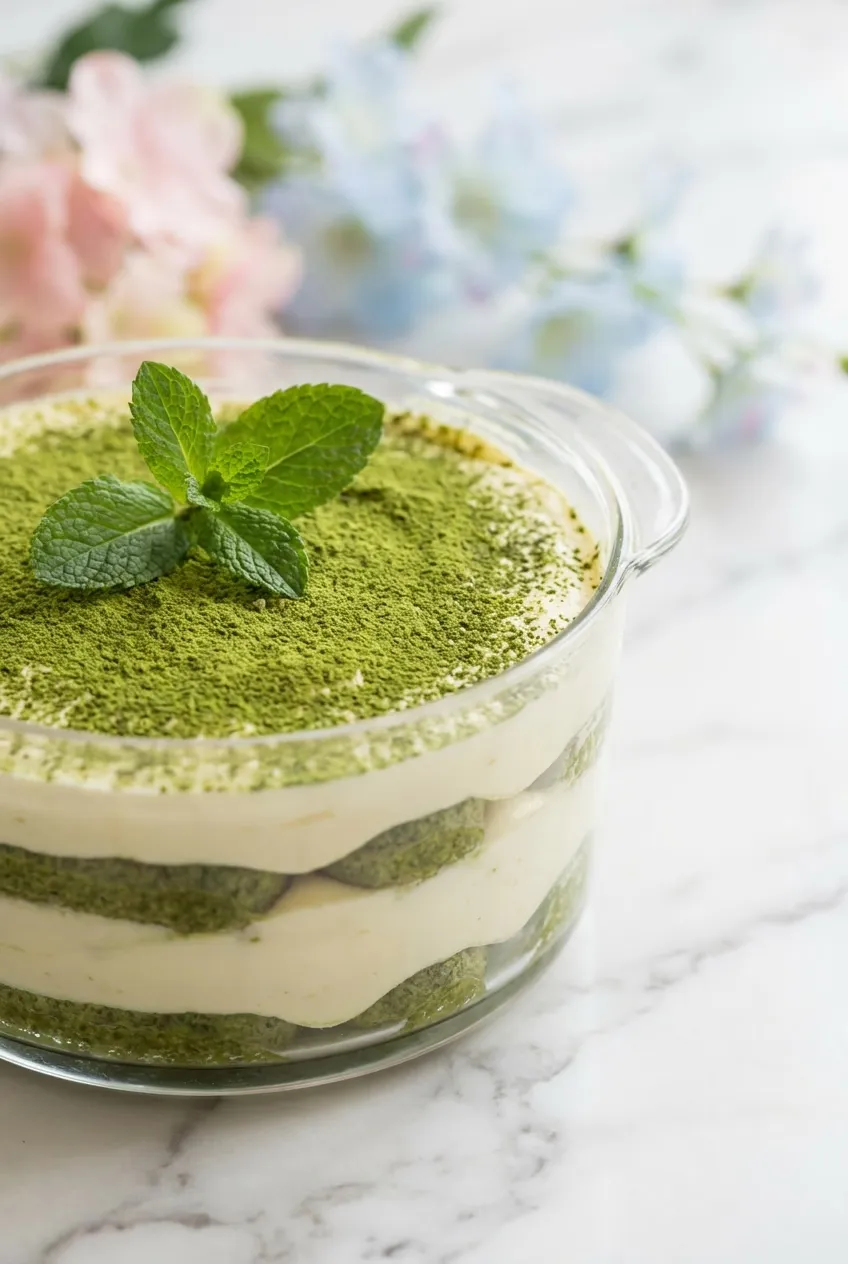
The flavor was unlike anything in the French pastry canon — vegetal and sweet, bitter and creamy, with this extraordinary umami depth that lingered long after the last sip. I immediately began thinking about how it would pair with mascarpone, and that night in my tiny apartment, I made my first attempt at what would become this recipe. The ladyfingers soaked in sweetened matcha instead of espresso, the mascarpone cream barely sweetened so the tea could shine — it was an epiphany. The green against the white layers looked like a spring garden, which felt exactly right for a dessert that tastes like renewal.
I’ve made hundreds of tiramisus in my career, but this matcha version holds a special place. It taught me that the best desserts come from genuine curiosity and a willingness to let different traditions talk to each other. My philosophy has always been that every dessert should look like a celebration and taste like a warm hug — and this one does both, with an elegance that makes people stop and stare before they even pick up a spoon.
Before You Start
- Use ceremonial-grade matcha. This is the single most important ingredient decision. Culinary-grade matcha is fine for baking where heat and other flavors mask imperfections, but in a raw, chilled dessert like this, the quality of your matcha is front and center. Ceremonial grade gives you that vibrant emerald color and smooth, complex flavor without bitterness.
- Bring mascarpone to room temperature. Cold mascarpone will be lumpy and resist whipping into a smooth cream. Pull it out of the fridge at least 30 minutes before you begin.
- Sift your matcha. Matcha is notorious for clumping. Always sift it through a fine-mesh strainer before whisking with hot water. This takes 20 seconds and prevents grainy green lumps in your soaking liquid.
- Clear fridge space. You’ll need room for a 9x13-inch dish to chill undisturbed for at least 6 hours (overnight is better). Plan accordingly.
- Do NOT dust the matcha on top until serving. Matcha powder absorbs moisture rapidly. If you dust it ahead of time, it will turn dark and dull within an hour. Keep the surface clean until the moment before you bring it to the table.
Instructions
Step 1: Prepare the Matcha Soaking Liquid
Sift 2 tablespoons of the matcha powder through a fine-mesh strainer into a medium heatproof bowl. Add the hot water (about 175°F/80°C — hot but not boiling, as boiling water will scorch the matcha and make it bitter). Whisk vigorously with a bamboo chasen or a regular small whisk in a rapid zigzag motion for 30-45 seconds until the matcha is completely dissolved, slightly frothy, and no lumps remain.
Add the sugar and stir until dissolved. If using the matcha liqueur, stir it in now. Taste the liquid — it should be pleasantly sweet with a strong matcha flavor. Let it cool to room temperature, then transfer to a shallow bowl or dish wide enough to dip ladyfingers. You should have about 1 3/4 cups of soaking liquid.
Step 2: Make the Mascarpone Cream
Fill a medium saucepan with about 2 inches of water and bring it to a gentle simmer over medium heat. In a large heatproof bowl that fits over the saucepan (without touching the water), combine the egg yolks and sugar. Whisk constantly over the simmering water for 4-5 minutes until the mixture reaches 160°F (71°C) on an instant-read thermometer. The mixture should be pale yellow, thick enough to coat the back of a spoon, and visibly increased in volume. Remove from heat.
Add the mascarpone cheese in three additions, folding gently with a rubber spatula after each. Do not overmix — fold just until the mascarpone is incorporated and the mixture is smooth and uniform. Stir in the vanilla extract and salt. Set aside.
Step 3: Whip the Cream
In a separate large bowl, whip the cold heavy cream with an electric mixer on medium-high speed for 3-4 minutes until it reaches stiff peaks. The cream should hold its shape when the whisk is lifted and not slide if you tilt the bowl. Be careful not to over-whip — stop before the cream looks grainy or begins to separate.
Fold one-third of the whipped cream into the mascarpone mixture vigorously to lighten it. Then fold in the remaining whipped cream in two additions using gentle, sweeping strokes from the bottom of the bowl upward. Fold just until no white streaks remain. The final cream should be airy, mousse-like, and hold a soft mound on a spoon.
Step 4: Soak the Ladyfingers
Working quickly, dip each ladyfinger into the cooled matcha liquid for 1-2 seconds per side. The key here is speed — ladyfingers are like sponges, and if you leave them in too long, they’ll disintegrate into a mushy mess. You want the exterior soaked and green while the center retains a slight firmness. It will continue to absorb moisture from the cream as it chills.
Arrange a single layer of matcha-soaked ladyfingers in the bottom of a 9x13-inch dish, fitting them snugly side by side. You may need to break a few to fill gaps. You should use about half the ladyfingers for this first layer.
Step 5: Assemble the Layers
Spread exactly half of the mascarpone cream over the first layer of ladyfingers, using an offset spatula to create a smooth, even surface. Take your time here — an even layer ensures consistent texture in every bite.
Create a second layer of matcha-soaked ladyfingers on top of the cream, again fitting them snugly. Top with the remaining mascarpone cream, spreading it evenly and smoothing the surface with the offset spatula. For a clean finish, run the spatula under hot water and wipe dry before doing a final smooth — the warmth helps create a perfectly flat, polished surface.
Step 6: Chill
Cover the dish tightly with plastic wrap, pressing it gently against the surface to prevent a skin from forming. Refrigerate for a minimum of 6 hours, though overnight (12-24 hours) is strongly preferred. The extended chilling time allows the ladyfingers to fully absorb the matcha liquid and cream, creating that signature luscious, spoonable texture where the layers meld together while still remaining distinct.
Step 7: Dust and Serve
Just before serving — and I cannot stress this enough, only right before — sift the remaining 1 tablespoon of matcha powder evenly over the entire surface through a fine-mesh strainer. Hold the strainer about 6 inches above the surface and tap gently for an even, snow-like dusting. If desired, dust a light line of cocoa powder along one edge for a beautiful green-and-brown contrast.
Cut into squares or scoop with a large spoon. Garnish individual servings with white chocolate shavings if desired. Serve chilled.
Ingredient Substitutions
| Ingredient | Substitute | Notes |
|---|---|---|
| Ceremonial-grade matcha | Culinary-grade matcha | The color will be less vibrant and the flavor slightly more bitter. Increase sugar in the soaking liquid by 1 tablespoon to compensate. |
| Mascarpone | Equal parts cream cheese and heavy cream, blended smooth | Cream cheese is tangier and denser. Whip with cream to approximate mascarpone’s silky texture. |
| Savoiardi ladyfingers | Sponge cake cut into strips | Homemade sponge cake works beautifully and is easier to find in some areas. Cut into strips roughly the size of ladyfingers. |
| Heavy cream | Coconut cream (chilled, solids only) | For dairy-free. The texture will be slightly different but the coconut flavor pairs surprisingly well with matcha. |
| Egg yolks | 3 tbsp cornstarch cooked into a pudding base | For egg-free. Make a simple vanilla pudding base and fold in mascarpone. The texture will be slightly denser. |
| Matcha liqueur | 1 tbsp vanilla extract + 1 tbsp water | The liqueur adds subtle depth but isn’t essential. Extra vanilla keeps the flavor profile elegant. |
| White chocolate | Toasted coconut flakes | Adds textural contrast and a complementary sweetness. |
Chef’s Tips
- The matcha dusting timing rule. I tell every student in my classes the same thing: matcha powder and moisture are mortal enemies. Dust it on too early and within an hour it will darken to an army green and lose its vibrant beauty. Set an alarm if you need to — dust exactly 5 minutes before you bring this to the table, no sooner.
- Temperature of the soaking liquid matters. If the matcha liquid is too warm when you dip the ladyfingers, they’ll go soft too quickly and fall apart. Let it cool to room temperature or slightly below before dipping. I sometimes chill mine for 10 minutes in the fridge.
- The quick-dip technique. Hold the ladyfinger horizontally and submerge it for one second, flip, one second — then straight into the dish. Count “one-Mississippi” in your head. Seriously. The difference between 1 second and 3 seconds is the difference between a perfect tiramisu and green porridge.
- Invest in good matcha once. A 30-gram tin of ceremonial-grade matcha costs about $25-30 and will make this recipe twice. The flavor difference between ceremonial and culinary grade in an uncooked dessert is night and day. Look for matcha that’s vibrant green (not olive or yellowish) and from the Uji or Nishio regions of Japan.
- Make individual portions. For an elegant presentation, layer the tiramisu in clear glasses or small jars. The green-and-white layers look stunning through glass and make portion control easier for dinner parties.
- The cocoa powder contrast. A light dusting of cocoa powder over half the surface, creating a diagonal line against the matcha, makes this dessert look absolutely professional. The flavor pairing of chocolate and matcha is also wonderful.
Meal Prep & Storage
- Best made ahead. Unlike most desserts, tiramisu actually requires advance preparation. It needs at minimum 6 hours in the fridge and tastes best after 12-24 hours. Make it the night before you plan to serve it.
- Refrigerator storage: Cover tightly and store in the fridge for up to 3 days. The flavor deepens beautifully through day 2. By day 3, the ladyfingers will be very soft — still delicious, but the texture changes.
- Do not freeze. Freezing ruins the texture of mascarpone cream and causes the ladyfingers to become unpleasantly icy. This dessert is best enjoyed fresh from the fridge.
- Matcha soaking liquid prep. The matcha liquid can be prepared up to 2 days ahead and stored in the fridge. Whisk briefly before using, as the matcha will settle to the bottom.
- Transport tip. If bringing this to a gathering, transport the tiramisu covered in the fridge-cold dish with the matcha powder in a separate small container. Dust the top when you arrive.
Pairing Suggestions
- Drink: A warm cup of hojicha (roasted Japanese green tea) provides a toasty counterpoint to the bright, grassy matcha in the dessert. For something cold, try sparkling water with a squeeze of yuzu.
- After-dinner pairing: A small pour of Frangelico or amaretto on the rocks mirrors the Italian heritage of the tiramisu while adding a warm, nutty complement to the matcha.
- Fruit: Fresh strawberries or raspberries on the plate alongside each serving add a burst of color and acidity that cuts through the richness beautifully. Sliced mango is another inspired choice.
- Wildcard: A thin butter cookie or langue de chat served standing upright in each portion adds textural contrast and a touch of French patisserie elegance. My training at ENSP taught me that every dessert benefits from a crunch element.
Frequently Asked Questions
Can I use regular espresso instead of matcha for a traditional tiramisu? Of course — simply replace the matcha soaking liquid with 1 1/2 cups of strongly brewed espresso mixed with 2 tablespoons of sugar and 2 tablespoons of Marsala or Kahlúa. The mascarpone cream recipe works perfectly for both versions. But I’d encourage you to try the matcha version first — you might never go back.
My matcha soaking liquid looks clumpy. What went wrong? You likely didn’t sift the matcha before whisking, or the water was boiling rather than the recommended 175°F (80°C). Matcha is extremely fine and clumps easily. Always sift through a fine-mesh strainer first, use water just below boiling, and whisk in a rapid W or zigzag motion rather than circular stirring. If clumps persist, strain the liquid through a fine-mesh sieve before using.
Can I make this without raw eggs? The recipe as written uses pasteurized egg yolks that are heated to 160°F (71°C) over a double boiler, which brings them to a safe temperature. If you’re still concerned, you can use pasteurized eggs (sold in most grocery stores) or substitute the yolk mixture with an egg-free pastry cream base. Alternatively, some versions skip the eggs entirely and simply whip mascarpone with cream and sugar — the result is lighter but still delicious.
How far in advance can I make this? The sweet spot is preparing it the evening before you plan to serve it, giving it a full 12-24 hours to set. It will keep well in the fridge for up to 3 days total, though the texture is most elegant on days 1 and 2. Remember: do not dust the matcha on top until moments before serving.
Why is my tiramisu watery or loose? The most common causes are over-soaking the ladyfingers (they should be dipped for only 1-2 seconds per side), under-whipping the cream (it should reach stiff peaks), or using mascarpone that was too cold and didn’t incorporate smoothly. Make sure to drain any excess matcha liquid from the ladyfingers before placing them in the dish, and ensure your cream is whipped fully before folding into the mascarpone mixture.
What’s the difference between ceremonial and culinary-grade matcha? Ceremonial grade is made from the youngest, most tender tea leaves, stone-ground to an extremely fine powder. It has a vibrant green color, naturally sweet and complex flavor, and smooth texture — perfect for drinking straight or using in uncooked preparations where its flavor is the star. Culinary grade uses slightly older leaves, has a more astringent flavor, and is better suited for baking, smoothies, and applications where other flavors will balance its bitterness. For this tiramisu, the matcha flavor is unmasked, so ceremonial grade makes a substantial difference.