
The Story Behind This Recipe
I have spent my entire career building desserts that require precision. Tempered chocolate, laminated dough, caramel cooked to exactly 338°F (170°C) — these are the things that defined my years at Le Cinq in Paris and earned me recognition at the Coupe de France de la Pâtisserie. So when my niece in Lyon sent me a TikTok video of someone sticking Biscoff cookies into a container of yogurt and calling it cheesecake, I’ll admit — I was skeptical. Two ingredients? No oven? No water bath? This couldn’t possibly be worth my time.
But I made it anyway, because Sophie Laurent does not dismiss things she hasn’t tried. And I need you to understand something: when I pulled that container from the refrigerator four hours later and took my first bite, I sat down at my kitchen table and stared at the wall for a full minute. It was extraordinary. Not because it was complex — but because it wasn’t. The tangy yogurt had softened the spiced cookies into layers that genuinely mimicked the texture of a light, airy cheesecake. The warm cinnamon-caramel notes of the Biscoff melted into the bright acidity of the yogurt in a way that felt balanced and intentional, like someone had actually designed the pairing. The Japanese call this style “rare cheesecake” — meaning unbaked — and it captures everything I love about their dessert philosophy: restraint, quality ingredients, and the confidence to let simplicity speak.
I’ve since refined the technique slightly. I use full-fat Greek yogurt — never low-fat, the texture suffers dramatically. I add a whisper of vanilla extract for warmth, a drizzle of honey on top for sweetness, and fresh berries for acidity and color. A pinch of flaky sea salt at the end makes everything pop. My mother, who trained me to make madeleines when I was seven years old in our Lyon apartment, tried it last Christmas and said, “Sophie, this is the best thing you’ve ever made.” I’m still not sure if she was joking.
Before You Start
- Chill the yogurt thoroughly. Use yogurt straight from the fridge — warm yogurt won’t set properly around the cookies and will be too loose.
- Use full-fat Greek yogurt. At least 2% fat, but full-fat (5% or higher) gives the creamiest, most cheesecake-like result. Skyr and Balkan-style yogurt also work beautifully. Avoid regular (non-strained) yogurt — it’s too watery.
- Don’t substitute the cookies. Biscoff specifically has the right spice profile and texture to soften into cheesecake-like layers. Graham crackers or Oreos will give a completely different result.
- Be patient. The magic happens in the refrigerator over 4 hours minimum — overnight is even better. Don’t cheat the time or the cookies won’t fully soften.
- Prepare your toppings in advance. Have your honey, berries, and sea salt ready before unmolding so you can serve immediately.
Instructions
Step 1: Prepare the Container
Choose your vessel: a 4-cup rectangular food storage container works perfectly and gives you clean, sliceable portions. You can also use individual ramekins, small mason jars, or even a loaf pan lined with plastic wrap for easier unmolding. If using individual portions, small 6-ounce containers make perfect single servings.
Step 2: Layer the First Yogurt Base
Spoon Greek yogurt into the bottom of your container and spread it into an even layer using the back of the spoon. If using vanilla extract, stir it into the yogurt beforehand so the flavor is evenly distributed. The layer should be about 1/2 inch thick — enough to fully encase a row of cookies.
Step 3: Insert the Cookie Rows
Take the Biscoff cookies and stand them vertically in the yogurt, pressing them down gently until they’re about halfway submerged. Arrange them in neat, snug rows — the cookies should be touching each other like books on a shelf. Press them in firmly enough that they stay upright but don’t crack.
Step 4: Cover with More Yogurt
Spoon more yogurt over and around the cookies, using the back of the spoon to push yogurt into every gap between cookies. You want the cookies completely surrounded by yogurt — no dry edges exposed, no air pockets. Add another row of vertical cookies on top if your container is deep enough. Continue layering — yogurt, cookies, yogurt — until you’ve used all the cookies and yogurt. The final top layer should always be yogurt, spread smooth and flat.
Step 5: Refrigerate for the Transformation
Seal the container with a tight-fitting lid or press plastic wrap directly onto the surface (this prevents a skin from forming). Refrigerate for a minimum of 4 hours, but overnight (8-12 hours) is ideal. During this time, the moisture from the yogurt slowly penetrates the cookies, transforming them from crispy biscuits into soft, cake-like layers. The cookies absorb just enough liquid to become tender while retaining their spiced caramel flavor — the same principle as an icebox cake, but with the tangy brightness of yogurt instead of heavy cream.
Step 6: Unmold and Garnish
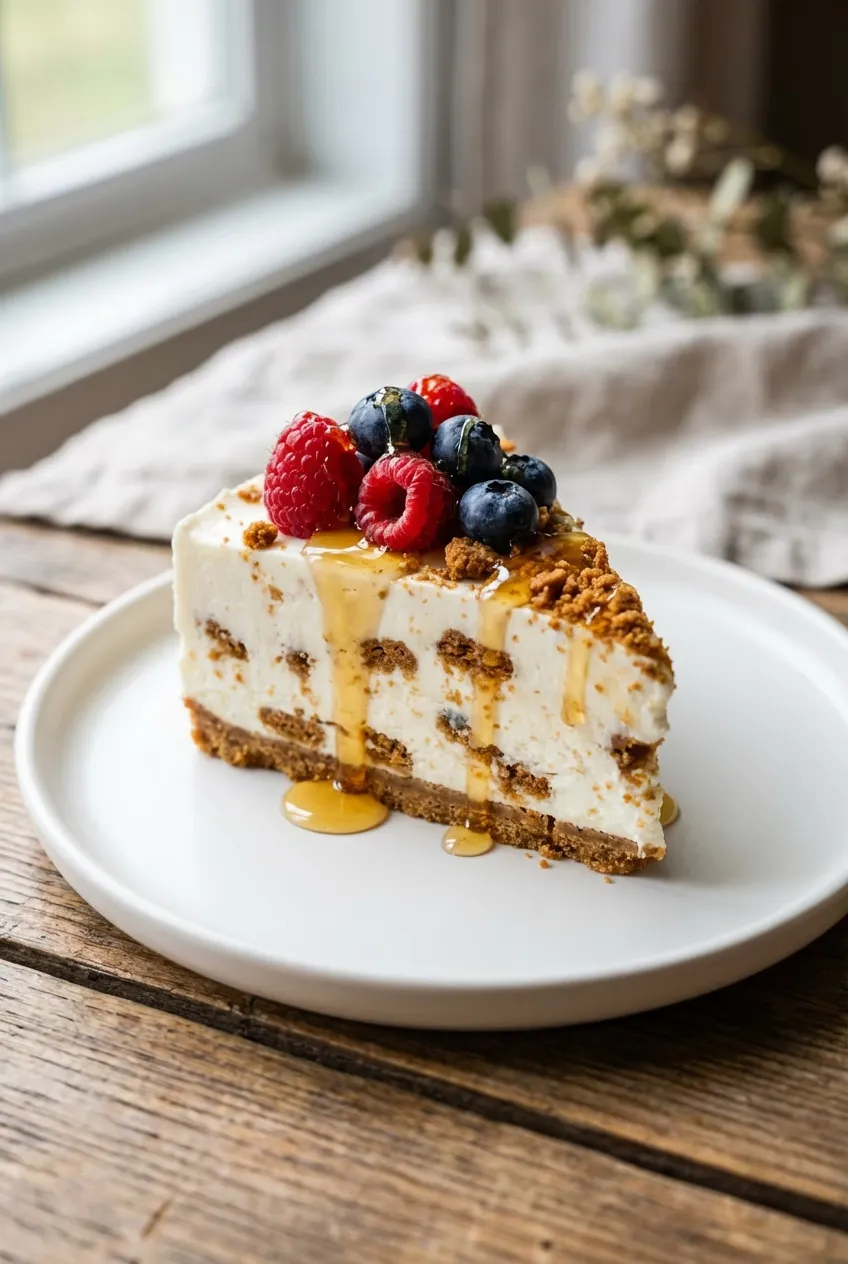
When ready to serve, run a thin knife around the edges of the container if needed. Invert onto a serving plate or simply scoop portions directly from the container — both approaches work. Drizzle each serving generously with honey. Scatter fresh mixed berries over the top — the tartness of raspberries and the sweetness of blueberries complement the tangy yogurt perfectly. Finish with a small pinch of flaky sea salt — this is not optional, it’s the detail that elevates the entire dessert from good to extraordinary by heightening the caramel notes in the Biscoff.
Step 7: Slice and Serve
If you’ve made a full container, slice it like a terrine — you’ll see the beautiful layers of creamy yogurt and softened cookie when you cut through. Serve immediately. The texture is at its best straight from the fridge: cool, creamy, with layers that hold their shape but yield easily to a spoon. Each bite should give you that unmistakable cheesecake sensation — tangy, sweet, with a warm spice finish from the Biscoff.
Ingredient Substitutions
| Ingredient | Substitute | Notes |
|---|---|---|
| Full-fat Greek yogurt | Skyr or Balkan-style yogurt | Both are thick and tangy. Skyr is slightly more protein-dense. Avoid regular yogurt — too thin. |
| Biscoff cookies | Speculoos cookies from any brand | Same spice cookie by a different name. Any caramelized cinnamon cookie works. |
| Honey | Maple syrup or agave nectar | Maple adds a deeper, autumnal sweetness. Agave is milder and more neutral. |
| Fresh berries | Passion fruit pulp or mango slices | Tropical fruits add acidity and brightness. Passion fruit is especially stunning. |
| Vanilla extract | Vanilla bean paste (1/2 teaspoon) | Paste gives visible vanilla specks and a more intense flavor. |
| Flaky sea salt | Maldon salt or fleur de sel | Any finishing salt with large, crunchy flakes works. Table salt is too harsh. |
Chef’s Tips
- The yogurt fat content is everything. I cannot stress this enough. Full-fat Greek yogurt (5% or higher) creates a dense, creamy texture that genuinely mimics cheesecake. Lower-fat versions taste fine but will be thinner and more mousse-like. If you can find French-style fromage blanc or Icelandic skyr, try it — both are exceptional.
- Try a Biscoff spread layer. For an indulgent upgrade, warm 2 tablespoons of Biscoff cookie butter in the microwave for 15 seconds and drizzle it between the cookie layers before adding yogurt. It melts into the yogurt as it chills and creates a swirl of concentrated caramel flavor.
- Freeze it for a cheesecake ice cream effect. Instead of refrigerating, freeze the assembled container for 3-4 hours until firm but not rock-solid. The result is a frozen cheesecake bar with an ice cream-like texture that’s perfect for summer. Let it sit at room temperature for 5 minutes before serving.
- Make it in a muffin tin for portion control. Line a muffin tin with cupcake liners, add a spoonful of yogurt, a few cookie halves, more yogurt, and chill. You get perfectly portioned individual cheesecakes ready for parties or meal prep.
- Add a cocoa variation. Stir 1 tablespoon of unsweetened cocoa powder into the yogurt before layering for a chocolate cheesecake version. The bitterness of cocoa against the sweet Biscoff is stunning.
Meal Prep & Storage
- Refrigerator: The assembled cheesecake keeps beautifully in the fridge for up to 3 days in a sealed container. The texture actually improves after the first overnight rest — day two is often the best.
- Freezer: Freeze individual portions for up to 2 weeks. Thaw in the fridge for 2 hours or enjoy partially frozen as a semi-freddo texture.
- Do not add toppings until serving. Honey will pool and berries will release juice if added too early. Keep them separate and garnish each portion fresh.
- Batch prep: Make 4-6 individual jars on Sunday evening and you have a grab-and-go high-protein dessert or breakfast for the entire week. Each serving delivers approximately 15-20 grams of protein depending on your yogurt.
- Travel-friendly: Mason jar versions travel exceptionally well for picnics, lunches, or potlucks. Just keep them chilled in an insulated bag.
Pairing Suggestions
- Coffee: A strong espresso or café au lait is the perfect companion. The bitterness of coffee against the sweet, tangy cheesecake creates a classic French dessert experience.
- Tea: Matcha latte (unsweetened) plays beautifully with the spiced Biscoff — the grassy bitterness of matcha and the warm cinnamon notes create an unexpectedly harmonious pairing.
- Wine: A late-harvest Gewürztraminer or Moscato d’Asti. Both are lightly sweet, aromatic, and won’t overpower the delicate yogurt flavors.
- Fruit: A simple citrus salad of segmented blood oranges and grapefruit with a mint leaf makes a bright, refreshing counterpoint if you want to extend this into a full dessert course.
Frequently Asked Questions
Does this actually taste like cheesecake? It genuinely does — and I say that as someone who has made hundreds of traditional cheesecakes in my career. The tang of Greek yogurt mimics the cream cheese acidity, and the softened Biscoff cookies create distinct layers that feel like a baked crust interspersed with creamy filling. It’s lighter than a New York cheesecake and closer to a Japanese rare cheesecake in texture — smooth, creamy, and not overly sweet.
Can I use flavored yogurt instead of plain? You can, but I’d recommend sticking with plain. Flavored yogurts contain added sugars that can make the result overly sweet when combined with the Biscoff cookies, which are already quite sweet on their own. If you want more flavor, add vanilla extract to plain yogurt — it gives you control over the sweetness level.
How long does it really need to chill? Four hours is the minimum for the cookies to soften through completely. Overnight (8-12 hours) is genuinely better — the layers meld more seamlessly and the texture becomes silkier. I’ve tested it at 2 hours and the cookies still had a firm center, which isn’t unpleasant but doesn’t give you the cheesecake effect you’re after.
Is this a healthy dessert? Compared to traditional cheesecake, absolutely. A serving made with full-fat Greek yogurt delivers 15-20 grams of protein, probiotics for gut health, and significantly less sugar and saturated fat than a baked cheesecake made with cream cheese, eggs, and a butter crust. It’s not calorie-free — Biscoff cookies contain sugar and palm oil — but it’s a substantially lighter indulgence.
Can I make this with dairy-free yogurt? Yes, with caveats. Coconut-based Greek-style yogurt works best — it’s thick and creamy enough to hold the structure. Almond and oat-based yogurts tend to be thinner and may not set as firmly. Check that your dairy-free yogurt is thick enough to hold a spoon upright before using it.
What other cookies work besides Biscoff? I’ve tested this with several alternatives: digestive biscuits work well but are less flavorful, Maria cookies (galletas María) give a more neutral base, and chocolate wafer cookies create an excellent cookies-and-cream version. Oreos are too strongly flavored and the dark color turns the yogurt grey, which isn’t appetizing. Biscoff remains the gold standard for a reason — the warm spice profile is uniquely complementary to yogurt’s tang.