
The Story Behind This Recipe
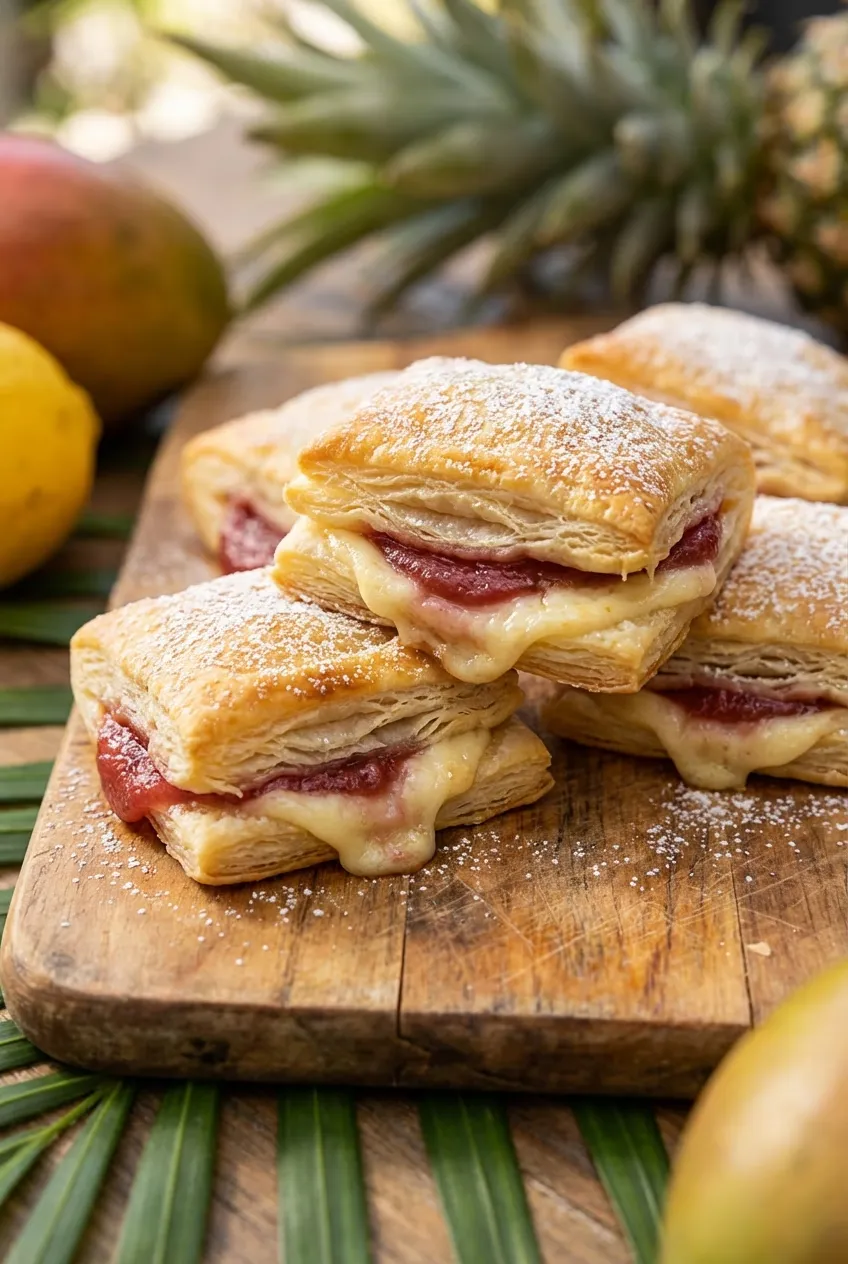
I first encountered pastelitos de guayaba at a tiny Cuban bakery in Miami’s Little Havana neighborhood during a pastry research trip in 2019. I had just finished a competition season and was traveling the Americas looking for the pastry traditions that European training never teaches you. The moment I bit into that first pastelito — the shattering, butter-laminated shell giving way to molten guava paste and cool, tangy cream cheese — I understood immediately why these are the heartbeat of Cuban breakfast culture. It was a flavor combination I had never encountered in all my years at Le Cinq or competing on the French pastry circuit.
What struck me most was the elegant simplicity. In French pâtisserie, we layer complexity upon complexity — crème mousseline, mirror glazes, tempered chocolate. But the pastelito achieves something equally profound with just four core ingredients. The guava paste brings this intensely tropical, almost floral sweetness that is nothing like any European fruit preserve I had worked with. Paired against the slight tang of cream cheese and wrapped in buttery, flaky pastry, it creates a harmony that reminds me of the best fruit tarts I ever made in Lyon, but with a warmth and directness that is uniquely Caribbean.
I brought the recipe home and spent weeks refining my version, applying the precision I learned at École Nationale Supérieure de Pâtisserie to a recipe that has thrived for generations on intuition and feel. The result is a pastelito that honors the Cuban original — simple, joyful, unapologetically sweet — while ensuring every layer of puff pastry reaches its maximum potential. My mother would say it is proof that the best desserts always taste like a warm hug, no matter which ocean they come from.
Before You Start
- Thaw the puff pastry properly. Remove it from the freezer and let it thaw in the refrigerator for 6-8 hours, or on the counter for 40 minutes. It should unfold without cracking but still feel cold to the touch. If it gets too warm, the butter layers melt and you lose all that flaky lift.
- Soften the cream cheese fully. Leave it at room temperature for at least 30 minutes. Cold cream cheese creates lumps in the filling and won’t spread evenly, leading to uneven pockets and potential blowouts during baking.
- Use quality guava paste, not guava jelly. Guava paste (pasta de guayaba) comes in a dense, sliceable block — look for brands like Goya or Conchita at your grocery store’s Latin foods aisle. Guava jelly is too runny and will leak out during baking.
- Have a sharp knife and ruler handy. Even squares mean even pastelitos. Eyeballing the cuts leads to lopsided pastries that don’t seal properly.
- Chill the assembled pastelitos before baking. Ten minutes in the fridge after assembly firms up the butter in the pastry and helps the seal hold. This is the difference between pastelitos that puff into perfect pillows and ones that split open.
Instructions
Step 1: Prepare the Cream Cheese Filling
In a medium bowl, combine softened cream cheese, granulated sugar, vanilla extract, and sea salt. Beat with a hand mixer or a stiff spatula until completely smooth and creamy, about 2 minutes. There should be no lumps whatsoever — the filling needs to be silky enough to spread in a thin, even layer. Taste it; you want a balance of sweet and tangy. Set the bowl aside.
Step 2: Prepare the Guava Paste
Unwrap the guava paste and place it on a cutting board. Using a sharp knife, cut it into 12 even slices, each roughly 1/4 inch thick. If the paste is very firm, run your knife under hot water between cuts to help it glide through cleanly. The slices should be roughly the same size as the pastry squares you will cut — approximately 3 inches by 3 inches. Trim if needed.
Step 3: Cut and Prepare the Puff Pastry
Preheat your oven to 400°F (200°C) and line two baking sheets with parchment paper. Lightly flour your work surface and gently unfold the puff pastry sheets. Roll each sheet out slightly to smooth any creases, creating a rectangle roughly 10 by 12 inches. Cut each sheet into 12 equal squares (a 3x4 grid), giving you 24 squares total — 12 bottoms and 12 tops.
Step 4: Assemble the Pastelitos
Working with one square at a time, place roughly 1 tablespoon of cream cheese filling in the center, spreading it slightly but leaving a 1/2-inch border around all edges. Lay one slice of guava paste directly on top of the cream cheese. Brush the exposed pastry border with egg wash using a pastry brush — this is your glue. Place a second pastry square on top and press the edges firmly with your fingertips to seal. Then press the tines of a fork along all four edges to crimp and double-seal. This prevents the filling from bubbling out. Place each assembled pastelito on the prepared baking sheet, spacing them 2 inches apart. Repeat for all 12.
Step 5: Chill and Egg Wash
Transfer the baking sheets to the refrigerator for 10 minutes. This firms the butter in the pastry and ensures maximum puff. Remove from the fridge and brush the top of each pastelito generously with egg wash — this creates that deep, glossy, bakery-golden color. Use a sharp knife to cut two small slits in the top of each pastelito to allow steam to escape.
Step 6: Bake Until Golden and Puffed
Bake at 400°F (200°C) for 20-22 minutes, rotating the pans halfway through. The pastelitos are done when they are deeply golden brown on top and bottom, puffed dramatically, and the edges look dry and flaky. You should see tiny wisps of steam escaping from the slits, and the guava filling may bubble slightly at the seams — that is perfectly fine and means the filling is hot all the way through.
Step 7: Cool and Dust
Remove from the oven and let the pastelitos cool on the baking sheet for 5 minutes — the filling is molten and will burn your mouth if you dive in immediately. Transfer to a wire rack. Once they have cooled to warm (not hot), dust lightly with powdered sugar through a fine-mesh sieve. The sugar melts into the warm pastry surface and creates a beautiful, bakery-shop finish. Serve warm or at room temperature.
Ingredient Substitutions
| Ingredient | Substitute | Notes |
|---|---|---|
| Puff pastry | Homemade rough puff pastry or phyllo dough | Homemade rough puff is superior but adds 2+ hours. Phyllo gives a thinner, crispier shell but lacks the buttery richness. |
| Cream cheese | Mascarpone or queso crema | Mascarpone is richer and less tangy. Queso crema is the authentic Latin American choice — slightly looser texture but wonderful flavor. |
| Guava paste | Mango paste or membrillo (quince paste) | Mango paste is sweeter and less tart. Membrillo is the closest in texture and has a lovely floral quality, common in Spanish pastries. |
| Granulated sugar | Honey or agave nectar | Use 2 tablespoons instead of 3. These add moisture, so the filling will be slightly softer. |
| Vanilla extract | Almond extract or orange blossom water | Use half the amount — both are more potent. Orange blossom water adds a stunning tropical-floral note. |
| Egg wash | Whole milk brushed on top | Milk gives a softer, matte finish instead of the glossy sheen. The pastry still browns but won’t have the same lacquered look. |
Chef’s Tips
- Do not over-fill. The single biggest mistake home bakers make with pastelitos is packing too much filling inside. One tablespoon of cream cheese and one thin slice of guava paste is all you need. Overfilling causes blowouts, messy leaking, and pastelitos that don’t seal. Trust the process — the flavors are concentrated enough to shine even in modest amounts.
- The fork crimp is non-negotiable. Pressing the edges with a fork does double duty: it creates a beautiful decorative border and it mechanically seals the two layers of pastry together. Without it, steam builds up inside during baking and pushes the top sheet right off.
- Work quickly and keep everything cold. Puff pastry is all about butter layers, and butter melts fast at room temperature. If your kitchen is warm, assemble six pastelitos at a time and refrigerate them while you work on the next batch. Cold pastry = tall, flaky layers. Warm pastry = flat, greasy disappointment.
- The steam vents are essential. Those two small slits in the top allow steam to escape in a controlled way. Without them, pressure builds inside the pastry and the filling erupts from the weakest point of the seal, usually the corners.
- Day-old pastelitos get a second life in the air fryer. Reheat at 350°F (175°C) for 3-4 minutes to re-crisp the pastry. They come out almost as good as fresh from the oven — sometimes better, because the guava paste has had time to set and intensify in flavor.
Meal Prep & Storage
- Room temperature: Pastelitos stay fresh for up to 1 day stored in a single layer in an airtight container. The pastry softens over time, but the flavor remains excellent.
- Refrigerator: Store in an airtight container for up to 4 days. The pastry will lose its crispness but the filling actually improves as the flavors meld overnight.
- Freezing (unbaked): Assemble the pastelitos, place them on a parchment-lined sheet pan, and freeze until solid. Transfer to a freezer bag and store for up to 3 months. Bake directly from frozen — add 3-5 minutes to the bake time.
- Freezing (baked): Baked pastelitos freeze well for up to 2 months. Reheat from frozen in a 375°F (190°C) oven for 8-10 minutes until warmed through and crispy again.
- Batch prep: The cream cheese filling can be made up to 3 days ahead and stored covered in the fridge. The guava paste can be pre-sliced and stacked with parchment between slices.
Pairing Suggestions
- Coffee: A strong café con leche is the traditional and unbeatable pairing. The creamy, sweetened espresso cuts through the richness of the pastry and amplifies the tropical guava notes. If you prefer American-style coffee, go dark roast with a splash of whole milk.
- Fruit: A simple bowl of sliced tropical fruit — mango, papaya, and pineapple — creates a vibrant breakfast spread alongside the pastelitos. The fresh fruit lightens the richness of the pastry.
- Savory balance: A slice of sharp manchego cheese or a few strips of crispy bacon alongside the pastelitos creates a beautiful sweet-savory breakfast plate. Cubans often pair their pastries with croquetas for exactly this reason.
- Cocktail: For brunch, a guava mimosa (guava nectar and sparkling wine) is absolutely perfect. It echoes the pastelito’s tropical flavor and makes the whole spread feel like a celebration.
Frequently Asked Questions
Can I make pastelitos with homemade puff pastry? Absolutely, and they will be noticeably better. Homemade puff pastry — even a rough puff or quick puff — has more butter, better lamination, and a richer flavor than store-bought. The trade-off is time: true puff pastry takes several hours of folding and chilling. If you have the time, it is worth every minute. If not, store-bought all-butter puff pastry from brands like Dufour or Trader Joe’s is an excellent shortcut.
Where do I find guava paste? Guava paste is widely available in the Latin foods aisle of most major grocery stores — look for brands like Goya, Conchita, or La Fe. It is usually sold in a flat, rectangular brick or a round tin. You can also find it on Amazon. Make sure you are buying guava paste (dense and sliceable), not guava jelly or guava marmalade, which are too runny for this recipe.
My pastelitos burst open during baking. What happened? The most common causes are: overfilling, not sealing the edges well enough, or not cutting steam vents in the top. Use a generous fork crimp on all four edges, keep the filling to one tablespoon of cream cheese and one thin slice of guava, and always cut two slits in the top to release steam. Also, make sure the egg wash only goes on the border where the two sheets meet — egg wash on the cut edges can act as glue that prevents the pastry from puffing properly.
Can I make these dairy-free? You can substitute the cream cheese with a vegan cream cheese alternative (brands like Kite Hill or Miyoko’s work well for baking). For the puff pastry, look for a brand made with vegetable oil instead of butter — Pepperidge Farm puff pastry sheets are actually dairy-free. Skip the egg wash and use oat milk brushed on top instead; you will lose the glossy sheen but the pastry will still brown.
How do I keep the bottoms from getting soggy? Bake on the lower-middle rack of the oven and use parchment paper, not a silicone mat. Parchment allows moisture to escape from the bottom of the pastry, while silicone traps steam. If your oven runs cool, preheat a sheet pan in the oven and place your parchment-lined pan directly on top of the hot pan — this gives the bottoms a head start and ensures crispness.
Can I use different fillings? The guava and cream cheese combination is the classic, but the pastry template works beautifully with other fillings. Try dulce de leche, Nutella, mango paste with mascarpone, or even a savory version with seasoned ground beef (pastelitos de carne). Just keep the total filling volume to about 2 tablespoons per pastry to avoid overfilling.