
The Story Behind This Recipe
I have a confession that might get my pastry credentials revoked: I am completely, hopelessly obsessed with gochujang. It started three years ago when a Korean friend in Paris brought me a jar from her mother’s kitchen, and I tasted it straight from a spoon like the unhinged pastry chef I am. My brain lit up. The fermented depth, the slow-building heat, that hint of sweetness underneath — it reminded me of the complexity I chase in caramel, but through an entirely different lens.
I started experimenting immediately. Gochujang in caramel sauce was the first revelation — it was like someone had turned the volume up on everything I love about caramel. The butter, the sugar, the bittersweet edge of proper caramelization — and then this warm, gentle heat that blooms at the back of your throat and makes you reach for another bite before you’ve finished the first. My colleagues at Le Cinq would have been horrified. I was in heaven.
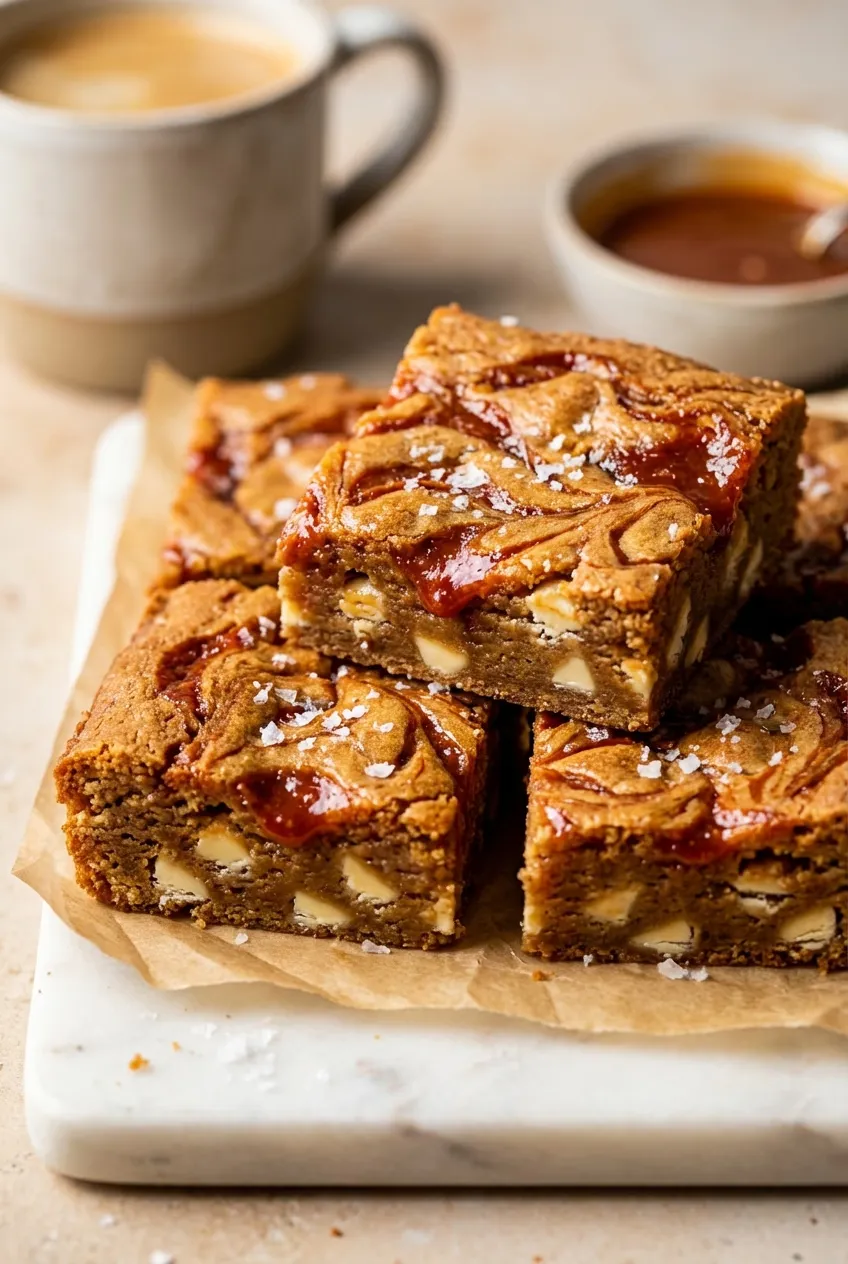
These blondies are where that obsession landed. The base is my go-to French blondie recipe — dense, chewy, butterscotch-flavored — but the gochujang caramel swirled through the top transforms it into something genuinely new. The white chocolate chips melt into pockets of creamy sweetness that temper the heat, and the flaky sea salt on top ties everything together. When Eric Kim published his famous gochujang caramel cookies in the New York Times, I felt vindicated — the world was finally catching up to what I’d been doing in my kitchen for years. These blondies are my answer, and I think they’re even better.
Before You Start
- Melt the butter and let it cool slightly. Pouring scalding butter into sugar and eggs will partially cook them and create a grainy texture. Let the melted butter sit for 5 minutes before mixing.
- Use real gochujang paste, not gochujang sauce. The paste (found in a red tub at Asian markets) is thick, concentrated, and fermented. The sauce is a thinner, sweeter product that won’t give you the same depth. The ingredient list should be short — chili peppers, rice, fermented soybeans, salt.
- Line your pan with parchment paper with overhang on two sides. This creates “handles” that let you lift the entire slab out of the pan cleanly for easy cutting.
- Don’t overbake. These should look slightly underdone in the center when you pull them out — they continue cooking in the hot pan for another 10 minutes. A toothpick should come out with moist crumbs, not wet batter and not clean.
- Make the gochujang caramel first so it’s ready to swirl as soon as the batter is in the pan.
Instructions
Step 1: Prepare the Pan and Preheat
Preheat your oven to 350°F (175°C). Line a 9x9-inch baking pan with parchment paper, leaving a 2-inch overhang on two opposite sides. Lightly grease any exposed pan surfaces with butter or cooking spray.
Step 2: Make the Gochujang Caramel
In a small saucepan, melt butter over medium heat. Add dark brown sugar and stir constantly for 2-3 minutes until the sugar dissolves into the butter and the mixture starts to bubble and darken slightly. The aroma will shift from raw butter to something that smells like toffee.
Remove from heat and whisk in gochujang paste until completely smooth — no red streaks remaining. Stir in heavy cream. The mixture will seize up briefly, then smooth out into a glossy, spicy caramel. Set aside to cool for 5 minutes. It should be pourable but not hot.
Step 3: Mix the Blondie Batter
In a large bowl, whisk together melted butter, light brown sugar, and granulated sugar until smooth and slightly thickened, about 1 minute of vigorous whisking. Add the egg, egg yolk, and vanilla extract. Whisk until the mixture is glossy and ribbon-like — when you lift the whisk, the batter should fall in a thick ribbon that holds its shape for a second before dissolving back into the bowl.
Step 4: Add the Dry Ingredients
In a separate bowl, whisk together flour, baking powder, baking soda, and salt. Pour the dry ingredients into the wet mixture and fold with a rubber spatula using gentle, deliberate strokes. Mix until just combined — you should still see a few faint flour streaks. Fold in white chocolate chips with the last few strokes.
Do not overmix. Overworking the batter develops gluten, which turns chewy blondies into tough, cakey blondies. Fifteen to twenty folds is all you need.
Step 5: Assemble and Swirl
Spread the batter into the prepared pan using an offset spatula or the back of a spoon. It will be thick and sticky — wet your spatula slightly to make spreading easier. The batter should be roughly even, but don’t obsess over perfection.
Dollop spoonfuls of the gochujang caramel over the surface — aim for 8-10 small spoonfuls distributed evenly. Using a knife, toothpick, or skewer, drag through the caramel dollops in a figure-eight or zigzag pattern to create a dramatic swirl. Don’t over-swirl — you want distinct ribbons of caramel visible, not a uniform brownish batter. Three or four passes is plenty.
Step 6: Bake
Place the pan on the center rack and bake for 25-28 minutes. The blondies are done when the edges are set and golden, the top has a slight sheen, and a toothpick inserted into the center comes out with moist crumbs clinging to it — not wet batter, and not clean.
The gochujang caramel swirl on top will have darkened and may crack slightly — that’s normal and actually creates a beautiful, rustic appearance.
Step 7: Cool, Salt, and Cut
Remove from the oven and immediately sprinkle flaky sea salt over the hot surface. The salt will partially melt and adhere to the sticky top, creating those gorgeous salt flake moments in every bite.
Let the blondies cool in the pan for at least 30 minutes — ideally longer. They’ll be very soft and fragile when warm. Use the parchment overhang to lift the entire slab onto a cutting board. Cut into 16 squares using a sharp chef’s knife, wiping the blade between cuts for clean edges.
Ingredient Substitutions
| Ingredient | Substitute | Notes |
|---|---|---|
| Gochujang paste | Sriracha mixed with a teaspoon of miso paste | Not identical, but captures the fermented-spicy spirit. Use 1 tablespoon sriracha + 1 teaspoon white miso. |
| White chocolate chips | Butterscotch chips or dark chocolate chips | Butterscotch amplifies the caramel notes. Dark chocolate creates a more intense, less sweet blondie. |
| Light brown sugar | Dark brown sugar | More molasses flavor — the blondies will be slightly darker and more deeply flavored. |
| All-purpose flour | 1-to-1 gluten-free baking flour | Bob’s Red Mill or King Arthur work well. Add 1/4 teaspoon xanthan gum if your blend doesn’t include it. |
| Heavy cream | Coconut cream | Makes the caramel dairy-free compatible if you also swap the butter. Adds a subtle coconut undertone. |
| Unsalted butter | Browned butter | Extra step, incredible payoff. Brown the butter first, cool it, then proceed. Adds nutty depth that pairs beautifully with the gochujang. |
| Flaky sea salt | Coarse kosher salt | Works in a pinch, but flaky salt (Maldon) delivers a better texture and visual impact. |
Chef’s Tips
- Brown the butter for an elevated version. Melt the butter in a saucepan over medium heat until the milk solids turn golden and smell nutty, about 5 minutes. Cool before using. Browned butter adds a toffee-like depth that makes these blondies truly extraordinary.
- Taste your gochujang before baking. Brands vary significantly in heat level. If yours is very spicy, start with 1.5 tablespoons in the caramel and adjust up. If it’s mild, use the full 2 tablespoons or even add a pinch more.
- The resting time is not optional. I know warm blondies are tempting, but cutting them too early results in a crumbly mess. Thirty minutes minimum. For the cleanest cuts and chewiest texture, refrigerate for 1 hour before slicing.
- Use a kitchen scale for the flour. 1 1/4 cups of flour can vary by 20-30 grams depending on how you scoop it. If you have a scale, weigh out 156 grams for consistent results every time.
- Double the gochujang caramel. Make extra and store it in a jar in the fridge. It’s incredible drizzled over vanilla ice cream, swirled into milkshakes, or spooned over pancakes.
Meal Prep & Storage
- Room temperature: Store in an airtight container at room temperature for up to 4 days. Place parchment paper between layers to prevent sticking.
- Refrigerator: Sealed in the fridge for up to 1 week. The texture becomes denser and more fudgy when cold — many people actually prefer them chilled.
- Freezing: Wrap individual blondies tightly in plastic wrap, then place in a freezer bag for up to 3 months. Thaw at room temperature for 20 minutes or microwave for 15-20 seconds for a warm, gooey treat.
- Gift-worthy: These package beautifully. Stack in a parchment-lined box or tin for bake sales, gifts, or care packages. The unique flavor always sparks conversation.
Pairing Suggestions
- Coffee: A bold espresso or a Vietnamese iced coffee with sweetened condensed milk. The coffee’s bitterness and the blondie’s sweet heat are a perfect match.
- Ice cream: A scoop of vanilla bean or salted caramel ice cream alongside a warm blondie is the ultimate dessert experience. The cold cream and warm spice play off each other beautifully.
- Tea: A roasted barley tea (boricha) or a spicy chai latte mirrors the warm, toasty flavors in the blondie.
- Wildcard: Crumble a blondie over a bowl of black sesame ice cream for a Korean-French fusion dessert that will blow your dinner guests’ minds.
Frequently Asked Questions
How spicy are these actually? They’re warm, not fiery. The gochujang caramel delivers a slow, gentle heat that builds pleasantly in the background — think of it more like a warm hug than a punch. Most people who “don’t like spicy food” love these because the sweetness of the brown sugar and white chocolate balances the heat beautifully. If you’re very heat-sensitive, reduce the gochujang to 1 tablespoon.
What does gochujang taste like in a dessert? It’s not what you’d expect. Gochujang has a complex, fermented sweetness underneath its heat — almost like a fruity, earthy warmth. In caramel, it reads as deeply savory-sweet with a slow kick. It doesn’t taste “Asian” or out of place — it tastes like caramel with depth and intrigue.
Can I use gochujang sauce instead of paste? I’d strongly advise against it. Gochujang sauce is a thinner, sweeter product with added vinegar and sugar. The paste is thick, concentrated, and fermented — it gives you the real depth of flavor. Look for it in red tubs at Asian grocery stores or in the international aisle of most supermarkets.
Why do these need two types of sugar? The light brown sugar provides moisture, chewiness, and butterscotch flavor from its molasses content. The granulated sugar adds structure and helps create a slightly crackly top. Together, they create the perfect blondie texture — chewy in the center with crisp edges.
Can I make these as cookies instead? You can, but the texture will be different. Chill the batter for 1 hour, scoop into 2-tablespoon balls, and bake at 350°F (175°C) for 10-12 minutes. You’ll get thinner, crispier results. For a true cookie experience, look up Eric Kim’s gochujang caramel cookies — they’re formulated specifically for cookie texture.
Do these need to be refrigerated? Not necessarily. They’re perfectly fine at room temperature for 4 days in an airtight container. However, refrigerating them creates a denser, fudgier texture that many people prefer. They’re delicious either way.