
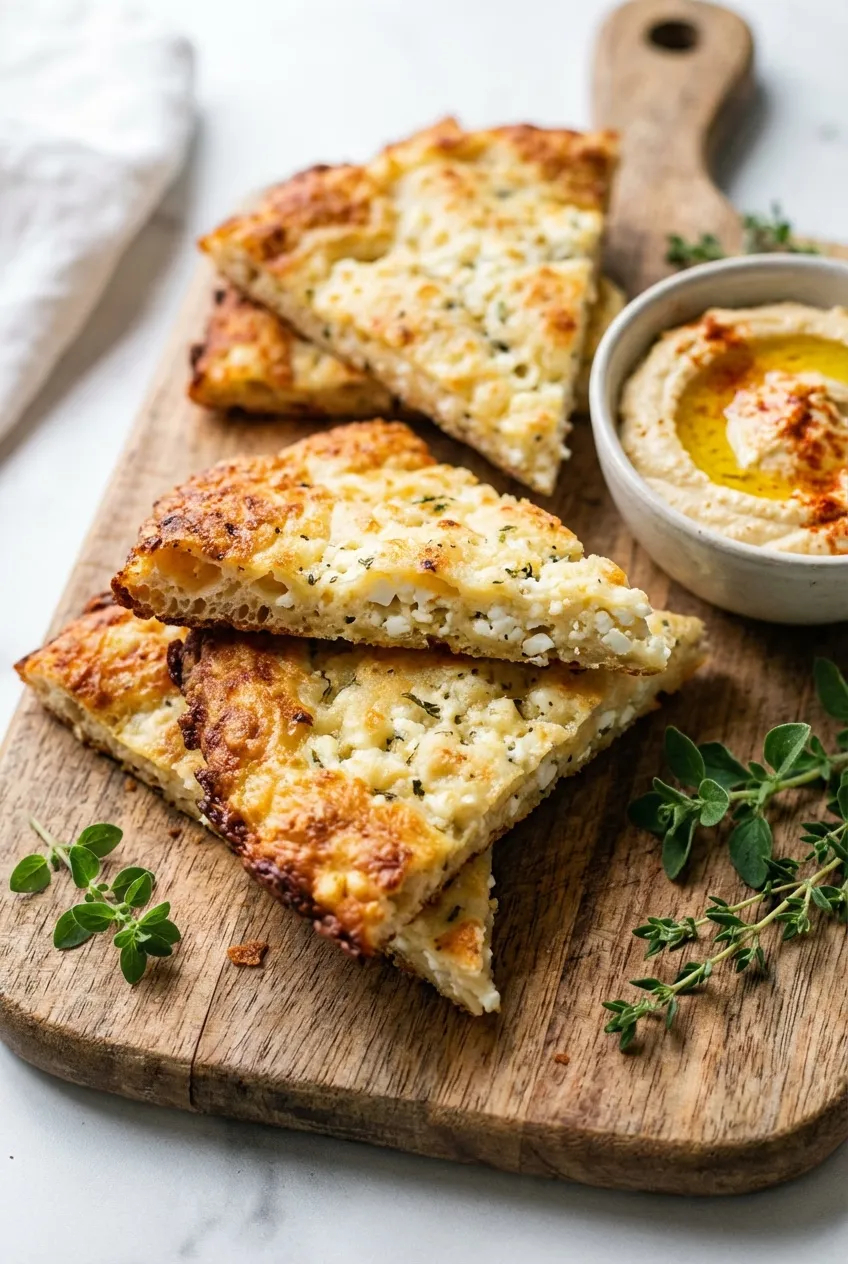
The Story Behind This Recipe
When I first heard about cottage cheese flatbread — this two-ingredient thing blowing up on every fitness influencer’s page — I’ll admit I was skeptical. I grew up in Mumbai where flatbreads are sacred. My mother made roti every single evening, the soft slap of dough between her palms the soundtrack of my childhood. My grandmother’s naan recipe involved a tandoor she’d had since before I was born. So the idea that you could blend cottage cheese and eggs together, pour it on a sheet pan, and call it flatbread? I needed convincing.
But then I made it. And something unexpected happened — it reminded me of the besan chilla my aunt used to make on Sunday mornings. Those savory chickpea flour pancakes that were crispy on the outside, tender inside, and packed with protein to fuel a whole day of playing in the courtyard. This cottage cheese flatbread hits the same notes: that golden, slightly crispy exterior, the satisfying density, the way it tears apart into pieces perfect for scooping up chutney or wrapping around fillings. The protein scientist in me was immediately hooked too — nearly 40 grams of protein from just cottage cheese and eggs, no flour, no gluten, no complicated ingredients.
What I’ve done is take that basic viral concept and season it the way I believe flatbread should be seasoned — with garlic, smoked paprika, and a touch of nutritional yeast that gives it an almost cheesy, savory depth. I’ve also tested every variable so you don’t have to: the right cottage cheese consistency, the exact oven temperature for crispy edges without a rubbery center, and the draining technique that makes the difference between a soggy mess and a beautiful, golden flatbread. This has become my go-to breakfast, my meal-prep staple, and the recipe I hand to every client who tells me they can’t hit their protein goals without choking down another chicken breast.
Before You Start
- Drain the cottage cheese if it’s watery. Different brands vary wildly in moisture content. If yours looks liquidy, pour it into a fine-mesh strainer and let it sit for 5 minutes. Excess moisture is the number one reason this recipe fails — it makes the flatbread soggy and prevents it from crisping.
- Use full-fat cottage cheese for best results. Full-fat (4%) gives the best flavor and texture. 2% works but produces a slightly drier flatbread. Fat-free is the leanest option but can taste rubbery — if using it, add an extra egg yolk.
- Blend until completely smooth. Any remaining cottage cheese curds will create uneven texture. Process for a full 30-45 seconds until the mixture is silky and pourable, like a thin pancake batter.
- Let it cool completely before cutting. The flatbread firms up significantly as it cools. Cutting it hot will leave you with a floppy, fragile mess. Patience is critical here.
- Parchment paper is non-negotiable. Even with cooking spray, the cheese proteins will bond to bare metal. Use parchment paper and lightly spray it. Silicone baking mats also work perfectly.
Instructions
Step 1: Preheat and Prepare
Preheat your oven to 350°F (176°C) with the rack in the center position. Line a quarter sheet pan (9x13 inches) or a standard half sheet pan (for thinner, crispier flatbread) with parchment paper. Lightly coat the parchment with non-stick cooking spray or brush with a thin layer of olive oil.
Step 2: Blend the Batter
Add the cottage cheese, eggs, garlic powder, Italian seasoning, onion powder, smoked paprika, black pepper, salt, and nutritional yeast (if using) to a food processor or high-powered blender. Process for 30-45 seconds until the mixture is completely smooth with no visible curds. Scrape down the sides once and blend again for another 10 seconds. The consistency should resemble a slightly thick crepe batter — pourable but not watery.
Step 3: Pour and Spread
Pour the batter onto the prepared sheet pan. Using an offset spatula or the back of a spoon, spread the mixture into an even layer approximately 1/4 inch thick. The thinner you spread it, the crispier the result. For a quarter sheet pan, the batter will naturally be thicker and yield a softer, more bread-like flatbread. For a half sheet pan, you’ll get a thinner, cracker-like crisp.
Step 4: Season the Top
Sprinkle a light dusting of dried oregano and a few cracks of black pepper across the surface. If you like heat, a pinch of red pepper flakes adds a nice kick. The seasonings will toast in the oven and become fragrant.
Step 5: Bake
Slide the pan into the center of the oven and bake for 30-35 minutes. The flatbread is done when the edges are deeply golden brown, the center is set and no longer jiggles, and the top has developed golden spots across its surface. If you want extra crispy edges, switch to the broiler for the last 2-3 minutes — but watch it carefully, as it can burn quickly. The flatbread should feel firm when you press the center lightly with your finger.
Step 6: Cool and Finish
Remove the pan from the oven and let the flatbread cool completely on the pan — this takes about 15-20 minutes. As it cools, it will firm up and become easier to handle. Once cool, finish with a sprinkle of flaky sea salt. Carefully peel the flatbread off the parchment paper and transfer to a cutting board. Cut into squares, strips, or triangles — whatever suits your purpose.
Step 7: Serve
Serve the flatbread warm or at room temperature. It works beautifully as a wrap (fold fillings inside), a pizza base (top with sauce and cheese and broil), a sandwich bread, or simply torn into pieces for dipping in hummus, tzatziki, or chutney. The texture is firm enough to hold toppings but flexible enough to fold without cracking.
Ingredient Substitutions
| Ingredient | Substitute | Notes |
|---|---|---|
| Full-fat cottage cheese | 2% or fat-free cottage cheese | 2% works well with slightly drier results. Fat-free can be rubbery — add an extra egg yolk to compensate. |
| Whole eggs | Egg whites only (4 whites) | Reduces fat and calories but the flatbread will be less rich and slightly more fragile. Less golden color. |
| Garlic powder | Fresh minced garlic (1 clove) | Fresh garlic can burn in the oven. If using fresh, reduce oven temp by 10°F and watch closely. |
| Italian seasoning | Za’atar, taco seasoning, or everything bagel mix | Each creates a completely different flavor profile. Za’atar with a drizzle of olive oil is exceptional. |
| Nutritional yeast | Parmesan cheese (1 tablespoon, finely grated) | Parmesan adds similar savory depth plus extra protein. Not vegan-friendly, but delicious. |
| Smoked paprika | Regular paprika or a pinch of cayenne | Smoked paprika adds warmth without heat. Cayenne adds actual spice — use sparingly (1/8 teaspoon). |
Chef’s Tips
- The draining step separates good from great. I cannot stress this enough — if your cottage cheese brand is wet, drain it. Pour it into a fine-mesh strainer, press gently with a spoon, and let the whey drip out for 5 minutes. This alone will transform your flatbread from rubbery to crispy.
- Go thin for wraps, thick for pizza. On a half sheet pan, the batter spreads thin and produces a crispy, pliable flatbread perfect for wrapping. On a quarter sheet pan, it stays thick enough to use as a pizza crust or sandwich bread. Both are delicious — choose based on your intended use.
- Add mix-ins directly to the batter. Finely chopped sun-dried tomatoes, fresh herbs like basil or cilantro, or a handful of shredded cheddar blended into the batter create endless variations. Keep add-ins finely chopped so they distribute evenly and don’t create weak spots.
- The broiler finish is a game-changer. Those last 2-3 minutes under the broiler create leopard spots of caramelization that add crunch and visual appeal. Set a timer and don’t walk away — the difference between beautifully spotted and burnt is about 30 seconds.
- Don’t skip the cooling time. I know it’s tempting to cut into it right out of the oven. Resist. The proteins need time to firm up as they cool. A hot flatbread will tear and crumble. A room-temperature flatbread will slice cleanly and hold its shape.
- Make it sweet for breakfast. Skip the garlic and Italian seasoning. Instead, blend in 1 tablespoon of honey, 1 teaspoon of cinnamon, and a splash of vanilla extract. Top with fresh berries and a drizzle of nut butter. Same protein, completely different meal.
Meal Prep & Storage
- Refrigerator storage: Cooked flatbread keeps in an airtight container or wrapped tightly in plastic wrap for up to 5 days in the fridge. Stack pieces between parchment paper to prevent sticking.
- Reheating: Toast in a dry skillet over medium heat for 1-2 minutes per side to re-crisp. The toaster oven also works well at 350°F (176°C) for 3-4 minutes. Avoid microwaving — it makes the flatbread rubbery and soft.
- Freezing: Freeze fully cooled flatbread pieces in a single layer on a sheet pan, then transfer to a freezer bag for up to 3 months. Reheat directly from frozen in a skillet or toaster oven — add an extra minute to the reheating time.
- Batch cooking: This recipe doubles and triples effortlessly. Make a week’s worth on Sunday, cut into portions, and store for grab-and-go breakfasts and lunches all week. Each serving delivers nearly 40 grams of protein with zero effort on busy mornings.
Pairing Suggestions
- Breakfast: Spread with mashed avocado, a fried egg, and a drizzle of hot sauce for a high-protein breakfast that clocks in at over 50 grams of protein. Everything bagel seasoning on the avocado is a must.
- Mediterranean wrap: Fill with hummus, cucumber, tomato, red onion, and a crumble of feta. A squeeze of lemon and a sprinkle of za’atar ties it all together. My personal favorite use for this flatbread.
- Pizza base: Top with tomato sauce, fresh mozzarella, and basil. Broil for 3-4 minutes until the cheese is bubbly and spotted. A drizzle of balsamic glaze finishes it perfectly.
- Tea: A warm cup of masala chai. The spice notes in the chai complement the garlic and paprika in the flatbread beautifully, and the warmth makes it feel like a proper morning ritual.
Frequently Asked Questions
Why is my flatbread rubbery instead of crispy? Three possible culprits: too much moisture in the cottage cheese (drain it), batter spread too thick (use a larger pan or less batter), or underbaking. The flatbread needs a full 30-35 minutes at 350°F (176°C) to develop proper texture. If the edges aren’t golden brown, it’s not done yet. The broiler finish also adds significant crispiness.
Can I use ricotta instead of cottage cheese? Ricotta works but produces a different result — denser, richer, and more Italian in character. It has less protein per cup than cottage cheese and more fat. If you use ricotta, drain it thoroughly in cheesecloth for at least 30 minutes, as it holds more water than cottage cheese.
How many calories and macros does this have? Using full-fat cottage cheese and 3 eggs, the entire recipe yields approximately 500 calories, 39 grams of protein, 28 grams of fat, and 10 grams of carbs. Split into two servings, that’s about 250 calories and 20 grams of protein per piece — or eat the whole thing for a 39-gram protein meal.
Can I add flour to make it more bread-like? You can add 2-3 tablespoons of almond flour or coconut flour to make it slightly thicker and more bread-like. This changes the macros, of course, but keeps it gluten-free. Oat flour works too if gluten isn’t a concern. Start with 2 tablespoons and increase gradually — too much flour makes it dense and cakey.
Is this actually good, or is it just a protein hack? I asked the same question before I made it. Here’s the truth: it’s not roti, it’s not naan, and it’s not sourdough. It’s its own thing — a crispy, savory, protein-dense flatbread that happens to taste really good when seasoned properly and cooked correctly. The key is the seasoning. Plain cottage cheese and eggs is boring. Add garlic, smoked paprika, nutritional yeast, and that broiler finish, and you’ve got something genuinely delicious that also happens to be nutritious.
Why does the batter need to be completely smooth? Cottage cheese curds that survive the blending process create pockets of different texture in the flatbread — some parts will be smooth and some will be lumpy and soft. A completely smooth batter ensures even cooking, consistent texture, and a better overall result. Blend for a full 30-45 seconds, scrape down, and blend again.