
The Story Behind This Recipe
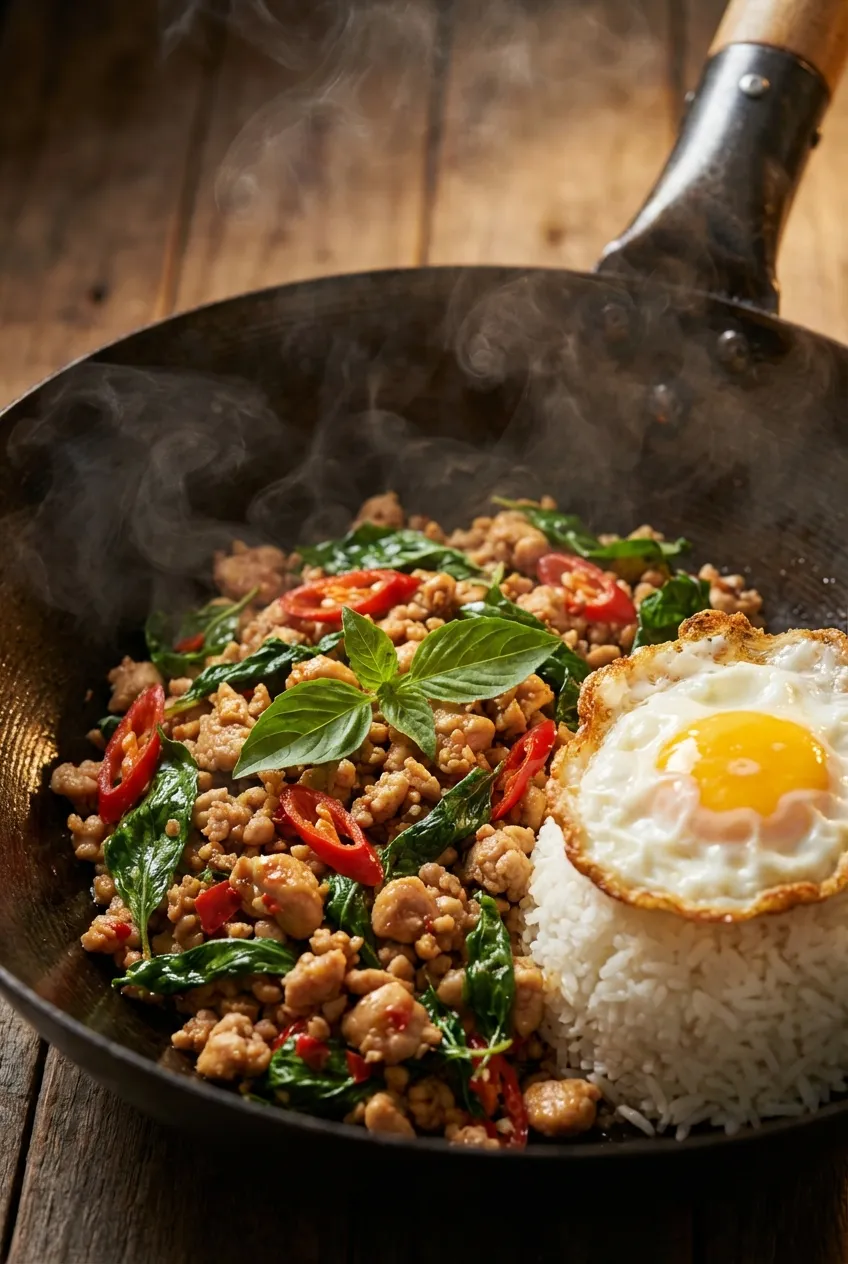
Growing up in my family’s restaurant in San Francisco’s Chinatown, the kitchen was always Cantonese-centric — wok hei was the gospel, and everything revolved around perfectly velveted proteins and razor-sharp vegetable cuts. But some of my most formative food memories came from sneaking away after our lunch service to eat at the Thai and Vietnamese spots scattered along Larkin and Eddy Streets in the Tenderloin. That was where I first tasted pad kra pao — real pad kra pao — spooned over broken jasmine rice with a fried egg so crispy at the edges it shattered when you poked the yolk. It was aggressive, aromatic, and completely addictive. One bite and I understood that great cooking is not about complexity. It is about conviction.
Years later, after graduating from CIA Hyde Park and staging at Narisawa in Tokyo, I found myself drawn back to that same directness. Japanese technique taught me restraint and respect for ingredients. Cantonese wok work gave me speed and instinct. But pad kra pao reminded me that sometimes the best dish is the one that hits you in the face with garlic, chilies, and holy basil in under fifteen minutes. My version draws on all three traditions: I use the high-heat wok technique I learned from my father, the disciplined mise en place drilled into me in culinary school, and the fearless seasoning I picked up eating my way through Bangkok’s street stalls during a three-week trip after Tokyo.
This is my go-to recipe when I want something fast, loud, and deeply satisfying. It is street food elevated just enough to feel intentional but not so much that it loses its soul. The fried egg on top is non-negotiable — the runny yolk mixing with the sauce and rice is what makes this dish transcendent. Make it spicy. Make it fast. Make it tonight.
Before You Start
- Have everything prepped and within arm’s reach before you heat the wok. This dish moves fast — the actual cooking takes under 10 minutes. Once the wok is hot, there is no time to stop and chop.
- Use the freshest Thai basil you can find. Holy basil (bai gra pao) is traditional and has a more peppery, clove-like flavor. Thai basil is more widely available and works beautifully. Regular Italian basil is not a substitute — the flavor profile is completely different.
- Do not lean away from the heat. You want your wok or skillet screaming hot. If you do not hear an aggressive sizzle when the chicken hits the pan, your pan is not hot enough. Pull everything off, let it reheat, and try again.
- Grind your own chicken for better texture. If you have a food processor, pulse 1.5 pounds of boneless, skinless chicken thighs 8-10 times until coarsely ground. Store-bought ground chicken tends to be too fine and can turn mushy.
- Fry the eggs separately and last. Trying to multitask the eggs and stir-fry simultaneously leads to overcooked eggs or undercooked chicken. Finish the stir-fry, set it aside, then give the eggs your full attention.
Instructions
Step 1: Prepare the Sauce
In a small bowl, whisk together the oyster sauce, dark soy sauce, light soy sauce, fish sauce, and sugar until the sugar dissolves completely. This takes about 30 seconds of vigorous stirring. Set the bowl right next to your stove — you will need to grab it quickly. The dark soy sauce adds color and a subtle maltiness; do not skip it or substitute regular soy sauce for it, as the finished dish will look and taste noticeably different.
Step 2: Prep All Aromatics and Vegetables
Finely mince the garlic — you want it almost paste-like so it melts into the oil and does not burn in chunks. Finely chop the Thai chilies; for moderate heat, use 4 chilies with seeds removed; for authentic Thai-level heat, use 6 chilies with seeds intact. Thinly slice the shallots. Dice the red bell pepper into even 1/2-inch pieces. Trim the green beans and cut them into 1-inch lengths. Wash and thoroughly dry the Thai basil leaves — wet basil hitting hot oil will splatter violently. Arrange everything in separate piles on a large cutting board or in small bowls, ordered by when they go into the wok.
Step 3: Cook the Stir-Fry
Heat a large wok or 12-inch carbon steel skillet over high heat until a drop of water evaporates on contact, about 2 minutes. Add 2 tablespoons of vegetable oil and swirl to coat the surface. The oil should shimmer immediately and produce faint wisps of smoke.
Add the garlic and chilies and stir constantly for 15-20 seconds until the garlic turns light golden and the chilies become fragrant. Do not let the garlic turn dark brown — it will taste bitter.
Add the ground chicken, breaking it apart with a spatula or the back of a ladle. Press the chicken flat against the hot surface of the wok and let it sear without stirring for 45-60 seconds to develop browning. Then break it apart and stir-fry for another 2-3 minutes until the chicken is cooked through with no visible pink remaining. The chicken should have some caramelized, slightly crispy edges — this is where the flavor lives.
Step 4: Add the Vegetables
Add the sliced shallots, diced bell pepper, and green beans to the wok. Toss and stir-fry for 2-3 minutes over high heat until the green beans are crisp-tender and the shallots are translucent. The bell pepper should still have some bite — you want texture contrast, not mush.
Step 5: Add the Sauce and Basil
Pour the prepared sauce over the chicken and vegetables. Toss everything vigorously for 30-45 seconds until the sauce coats every piece evenly and begins to reduce slightly — you will see it go from liquid to a glossy glaze clinging to the chicken.
Remove the wok from heat. Add all 2 cups of Thai basil leaves at once and toss them through the hot stir-fry for 10-15 seconds. The residual heat will wilt the basil just enough — it should still be vibrant green with a slight structure, not dark and slimy. If you leave the wok on the flame while adding the basil, it will overcook in seconds. Transfer the stir-fry to a serving bowl or divide among plates immediately.
Step 6: Fry the Eggs
Wipe the wok clean or use a separate small non-stick skillet. Add about 3 tablespoons of vegetable oil and heat over medium-high heat (approximately 375°F / 190°C) until the oil shimmers and a tiny drop of water pops on contact.
Crack one egg into the oil. The whites should immediately puff up and bubble aggressively at the edges — this is the signature Thai-style crispy fried egg. Let it cook undisturbed for 1.5-2 minutes until the whites are fully set and the edges are golden brown and lacy, but the yolk is still runny. Tilt the pan slightly and use a spoon to baste hot oil over the top of the egg white to set it without flipping. Remove with a slotted spatula and place on a paper towel briefly. Repeat for the remaining 3 eggs, adding a bit more oil between eggs if needed.
Step 7: Plate and Serve
Scoop a generous mound of steamed jasmine rice onto each plate. Spoon the Thai basil chicken alongside the rice — not on top, so the rice stays fluffy. Nestle a crispy fried egg on top of the chicken or rice. Serve immediately while everything is still hot. The yolk should break when pierced, creating a rich sauce that mingles with the spicy stir-fry and the rice beneath it.
Ingredient Substitutions
| Ingredient | Substitute | Notes |
|---|---|---|
| Ground chicken | Ground turkey, ground pork, or diced boneless chicken thighs | Pork is the most traditional alternative. If using diced thighs, cut into 1/2-inch pieces and increase cook time by 2-3 minutes. |
| Thai bird’s eye chilies | 1-2 serrano peppers or 1/2 teaspoon red pepper flakes | Serranos are milder. Red pepper flakes lack the fresh chili flavor but add heat. |
| Thai basil | Italian basil (last resort) or a mix of basil and mint | Thai basil has an anise-like quality that Italian basil cannot replicate. Adding a few torn mint leaves gets closer. |
| Dark soy sauce | Regular soy sauce + 1/2 teaspoon molasses | Dark soy is thicker, sweeter, and adds caramel color. This approximation is not exact but functional. |
| Oyster sauce | Mushroom-based vegetarian oyster sauce or hoisin sauce | Mushroom sauce is the closest match. Hoisin is sweeter, so reduce sugar to 1/2 teaspoon. |
| Fish sauce | Soy sauce + a pinch of salt | You lose the funky umami depth, but the salt balance will be correct. Coconut aminos also work. |
| Shallots | 1 small yellow onion, thinly sliced | Shallots are sweeter and milder. Onion works but is sharper in flavor. |
| Green beans | Long beans (Chinese yard-long beans), snap peas, or broccolini | Long beans are traditional in many versions. Cut them into 1-inch pieces. |
Chef’s Tips
- Wok hei is everything. The smoky char you get from a blazing hot wok is what separates restaurant pad kra pao from a homemade version that tastes like a generic stir-fry. Get your wok as hot as your stove allows. On a home burner, this means preheating for a full 2 minutes before adding oil. If you have an outdoor wok burner, use it.
- Do not overcrowd the wok. If your wok is smaller than 14 inches, cook the chicken in two batches. Overcrowding drops the temperature and the chicken will steam and release liquid instead of searing. You want browning, not boiling.
- The basil goes in off heat. This is the most common mistake I see. Thai basil turns black and bitter when overcooked. Remove the wok from the flame, toss in the basil, and let residual heat do the work. Ten seconds is all it needs.
- Use a fish spatula for the eggs. The thin, flexible edge slides perfectly under a fried egg without tearing it. A regular spatula is too thick and will break the yolk before you even get it to the plate.
- Taste and adjust before plating. The sauce should be savory, slightly sweet, and salty with a background funk from the fish sauce. If it tastes flat, add a squeeze of lime juice — the acid will wake everything up without changing the flavor profile.
- Make it a rice plate, not a rice bowl. Serve everything on a flat plate so you can see the components. The visual contrast of green basil, golden egg, and glossy chicken against white rice is part of the experience.
Meal Prep & Storage
- Refrigerator storage: Store the stir-fry (without rice or egg) in an airtight container in the fridge for up to 3 days. The basil will darken slightly but the flavor holds up well.
- Reheating: Reheat in a hot wok or skillet over high heat for 2-3 minutes, tossing frequently. Add a splash of water or soy sauce if it looks dry. Avoid the microwave — it makes the chicken rubbery and kills the texture.
- Freezing: The stir-fry freezes well for up to 2 months without the basil. Thaw overnight in the fridge, reheat in a wok, and add fresh basil at the end.
- Meal prep strategy: Prep the sauce and chop all vegetables up to 2 days ahead. Store the sauce in a jar and the vegetables in separate containers. Cook fresh each night — it only takes 10 minutes with everything prepped.
- Rice tip: Cook a large batch of jasmine rice at the start of the week. Day-old rice actually works better here because it is drier and absorbs the sauce without getting soggy.
Pairing Suggestions
- Thai iced tea: The sweet, creamy tea is the classic pairing and helps cool the heat from the chilies. Brew strong black tea, add sweetened condensed milk, and pour over ice.
- Cucumber salad (Ajat): Thinly sliced cucumbers in rice vinegar with a pinch of sugar and sliced shallots. The cool, acidic crunch is the perfect counterpoint to the rich, spicy stir-fry.
- Tom Yum soup: Start the meal with a small bowl of hot and sour shrimp soup. The lemongrass and galangal aromatics set the stage for the bold flavors of the pad kra pao.
- Cold Singha or Chang beer: A crisp, light Thai lager served ice-cold cuts through the richness and refreshes the palate between bites.
Frequently Asked Questions
What is the difference between Thai basil and holy basil? Holy basil (bai gra pao) is the traditional herb for this dish — it has serrated-edge leaves, a more peppery flavor with notes of clove and cinnamon, and it wilts down more when cooked. Thai basil has smooth leaves, a stronger anise flavor, and holds its shape better. Both work beautifully. Most Thai restaurants in the US use Thai basil because holy basil is difficult to source. If you find holy basil at an Asian grocery store, grab it — it is the authentic choice.
How spicy is this dish? With 4-6 Thai bird’s eye chilies, this is genuinely spicy — roughly a 7 out of 10 on the heat scale. For a milder version, use only 2 chilies with seeds removed. For extreme heat, use 8 chilies with seeds intact or add a teaspoon of chili flakes. The fried egg and jasmine rice help temper the heat, so it is more manageable than it sounds.
Can I use chicken breast instead of ground chicken? You can, but the dish will be drier and less flavorful. Dark meat ground chicken (made from thighs) has more fat and stays juicier during the high-heat cooking. If you only have breast, dice it into very small 1/4-inch pieces rather than using pre-ground breast, and add an extra tablespoon of oil to the wok to compensate for the lower fat content.
Do I need a wok to make this? A wok is ideal because its shape concentrates heat at the bottom and allows you to toss ingredients efficiently. However, a 12-inch cast iron skillet or carbon steel pan works well too. The key is getting the pan extremely hot before adding oil. Avoid non-stick pans — they cannot handle the high temperatures needed for proper stir-frying and most are not safe above 500°F (260°C).
Can I make this vegetarian? Yes. Replace the chicken with 14 ounces of firm tofu, pressed and crumbled, or use 12 ounces of finely diced mixed mushrooms (shiitake and king oyster work well). Swap the oyster sauce for mushroom-based vegetarian oyster sauce, and use soy sauce in place of fish sauce. The technique stays exactly the same.
Why does my stir-fry end up watery? Three likely causes: your pan was not hot enough (the chicken released liquid instead of searing), you overcrowded the wok (steam builds up and pools), or your basil was wet when you added it. Make sure to dry the basil thoroughly, cook in batches if needed, and let the wok preheat until it is smoking before you start. Properly made, this dish should have a glossy sauce that clings to the chicken — not a pool of liquid at the bottom.