
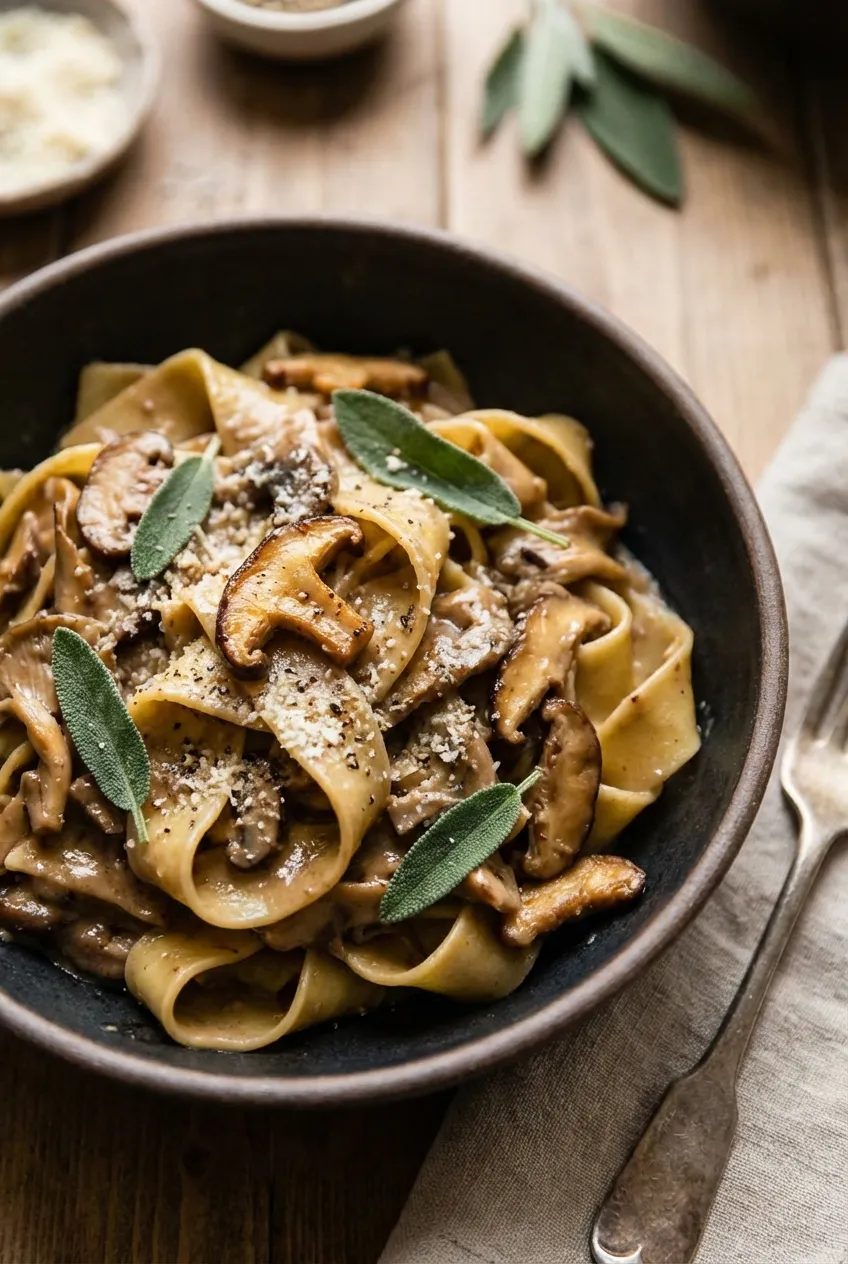
The Story Behind This Recipe
When my children were young and the house was full of noise and homework and muddy boots, pasta was the thing that held our evenings together. In Warsaw, my mother made a version of this with heavy cream and butter — a proper Polish approach to Italian comfort food, rich enough to silence a table of seven. I made it the same way for decades, and it never let me down.
But when my youngest daughter moved to Berlin and stopped eating dairy, I found myself standing at the stove one evening, cream in hand, realizing I did not know how to make her favorite pasta without it. That bothered me more than I expected. Food is how I tell my family I love them, and the idea that I could not feed my own daughter properly felt like a personal failure. So I started experimenting.
The cashew cream was the breakthrough. I had seen it in a magazine at the dentist’s office, of all places, and tried it that same week. The first batch was too thin. The second was gritty because I had not soaked the cashews long enough. But the third — the third was velvet. I added miso paste for that deep, savory quality that cream and butter provide, nutritional yeast for a hint of cheesiness, and a squeeze of lemon to brighten everything up. The mushrooms bring earthiness and body, and the sage — fried crispy in olive oil until it shatters between your teeth — adds an elegance that makes this feel far more special than a one-pot weeknight dinner has any right to feel. My daughter cried the first time I made it for her. We do not talk about that, but I keep making it.
Before You Start
- Soak the cashews first. Pour boiling water over raw cashews and let them sit for at least 30 minutes while you prep everything else. If you have a high-speed blender like a Vitamix, you can skip soaking — it will pulverize them smooth regardless. A regular blender needs the soak.
- Use a mix of mushrooms. A combination of cremini (for meatiness), shiitake (for depth), and oyster (for delicate texture) creates a more complex, interesting dish than any single variety alone. In a pinch, all cremini works fine.
- Do not wash your mushrooms. Wipe them clean with a damp paper towel. Mushrooms are like sponges — they absorb water, and wet mushrooms steam instead of sear.
- Have everything prepped and within reach. This is a one-pot recipe and it moves fast once you start cooking. Mise en place is your best friend here.
Instructions
Step 1: Make the Cashew Cream
Drain the soaked cashews and add them to a blender with the warm water, nutritional yeast, miso paste, lemon juice, salt, pepper, and nutmeg. Blend on high for 60 to 90 seconds until completely smooth and creamy — you should not feel any graininess when you rub a drop between your fingers. If it is too thick, add warm water one tablespoon at a time. The consistency should be like heavy cream. Set aside.
Step 2: Fry the Sage
Heat 2 tablespoons of olive oil in a large, deep skillet or Dutch oven over medium heat. Once the oil shimmers, add the sage leaves in a single layer. Fry for 45 to 60 seconds per side until they darken slightly, the edges curl, and the sizzling slows down — this means the moisture has evaporated and they are turning crispy. Transfer to a paper towel-lined plate and sprinkle with a pinch of salt immediately. They will crisp further as they cool. Reserve the sage-infused oil in the pan.
Step 3: Sear the Mushrooms
Increase the heat to medium-high. Add the remaining 1 tablespoon of olive oil and the vegan butter to the sage-infused oil already in the pan. Once the butter foams, add the sliced mushrooms in a single layer — work in batches if your pan is not large enough. This is critical: do not stir them for 3 to 4 minutes. Let them sit undisturbed until the bottoms are deeply golden brown. Then flip and cook the other side for 2 to 3 minutes more. The mushrooms should be caramelized and slightly shrunken, with a concentrated, savory flavor. Season with a pinch of salt.
Step 4: Build the Sauce Base
Push the mushrooms to one side of the pan and add the diced shallot to the cleared space. Cook for 2 minutes, stirring frequently, until softened and translucent. Add the sliced garlic and stir everything together for 30 seconds until fragrant.
Pour in the white wine (or broth) and scrape up any browned bits from the bottom of the pan with a wooden spoon — these fond bits are packed with flavor. Let the wine simmer for 1 to 2 minutes until reduced by about half.
Step 5: Cook the Pasta in the Pot
Pour in the 3 cups of vegetable broth and bring to a boil over high heat. Add the pasta, pushing it down into the liquid with tongs. Reduce heat to medium and cook, stirring every 2 to 3 minutes to prevent sticking, for 10 to 12 minutes or until the pasta is al dente and most of the liquid has been absorbed. The timing will vary by pasta shape — start checking 2 minutes before the package time.
Step 6: Add the Cashew Cream
Reduce heat to low. Pour in the cashew cream and stir gently to coat everything evenly. The sauce should be creamy, glossy, and clinging to the pasta. If it seems too thick, add a splash of broth or pasta cooking water. If too thin, let it simmer for another minute — it thickens quickly. Taste and adjust salt, pepper, and lemon juice as needed.
Step 7: Serve
Divide among warm bowls. Top each serving with the crispy fried sage leaves (crumble some and leave others whole), a crack of black pepper, a scattering of fresh parsley, and vegan parmesan if using. A pinch of red pepper flakes adds a nice warmth if you want it. Serve immediately — this pasta is best straight from the pot.
Ingredient Substitutions
| Ingredient | Substitute | Notes |
|---|---|---|
| Cashews | Raw sunflower seeds or silken tofu | Sunflower seeds: soak and blend the same way. Silken tofu: blend with the seasonings — slightly less rich but very creamy. |
| Pappardelle | Fettuccine, rigatoni, or any wide pasta | Wide shapes cling to the sauce best. Short tubes like rigatoni also work beautifully. |
| Mixed mushrooms | All cremini or all button mushrooms | Less complex but still delicious. Add a splash of soy sauce for extra umami depth. |
| White wine | Extra vegetable broth with 1 teaspoon white wine vinegar | You lose some complexity but the dish still works. |
| Nutritional yeast | 1 tablespoon white miso (extra) | Adds similar umami. The sauce will be less “cheesy” but still savory and rich. |
| Fresh sage | 1 teaspoon dried sage or fresh thyme | Dried sage works in the sauce but you lose the crispy garnish. Thyme is a lovely alternative. |
| Vegan butter | Extra olive oil | Slightly less rich, but the olive oil flavor works beautifully with the sage. |
Chef’s Tips
- Do not skip frying the sage. Crispy sage is not just a garnish — it is a flavor and texture element that transforms the dish. Raw sage is intensely herbal and slightly bitter; fried sage is delicate, nutty, and shatters on your tongue.
- Sear the mushrooms hard. The biggest mistake people make with mushrooms is crowding the pan and stirring too often. Mushrooms are 90 percent water — they need high heat and space to evaporate that moisture and develop deep caramelization. Be patient.
- The miso paste is the secret weapon. It adds a depth and savoriness (umami) that makes people think there is cheese or cream in the sauce. Do not skip it, even if it seems unusual in an Italian-inspired dish.
- Make extra cashew cream. It keeps for a week in the fridge and is incredibly versatile — use it as a base for other pasta sauces, soups, or creamy salad dressings.
- Finish with good olive oil. A drizzle of high-quality extra-virgin olive oil right before serving adds a fruity, peppery note that elevates everything.
Meal Prep & Storage
- Refrigerator storage: Store in an airtight container for up to 4 days. The pasta will absorb some sauce as it sits — add a splash of broth or plant milk when reheating.
- Reheating: Warm gently on the stovetop over medium-low heat with 2 to 3 tablespoons of vegetable broth, stirring frequently. Microwave works but stir halfway through.
- Freezing: The cashew cream freezes well on its own for up to 3 months. The finished pasta is best fresh — frozen noodles become soft and lose their texture.
- Batch cooking: Double the cashew cream and store the extra for future pasta nights. The mushroom searing step is the bottleneck — use two pans to speed things up.
- Crispy sage: Fry extra sage leaves and store in an airtight container at room temperature for up to 2 days. They lose crispness after that.
Pairing Suggestions
- Wine: A crisp, unoaked Chardonnay or a Pinot Grigio complements the earthy mushrooms and creamy sauce without competing. For red, a light Pinot Noir works beautifully.
- Side salad: A peppery arugula salad with shaved fennel, lemon juice, and a sprinkle of toasted pine nuts provides brightness and crunch against the rich pasta.
- Bread: Warm crusty sourdough or garlic-rubbed crostini for catching every last bit of sauce from the bowl.
- Soup starter: A simple roasted tomato soup or a clear vegetable broth with herbs makes an elegant first course before this hearty pasta.
Frequently Asked Questions
Can I make the cashew cream ahead of time? Yes, and I recommend it. Make a double batch and store it in a sealed jar in the fridge for up to 5 days. It thickens as it chills — just stir in a splash of warm water before using. This cuts your active cook time on busy nights.
I am allergic to nuts. Can I still make this creamy? Absolutely. Blend one block of silken tofu with the nutritional yeast, miso, lemon, and seasonings. It produces a remarkably creamy sauce with a slightly lighter body. Sunflower seeds also work — soak and blend the same way as cashews.
Why did my mushrooms turn soggy instead of crispy? Two common culprits: overcrowding and stirring too much. Mushrooms release a lot of water when heated — if they are packed together, they steam in their own liquid instead of searing. Cook in batches if needed, and let them sit undisturbed until golden on the bottom before flipping.
Can I use dried pasta shapes other than pappardelle? Yes. Fettuccine, tagliatelle, rigatoni, and penne all work well. The key is choosing a shape with surface area or ridges that the sauce can cling to. Spaghetti works but the sauce slides off more easily.
What is nutritional yeast and where do I find it? Nutritional yeast is a deactivated yeast sold as golden flakes, usually in the health food aisle or bulk section. It has a savory, slightly cheesy flavor that is popular in vegan cooking. Brands like Bragg and Bob’s Red Mill are widely available. It is not the same as brewer’s yeast or active baking yeast.
My sauce is too thick. How do I fix it? Add warm vegetable broth one tablespoon at a time, stirring between additions, until you reach your desired consistency. The cashew cream thickens as it cools and as the pasta absorbs liquid, so err on the side of slightly saucier than you think you need.