
The Story Behind This Recipe
People are always surprised when they learn that a Polish grandmother makes one of the most requested butter chickens in her family. But cooking has never respected borders — it respects curiosity, patience, and hunger, and I have all three in abundance. My introduction to Indian food came through my youngest son’s college roommate, a boy named Amir from Lahore who spent two Christmases at our home in Warsaw because his family was too far away. The first time he made butter chicken in my kitchen, using my pots, I stood beside him taking mental notes like I was back at the academy.
What struck me was how similar the technique was to what I already knew. Building a sauce from aromatics. Layering spice. Relying on slow heat and patience to develop depth. The base of butter chicken — onions softened in ghee, ginger and garlic bloomed until fragrant, tomatoes cooked down until they surrender their acidity — that is the same logic as my mother’s bigos or my aunt’s żurek. The spices were different, but the soul of the cooking was identical. Amir showed me how to marinate the chicken in yogurt and turmeric overnight so it stays impossibly tender, and he taught me that dried fenugreek leaves, crushed between your palms and added at the very end, are the single ingredient that separates homemade butter chicken from a restaurant version.
I have been making this in one pot ever since, because that is what I do — I find the path that creates the most flavor with the fewest dishes to wash. This version marinates the chicken for as little as twenty minutes or as long as overnight, builds the sauce in the same pot you sear the chicken in, and finishes in just over half an hour. I have fed this to friends from Delhi who asked for seconds, and to my Polish neighbors who now request it instead of pierogi. That, to me, is the highest compliment a recipe can receive.
Before You Start
- Marinate the chicken if you have time. Twenty minutes in the yogurt marinade is the minimum, but 4-12 hours in the refrigerator gives the yogurt time to tenderize the meat and let the spices penetrate deeply. Plan ahead if you can.
- Use chicken thighs, not breasts. Thighs stay juicy and tender even with extended cooking. Breasts dry out quickly in a simmering sauce and can turn chalky.
- Crush the fenugreek in your palms. Dried fenugreek leaves (kasuri methi) release their flavor when you rub them between your palms before adding them to the sauce. This small step makes a noticeable difference.
- Do not rush the onions. Finely diced onions cooked slowly until golden and soft form the foundation of the sauce. Undercooked onions give the sauce a raw, sharp taste.
- Have all spices measured before you start. The cooking moves quickly once the aromatics hit the pan, and burned garlic will ruin the entire pot.
Instructions
Step 1: Marinate the Chicken
In a large bowl, combine chicken pieces with yogurt, garam masala, turmeric, Kashmiri chili powder, and salt. Mix until every piece is evenly coated in the golden-orange marinade. Cover and refrigerate for a minimum of 20 minutes or up to 12 hours. The yogurt will tenderize the chicken while the spices bloom and penetrate the meat.
Step 2: Sear the Chicken
Heat a large Dutch oven or heavy-bottomed pot over medium-high heat. Add oil and one tablespoon of butter. When the butter foams and the foam subsides, add the marinated chicken pieces in a single layer — work in two batches if necessary to avoid crowding. Sear for 2-3 minutes per side until the exterior develops golden-brown spots. The chicken does not need to be cooked through — it will finish in the sauce. Transfer to a plate and set aside.
Step 3: Build the Aromatic Base
Reduce heat to medium. Add another tablespoon of butter to the same pot. Add diced onion and cook, stirring occasionally, for 6-8 minutes until soft, translucent, and beginning to turn golden at the edges. You should hear a gentle sizzle, not aggressive popping. Add garlic and ginger, stirring constantly for 45-60 seconds until the raw smell transforms into a warm, fragrant perfume that fills the kitchen.
Step 4: Create the Sauce
Add tomato paste and stir it into the onion mixture for 30 seconds — this concentrates the tomato flavor and removes the tinny raw taste. Pour in crushed tomatoes and stir well, scraping up any browned bits from the bottom of the pot. These fond bits are concentrated flavor. Let the tomato mixture simmer for 8-10 minutes, stirring occasionally, until the sauce thickens slightly and the raw tomato acidity mellows into a sweeter, rounder flavor. The oil may begin to separate at the edges — that is your sign the sauce base is ready.
Step 5: Simmer the Chicken
Return the seared chicken and any accumulated juices to the pot. Stir to coat every piece in the sauce. Reduce heat to medium-low, cover with a lid slightly ajar, and simmer for 15-18 minutes until the chicken is cooked through and fork-tender. The internal temperature should reach 165°F (74°C). Stir every 5 minutes to prevent sticking.
Step 6: Finish with Cream and Fenugreek
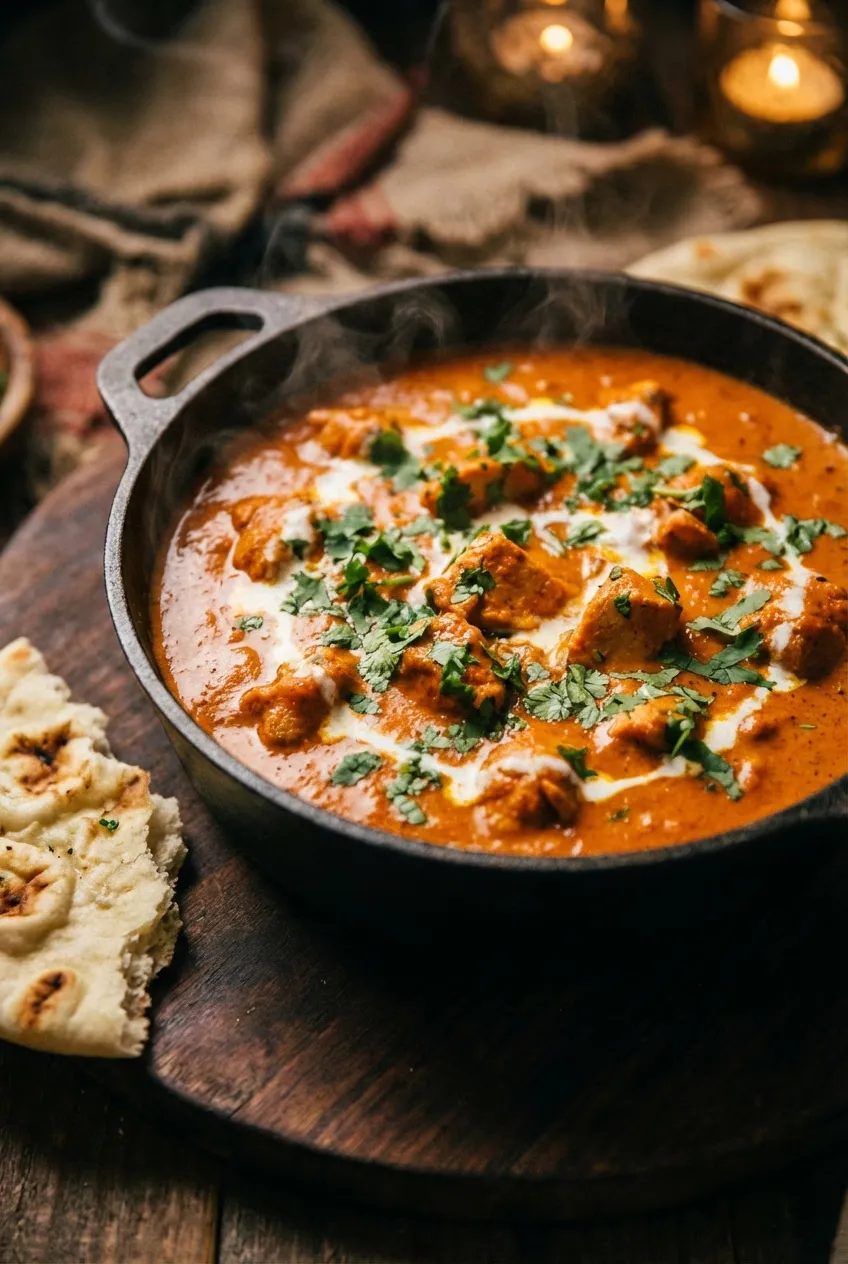
Remove the pot from heat. Stir in heavy cream, the remaining tablespoon of butter, and sugar. The sauce will transform from a deep red to a gorgeous burnt-orange color. Take the dried fenugreek leaves, crush them between your palms directly over the pot, and stir them in. The fenugreek adds a subtle maple-like earthiness that is the hallmark of authentic butter chicken. Taste and adjust salt and pepper. Return to low heat for 2-3 minutes just to warm everything through — do not let the cream boil or it may separate.
Step 7: Serve
Ladle the butter chicken into bowls over steamed basmati rice or alongside warm naan. Garnish with fresh cilantro leaves and a drizzle of cream if desired. The sauce should be velvety, rich, and cling to the back of a spoon. Serve with extra naan for scooping — this is not a dish for polite restraint.
Ingredient Substitutions
| Ingredient | Substitute | Notes |
|---|---|---|
| Chicken thighs | Chicken breast or paneer | Breast dries out faster — reduce simmer time by 5 minutes. Paneer makes it vegetarian. |
| Heavy cream | Full-fat coconut cream | Makes it dairy-free with a subtle sweetness; excellent alternative |
| Yogurt (marinade) | Coconut yogurt or buttermilk | Coconut yogurt for dairy-free; buttermilk adds tang but less tenderizing |
| Kashmiri chili powder | Sweet paprika + pinch of cayenne | Kashmiri chili is mild with vibrant color; paprika plus cayenne replicates both |
| Dried fenugreek | Extra pinch of garam masala | Not a perfect match, but adds complexity in the absence of fenugreek |
| Crushed tomatoes | 4 large fresh tomatoes, blanched, peeled, and crushed | Fresh tomatoes give a brighter, less concentrated sauce |
| Butter | Ghee | Ghee is more traditional and has a higher smoke point for searing |
Chef’s Tips
- Do not skip the sugar. It sounds strange in a savory dish, but one teaspoon of sugar balances the acidity of the tomatoes and rounds out the entire sauce. Without it, the sauce can taste flat or too sharp.
- Sear in batches for better browning. Crowding the pot with chicken causes the pieces to steam instead of sear, and you lose those flavorful browned spots. Two batches take an extra 4 minutes but make a significant difference in the final flavor.
- Make it ahead — it gets better overnight. Butter chicken is one of those rare dishes that tastes even better the next day after the spices have had time to meld. Make it on Sunday and reheat gently on Monday for an effortless dinner.
- Bloom the garam masala for extra depth. If you want a more intense spice flavor, toast the garam masala in the butter for 30 seconds before adding the onions. The heat releases the volatile oils and deepens the warm, aromatic quality.
- Adjust the heat to your preference. Kashmiri chili powder is mild. For more heat, add a finely minced serrano pepper with the garlic and ginger, or stir in a half teaspoon of cayenne with the cream.
Meal Prep & Storage
- Refrigerator: Store in an airtight container for up to 4 days. The sauce thickens as it cools — add a splash of water or cream when reheating.
- Freezer: Freezes beautifully for up to 3 months. Cool completely, transfer to freezer-safe containers, and leave half an inch of headspace for expansion. Thaw overnight in the refrigerator before reheating.
- Reheating: Warm gently over medium-low heat on the stovetop, stirring occasionally. Add a tablespoon of cream or water to restore the silky consistency. Avoid the microwave if possible — it heats unevenly and can cause the cream to break.
- Batch cooking: This recipe doubles easily. Use a larger pot and increase the simmer time by 5 minutes. Freeze half for a future weeknight rescue meal.
Pairing Suggestions
- Drink: A cold mango lassi or an off-dry Gewürztraminer, whose floral sweetness complements the warm spices beautifully.
- Side: Garlic naan or fluffy basmati rice — ideally both. A cucumber raita with mint cools the palate between bites.
- Salad: A simple kachumber salad of diced tomatoes, red onion, cucumber, and cilantro dressed with lemon juice adds freshness.
- Wildcard: Crispy papadums with mango chutney as a starter while the butter chicken simmers. The crunch and sweetness set the stage perfectly.
Frequently Asked Questions
Can I use chicken breasts instead of thighs? You can, but thighs are strongly recommended. Breast meat tends to dry out during the simmering stage and can turn chalky. If you must use breasts, cut them into larger pieces and reduce the simmering time in Step 5 to 10-12 minutes. Check for doneness at 165°F (74°C) and remove them promptly.
What makes this different from tikka masala? Butter chicken (murgh makhani) has a smoother, creamier, more butter-forward sauce with a mellow sweetness. Tikka masala tends to be spicier, tangier, and uses a different spice base. The addition of dried fenugreek and the finishing butter are what give butter chicken its distinctive character.
Is it supposed to be this orange? Yes. The combination of turmeric, Kashmiri chili powder, tomatoes, and cream creates a characteristic burnt-orange color. If your sauce looks pale, you may need more Kashmiri chili or a pinch of paprika for color. If it looks too red, add a bit more cream.
Can I make this in a slow cooker? Absolutely — and this is my preferred lazy-day method. Sear the chicken and build the sauce base on the stovetop through Step 4, then transfer everything to a slow cooker. Cook on low for 4-5 hours or high for 2-3 hours. Add the cream, butter, and fenugreek in the last 15 minutes.
How do I find dried fenugreek leaves? Look for them labeled as “kasuri methi” at Indian or South Asian grocery stores, or order online. They are inexpensive, shelf-stable, and last for months in an airtight container. There is no perfect substitute, so it is worth seeking them out — they are the secret ingredient.
My sauce is too thin. How do I thicken it? Simmer uncovered over medium-low heat for an extra 5-8 minutes before adding the cream. The tomato base should be thick enough to coat the back of a spoon before you stir in the cream. If it is still too thin after adding cream, a tablespoon of tomato paste stirred in will add body.