
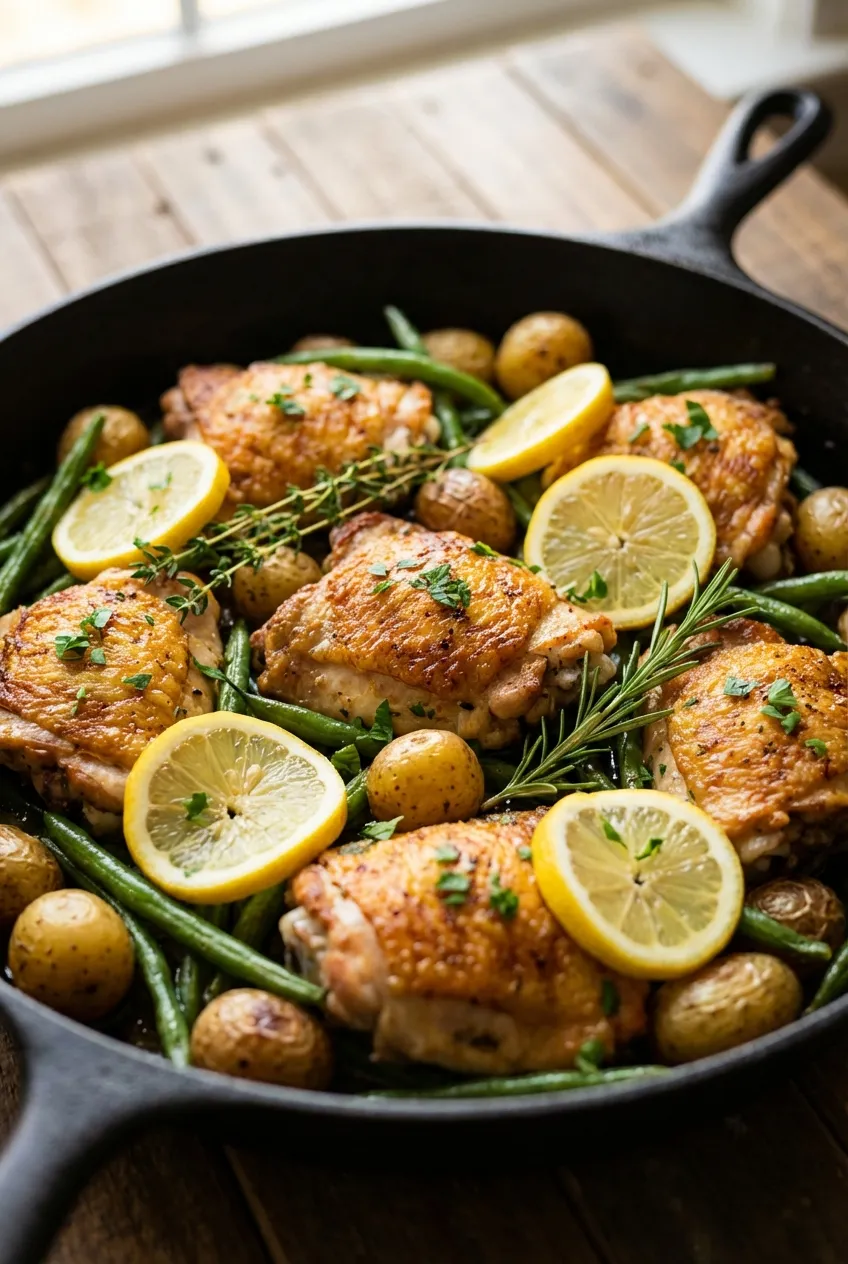
The Story Behind This Recipe
This dish takes me straight back to my grandmother’s kitchen in the Algarve region of Portugal. Every Sunday, she’d pull out her enormous cast iron skillet — the one with the wobbly handle she refused to replace — and fill it with whatever was fresh from the garden and the butcher that morning. Chicken thighs, always thighs, because she knew what every good cook knows: thighs are more forgiving, more flavorful, and far juicier than breasts.
The lemon trees in her yard produced fruit year-round, and she’d slice them thick, almost carelessly, and scatter them around the chicken so the juices would mingle with the drippings as everything roasted together. The house would fill with this incredible aroma — garlic, herbs, and that bright citrus cutting through the richness of the chicken fat. It was the kind of smell that pulled everyone into the kitchen before the food was even ready.
I’ve spent years refining this into a reliable weeknight recipe that captures that same magic. One pan. Minimal prep. Maximum flavor. It’s the dish I make when I want something that feels like a Sunday dinner but only takes 50 minutes on a Tuesday.
Before You Start
A few things that will set you up for success:
- Bring the chicken to room temperature. Pull the thighs out of the fridge 20–30 minutes before cooking. Cold chicken hitting a hot pan will steam instead of sear, and you’ll lose that gorgeous golden crust.
- Use an oven-safe skillet. A 12-inch cast iron skillet is ideal. If you don’t have one, a stainless steel oven-safe pan works too. Avoid non-stick — most aren’t rated for 425°F.
- Cut your vegetables evenly. This ensures everything cooks at the same rate. Baby potatoes should be halved (quartered if they’re on the larger side). Green beans should be roughly the same length.
- Read the full recipe once before starting. It moves quickly once the pan is hot.
Instructions
Step 1: Prep & Season the Chicken
Preheat your oven to 425°F (220°C) with a rack in the center position.
Pat the chicken thighs thoroughly dry on all sides with paper towels. This is the single most important step for crispy skin — don’t skip it. Press firmly and use multiple paper towels if needed. You want the surface as dry as possible.
In a small bowl, mix together the dried oregano, dried thyme, smoked paprika, 1 teaspoon of kosher salt, and ½ teaspoon of black pepper. Sprinkle this seasoning blend evenly over both sides of the chicken thighs, gently pressing it into the skin so it adheres.
Step 2: Prep the Vegetables
While the chicken comes to temperature, halve the baby potatoes and place them in a medium bowl. Trim the green beans and cut them into 2-inch pieces. Cut the onion into 6–8 wedges, keeping the root end intact so they hold together during roasting. Mince the garlic. Slice half the lemon into thin rounds (about ¼-inch thick) and set the other half aside for finishing.
Toss the potatoes and onion wedges with 1 tablespoon of olive oil, a pinch of salt, and a few grinds of pepper. Set the green beans aside — they’ll go in later since they cook faster.
Step 3: Sear the Chicken
Heat the remaining 1 tablespoon of olive oil in a 12-inch oven-safe skillet over medium-high heat until the oil just begins to shimmer (about 2 minutes). You should see faint wisps of smoke.
Carefully place the chicken thighs skin-side down in the pan. You should hear an aggressive sizzle — if you don’t, the pan isn’t hot enough. Don’t move the chicken once it’s down. Let it sear undisturbed for 5–6 minutes until the skin is deeply golden brown and releases easily from the pan. If it sticks, it’s not ready — give it another minute.
Flip the thighs and sear the other side for 2 minutes. Transfer the chicken to a plate and set aside. Leave the rendered fat in the pan — that’s liquid gold.
Step 4: Build the Pan
Reduce heat to medium. Add the seasoned potatoes and onion wedges to the skillet, tossing them in the chicken fat and pan drippings. Spread them into a single layer and let them cook for 3 minutes, stirring once, until they just start to pick up some color.
Add the minced garlic and red pepper flakes (if using) and stir for 30 seconds until fragrant. Scatter the green beans over the top. Nestle the lemon rounds among the vegetables.
Place the seared chicken thighs on top of the vegetables, skin-side up. The chicken should be sitting on the vegetables, not buried in them — this keeps the skin exposed to the oven’s dry heat so it stays crispy. Drop the tablespoon of butter in small pieces around the pan.
Step 5: Roast
Transfer the skillet to the oven and roast for 25–30 minutes. The chicken is done when:
- An instant-read thermometer inserted into the thickest part reads 165°F (74°C)
- The juices run clear when you pierce the thigh near the bone
- The skin is deeply bronzed and crackling
- The potatoes are fork-tender and golden at the edges
If the skin isn’t as crispy as you’d like, switch the oven to broil for the final 2–3 minutes. Watch it closely — it can go from perfect to burnt in seconds.
Step 6: Rest & Finish
Remove the skillet from the oven (remember — the handle is screaming hot, use a towel or oven mitt and leave it on so you don’t forget). Let the chicken rest in the pan for 5 minutes. This allows the juices to redistribute so they stay in the meat instead of running out onto the plate.
Squeeze the reserved lemon half over everything. Scatter the fresh parsley and dill (if using) over the top.
Step 7: Serve
Serve directly from the skillet — family style is the way to go. Place the pan on a trivet at the center of the table and let everyone dig in. The pan drippings mixed with the lemon juice and herbs make a natural sauce that’s incredible spooned over the potatoes.
Ingredient Substitutions
Don’t let a missing ingredient stop you from making this. Here are swaps that work:
| Ingredient | Substitute | Notes |
|---|---|---|
| Chicken thighs | Bone-in drumsticks | Increase cook time by 5–10 min. Boneless thighs work too — reduce oven time to 18–20 min. |
| Baby potatoes | Yukon Gold, cut into 1-inch chunks | Red potatoes also work. Avoid russets — they’ll fall apart. |
| Green beans | Asparagus, broccolini, or snap peas | Add asparagus/snap peas halfway through roasting to avoid overcooking. |
| Fresh lemon | 2 tbsp bottled lemon juice + lemon zest | Won’t be quite as bright, but still good. |
| Dried oregano | Herbes de Provence or Italian seasoning | Use the same amount. |
| Smoked paprika | Regular paprika or a pinch of cayenne | You’ll lose the smokiness but gain a different warmth. |
| Fresh parsley | Fresh basil or cilantro | Basil leans Italian; cilantro adds a completely different (delicious) direction. |
| Butter | More olive oil or ghee | Butter adds richness; ghee gives the same effect and is dairy-free. |
Chef’s Tips
- Crispy skin secret: Dryness is everything. After patting with paper towels, you can even leave the thighs uncovered on a plate in the fridge for a few hours (or overnight). The cold, dry air of the fridge works wonders on the skin.
- Don’t crowd the pan. If your skillet is smaller than 12 inches, sear the chicken in two batches. Crowding drops the temperature and you’ll steam instead of sear.
- Use a meat thermometer. It takes the guesswork out entirely. Chicken thighs are safe at 165°F but are actually best at 175–180°F — the extra collagen in thigh meat keeps them juicy even at higher temps.
- Save those drippings. If you have leftover pan juices, save them in a jar in the fridge. They’re incredible for sautéing vegetables, making rice, or deglazing another pan later in the week.
- The broiler is your friend. If the skin isn’t as crispy as you’d like after roasting, 2 minutes under the broiler will fix it. Just don’t walk away.
Meal Prep & Storage
This recipe is a fantastic meal prep candidate:
- Storage: Let leftovers cool completely, then store in an airtight container in the fridge for up to 4 days.
- Reheating: Reheat in a 375°F oven for 10–12 minutes to keep the skin from getting soggy. The microwave works in a pinch, but you’ll sacrifice the crispy skin.
- Freezing: The chicken and vegetables freeze well for up to 3 months. Thaw overnight in the fridge and reheat in the oven. The potatoes may be slightly softer after freezing, but the flavor holds up beautifully.
- Batch cooking: This recipe doubles easily. Use a sheet pan instead of a skillet — sear the chicken on the stovetop first, then spread everything on a lined sheet pan for roasting.
Pairing Suggestions
- Wine: A crisp Vinho Verde or a dry Sauvignon Blanc pairs beautifully with the lemon and herbs. For red, try a light Pinot Noir.
- Side salad: A simple arugula salad with shaved parmesan and a lemon vinaigrette mirrors the brightness of the dish.
- Bread: Warm crusty bread or garlic bread for soaking up the pan juices is non-negotiable in my house.
- Grain bowl: Serve over couscous, orzo, or rice to stretch it further and catch every drop of sauce.
Frequently Asked Questions
Can I use chicken breasts instead? You can, but I’d strongly recommend against it for this recipe. Breasts dry out much faster at 425°F. If you must use them, reduce the oven time to 18–20 minutes and check the temperature early. Bone-in, skin-on thighs are far more forgiving and flavorful.
Can I make this on a sheet pan? Absolutely. Sear the chicken on the stovetop first for that crispy skin, then transfer everything to a parchment-lined sheet pan. You’ll lose the concentrated pan sauce, but it’s a great option when feeding a crowd.
My vegetables are done but the chicken isn’t. What do I do? Remove the vegetables to a bowl and tent with foil. Return the chicken to the oven until it hits temperature. This usually means the potatoes were cut too small or the chicken pieces were extra thick.
Can I add other vegetables? Yes! Cherry tomatoes (they burst and make a beautiful sauce), zucchini, bell peppers, and fennel all roast beautifully at this temperature. Just be mindful of cook times — add quicker-cooking vegetables halfway through.
Is this recipe gluten-free? Yes, as written this recipe is completely gluten-free. Just double-check your smoked paprika and any seasoning blends — some brands add anti-caking agents that contain wheat.