
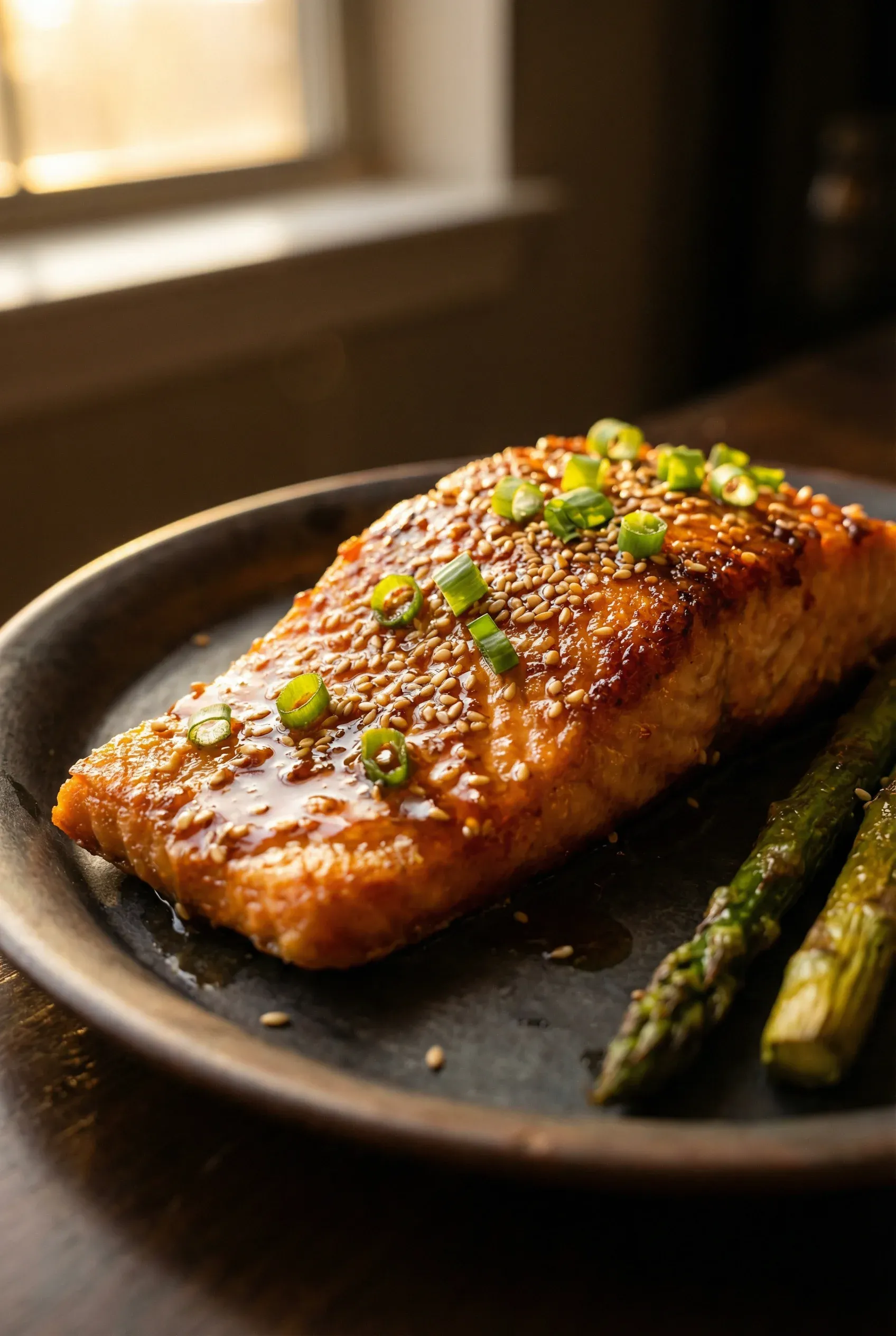
The Story Behind This Recipe
I first fell in love with crispy-skinned fish at my family’s restaurant in San Francisco’s Chinatown. My uncle had this almost supernatural ability to get fish skin so crispy it shattered like a chip, while the flesh underneath stayed silky and barely cooked through. He’d never explain it — just smiled and said “hot pan, dry fish, patience.” It took me years of burned fillets and soggy skin to figure out what he meant.
The honey garlic glaze is my own addition, born from a weeknight when I had exactly four ingredients in the pantry and needed dinner in twenty minutes. Honey, soy sauce, garlic, and a splash of rice vinegar — that’s all it takes to build a sauce with the kind of sticky, caramelized depth that makes people assume you’ve been cooking for hours. The sriracha crept in later because I can’t leave well enough alone, and now I can’t imagine this dish without that gentle heat hiding behind the sweetness.
This is the recipe I cook more than any other. It’s what I make when friends drop by unannounced, when I need to impress someone on a Tuesday, or when I just want something that feels like a restaurant dish without the restaurant effort. Twenty minutes, one pan, and that sizzle when the salmon hits the hot oil — that’s all you need.
Before You Start
- Pat the salmon completely dry. This is non-negotiable. Use paper towels and press firmly on every surface, especially the skin side. Moisture is the enemy of crispy skin.
- Use a stainless steel or cast iron skillet. Non-stick pans won’t get hot enough for a proper sear. You want the pan ripping hot.
- Mix the glaze ahead of time. Once the salmon is in the pan, things move fast. Have the honey, soy sauce, rice vinegar, garlic, ginger, and sriracha whisked together and ready to go.
- Bring salmon to room temperature. Pull fillets from the fridge 15 minutes before cooking. Cold fish in a hot pan causes the flesh to seize and cook unevenly.
- Check for pin bones. Run your finger along the center of each fillet and pull any bones out with tweezers or pliers.
Instructions
Step 1: Roast the Asparagus
Preheat your oven to 425F (220C). Spread the trimmed asparagus on a sheet pan, drizzle with 1 tablespoon of olive oil, and season with salt and pepper. Toss to coat evenly and arrange in a single layer. Roast for 10-12 minutes until tender-crisp with lightly charred tips. Set aside — the asparagus will stay warm while you cook the salmon.
Step 2: Prepare the Glaze
While the asparagus roasts, whisk together the honey, soy sauce, rice vinegar, minced garlic, grated ginger, and sriracha in a small bowl. Taste it — you want a balance of sweet, salty, and just a whisper of heat. Adjust by adding more honey for sweetness or more sriracha for kick. Set this next to the stove.
Step 3: Sear the Salmon Skin-Side Down
Heat 1 tablespoon of avocado oil in a 12-inch stainless steel or cast iron skillet over medium-high heat until the oil shimmers and you see the first wisps of smoke — about 2 minutes. Season the salmon fillets with salt and pepper on both sides.
Place the fillets skin-side down in the pan. You should hear an aggressive, immediate sizzle. If you don’t, the pan isn’t hot enough — take the fish out and wait another minute. Press each fillet down gently with a spatula for the first 10 seconds to prevent the skin from curling.
Cook undisturbed for 4-5 minutes. Do not move, poke, or peek under the fish. The skin will release naturally when it’s ready. You’ll see the salmon cooking from the bottom up — when it’s opaque about two-thirds of the way up the sides, it’s time to flip.
Step 4: Flip and Glaze
Flip the fillets carefully. The skin should be deeply golden and crackling. Cook the flesh side for 1 minute, then reduce heat to medium-low.
Add the butter to the pan. Once it melts and foams, pour the honey garlic glaze around (not directly on top of) the salmon. Let the sauce bubble and reduce for 2-3 minutes, spooning the glaze over the tops of the fillets repeatedly. The sauce will thicken into a glossy, sticky coating. The aroma will shift from sharp raw garlic to deep, nutty caramel — that’s your cue it’s ready.
Remove from heat when the internal temperature reaches 125-130F (52-54C) for medium, or 145F (63C) if you prefer well-done. The fish will carry over another 5 degrees while resting.
Step 5: Plate and Serve
Divide the roasted asparagus among four plates. Place a salmon fillet skin-side up on each bed of asparagus so the crispy skin stays exposed. Spoon the remaining pan sauce over the fish and asparagus. Sprinkle with sesame seeds and sliced green onions.
Serve immediately — crispy skin waits for no one.
Ingredient Substitutions
| Ingredient | Substitute | Notes |
|---|---|---|
| Salmon | Arctic char or steelhead trout | Similar fat content and texture. Reduce cook time by 1 minute for thinner fillets. |
| Honey | Maple syrup or agave nectar | Maple adds a deeper, earthier sweetness. Agave is thinner — reduce by 1 teaspoon. |
| Soy sauce | Tamari or coconut aminos | Tamari is gluten-free. Coconut aminos are sweeter — reduce honey by 1 teaspoon. |
| Rice vinegar | Apple cider vinegar or fresh lemon juice | Slightly sharper. Use the same amount. |
| Sriracha | Gochujang (1 tsp) or red pepper flakes (1/4 tsp) | Gochujang adds fermented depth. Red pepper flakes give heat without sweetness. |
| Asparagus | Broccolini, green beans, or bok choy | Broccolini roasts at the same temp and time. Bok choy can be sauteed in the same pan after the salmon. |
| Avocado oil | Grapeseed oil or vegetable oil | Any high smoke-point neutral oil works. Avoid olive oil — it will smoke. |
| Butter | Ghee or additional avocado oil | Ghee gives the same richness and is dairy-free. Oil works but the sauce won’t be as glossy. |
Chef’s Tips
- Score the skin for extra crispiness. Using a sharp knife, make 3-4 shallow diagonal cuts through the skin (not into the flesh). This prevents curling and creates more surface area for crisping.
- The spatula press is crucial. Those first 10 seconds of gentle pressure ensure full skin-to-pan contact. Uneven contact means some spots crisp while others stay flabby.
- Don’t pour glaze directly on the skin. Spoon it over the flesh side only. Getting the glaze under the skin will make it soggy and undo all your crispy work.
- Use residual heat wisely. Salmon continues cooking after you remove it from the pan. Pulling it at 125-130F gives you a perfect medium center by the time it hits the plate.
- Save the pan sauce. If there’s extra glaze left in the skillet, add a splash of water and stir over low heat to make a thin drizzle sauce. It’s incredible over rice.
- Upgrade with a torch. If you have a kitchen torch, a quick pass over the glaze after plating caramelizes the honey further and adds a smoky char that’s absolutely addictive.
Meal Prep & Storage
- Storage: Store leftover salmon and asparagus separately in airtight containers in the fridge for up to 3 days. Keep the sauce in a small jar.
- Reheating: Reheat salmon in a 300F (150C) oven for 8-10 minutes to warm through without overcooking. The skin won’t re-crisp perfectly, but the flesh stays tender. Alternatively, eat it cold — honey garlic salmon is surprisingly excellent straight from the fridge over a salad.
- Freezing: Cooked salmon freezes well for up to 2 months. Wrap individual fillets tightly in plastic wrap, then foil. Thaw overnight in the fridge. The texture will be slightly softer but the flavor holds beautifully.
- Batch cooking: Double the glaze and roast 8 fillets on a sheet pan at 425F (220C) for 12-15 minutes, brushing with glaze halfway through. You’ll sacrifice the stovetop crispy skin, but it’s an excellent trade-off for feeding a crowd or prepping the week.
Pairing Suggestions
- Drink: A dry Riesling or Grüner Veltliner complements the sweet-savory glaze without competing. For non-alcoholic, try sparkling water with a squeeze of yuzu or lime.
- Side: Steamed jasmine rice or coconut rice to soak up every drop of that sticky sauce.
- Vegetable: A quick cucumber salad with rice vinegar, sesame oil, and a pinch of sugar — the cool crunch contrasts the warm, rich salmon perfectly.
- Wildcard: Crispy shallots scattered over the top. Fry thinly sliced shallots in oil until golden, drain on paper towels, and use as a final garnish for an irresistible textural layer.
Frequently Asked Questions
How do I know when the salmon is done? The most reliable method is an instant-read thermometer — 125-130F for medium (slightly translucent center), 145F for well-done (fully opaque). Without a thermometer, press the thickest part gently with your finger. Medium salmon gives slightly, like pressing the base of your thumb. If it flakes apart easily, it’s well-done.
Why is my salmon skin not crispy? Three common reasons: the fish wasn’t dry enough, the pan wasn’t hot enough, or you moved the fish too soon. Pat aggressively with paper towels, wait for the oil to shimmer and smoke faintly, and do not touch the fish for a full 4-5 minutes after placing it in the pan.
Can I make this without the skin? Yes, but you’ll lose the textural contrast that makes this dish special. Without skin, sear the flesh side for 3 minutes per side and apply the glaze the same way. Consider adding a breadcrumb or panko crust for crunch.
Is this recipe gluten-free? It can be — just use tamari instead of regular soy sauce. Regular soy sauce contains wheat. Everything else in the recipe is naturally gluten-free.
Can I use frozen salmon? Ideally, thaw overnight in the fridge for the best texture. If you’re short on time, place the sealed fillets in a bowl of cold water for 30 minutes. Never microwave-defrost salmon — it partially cooks the edges and ruins the texture. Pat extra dry after thawing, as frozen fish releases more moisture.
What if my glaze burns? Honey burns quickly over high heat. If you see the glaze turning dark brown or smoking, immediately remove the pan from heat and add 2 tablespoons of water to stop the cooking. Stir to dissolve any stuck bits — they’ll add flavor. Next time, reduce heat to medium-low before adding the glaze.