
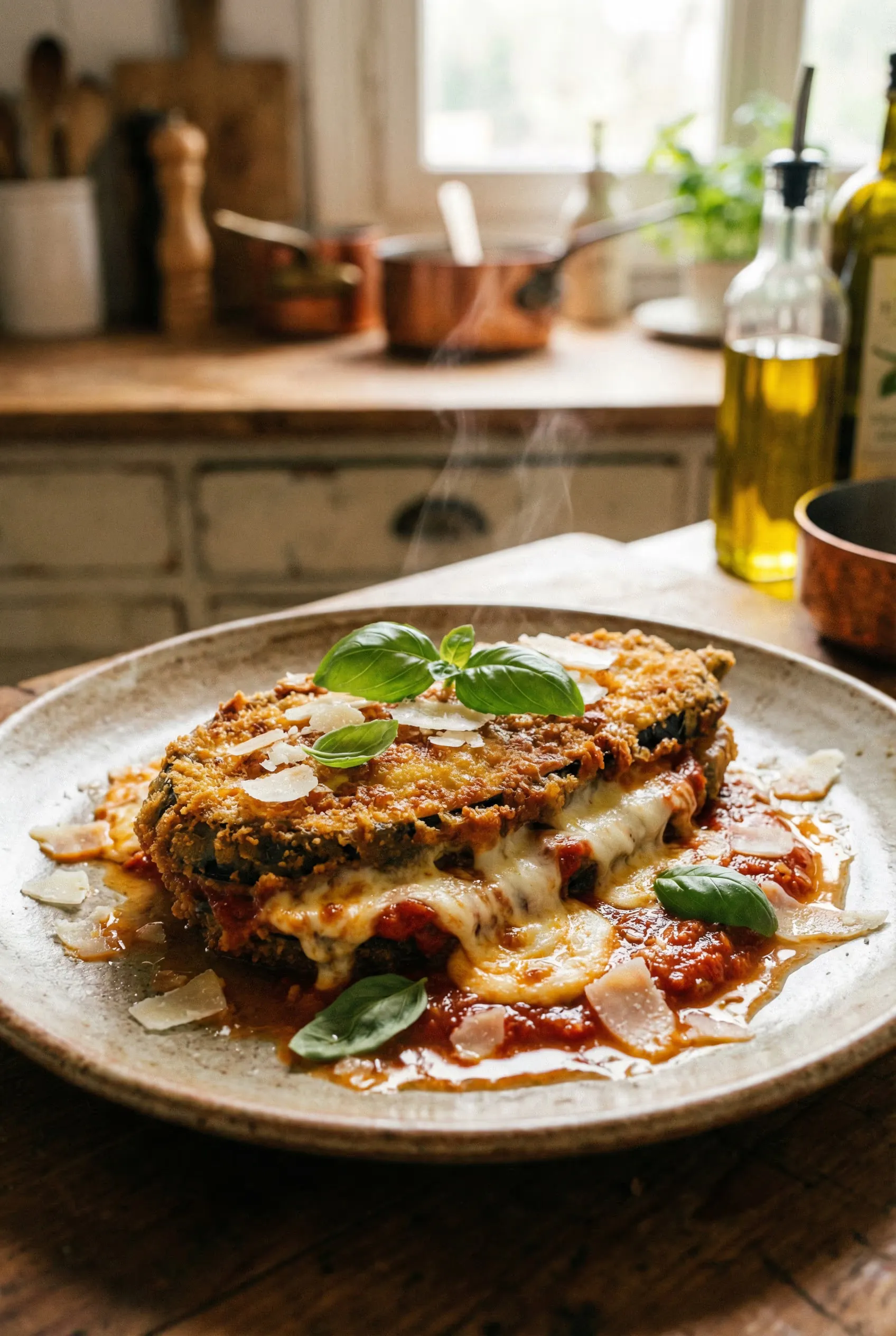
The Story Behind This Recipe
There is a small trattoria tucked into a side street in Rome’s Trastevere neighborhood — no sign, just a faded green door and the most extraordinary aroma of fried eggplant and bubbling cheese drifting into the alley. I stumbled upon it during my years cooking in Italy, and the melanzane alla parmigiana they served there changed everything I thought I knew about this dish. The eggplant was shatteringly crispy on the outside, impossibly silky within, and the marinara was nothing more than San Marzano tomatoes, garlic, olive oil, and time. It was perfect.
Back in Lisbon, working at Solmar, I spent months trying to recreate that experience. The secret, I discovered, was in the preparation of the eggplant itself. Most home cooks skip the salting step or rush it, and they end up with soggy, oil-logged eggplant that steams instead of crisps. Eggplant is a sponge — you must draw out the moisture before it ever touches oil. My grandmother in the Algarve always said, “You cannot rush the eggplant. It will tell you when it’s ready.” She was right. Forty-five minutes of salting transforms the texture completely.
This version honors what I learned in that Roman trattoria while adding the touches that years of cooking across the Mediterranean have taught me — a hint of cayenne in the breading, fresh mozzarella sliced thick enough to stay molten, and just enough marinara to bring everything together without drowning the crispy coating. It’s the dish I make when I want to remind people that vegetarian food is not a compromise. It’s a celebration.
Before You Start
- Salt the eggplant at least 45 minutes ahead. This step draws out bitter liquid and excess moisture, which is the single biggest factor in achieving crispy (not soggy) eggplant. Do not skip it.
- Use fresh mozzarella, not the shredded stuff. Pre-shredded mozzarella contains cellulose anti-caking agents that prevent proper melting. Slice fresh mozzarella into rounds and pat dry with paper towels.
- Set up a proper breading station. Three shallow bowls in a line — flour, beaten eggs, panko mixture — with a clean hand and a dirty hand designated. This keeps the process efficient and minimizes clumpy breading.
- Don’t drown it in sauce. One of the most common mistakes is using too much marinara between layers. The sauce should be a thin, flavorful glaze — not a soup. Too much liquid will steam the breading and destroy the crunch.
- Preheat your oven fully. Make sure the oven reaches 400°F (200°C) before the dish goes in. A fully preheated oven ensures the cheese bubbles and browns properly.
Instructions
Step 1: Salt and Drain the Eggplant
Slice the eggplants into even rounds, approximately half an inch thick. Discard the stem and end pieces. Arrange the slices in a single layer on a wire rack set over a sheet pan (or lay them on paper towels). Sprinkle kosher salt generously over both sides of each slice.
Let the eggplant sit for 45-60 minutes. You’ll see beads of brown liquid forming on the surface — that’s the bitter moisture being drawn out. After the time is up, use paper towels to blot each slice firmly on both sides, pressing down to remove as much liquid as possible. The slices should feel noticeably lighter and more pliable than when you started.
Step 2: Set Up the Breading Station
While the eggplant drains, prepare three shallow bowls or dishes. In the first, place the flour and season it with a pinch of salt and pepper. In the second, beat the eggs until smooth. In the third, combine the panko breadcrumbs with half a cup of the grated Parmesan, Italian seasoning, garlic powder, black pepper, and cayenne. Toss the panko mixture with your fingers to distribute the seasonings evenly.
Preheat your oven to 400°F (200°C) with racks in the upper and lower third positions.
Step 3: Bread the Eggplant
Working one slice at a time, dredge each eggplant round in flour (shake off the excess), dip it in the beaten egg (let the excess drip off), then press it firmly into the panko mixture, coating both sides completely. Press the panko into the surface so it adheres well — a solid, even coating is what creates that shattering crunch.
Place the breaded slices on a parchment-lined sheet pan. Continue until all slices are coated. Let the breaded eggplant sit for 5-10 minutes before frying — this brief rest helps the breading set and prevents it from falling off in the oil.
Step 4: Pan-Fry Until Golden
Heat half the olive oil in a large skillet (12-inch is ideal) over medium-high heat until it shimmers and a small piece of panko dropped in immediately sizzles and floats — about 350°F (175°C). Work in batches of 3-4 slices, being careful not to crowd the pan.
Fry each slice for 2-3 minutes per side until deeply golden brown and crispy. The sound should be a steady, confident sizzle — if it’s quiet, the oil isn’t hot enough. If it’s popping violently, reduce the heat. Transfer the fried slices to a wire rack set over a sheet pan to drain. Do not place them on paper towels or the bottom will steam and lose its crunch.
Add the remaining olive oil as needed between batches and allow the oil to come back to temperature before adding more eggplant.
Step 5: Assemble the Layers
Spread a thin layer of marinara sauce (about half a cup) across the bottom of a 9x13-inch baking dish. Arrange a single layer of fried eggplant slices over the sauce, overlapping slightly if needed. Spoon a thin layer of marinara over the eggplant — just enough to glaze, not drench. Scatter a third of the mozzarella slices and a few torn basil leaves over the top.
Repeat this layering process two more times: eggplant, thin marinara, mozzarella, and basil. On the final layer, top with the remaining mozzarella and sprinkle the rest of the Parmesan over everything.
Step 6: Bake Until Bubbly and Golden
Place the baking dish on the center rack and bake for 20-25 minutes at 400°F (200°C) until the cheese is melted, bubbly, and developing golden brown spots on top. The sauce should be visibly simmering around the edges.
If the cheese hasn’t browned enough after 25 minutes, switch the oven to broil and place the dish on the upper rack for 2-3 minutes, watching carefully. The cheese should be blistered and golden in patches.
Step 7: Rest and Serve
Remove the dish from the oven and let it rest for 10-15 minutes before cutting. This is critical — the resting period allows the layers to set so they hold together when sliced. If you cut too soon, the layers will slide apart and the sauce will run everywhere.
Scatter fresh basil leaves and chopped parsley over the top. Finish with a pinch of flaky sea salt and a drizzle of your best extra-virgin olive oil. Cut into generous squares and serve with a spatula, scooping from the bottom to keep the layers intact.
Ingredient Substitutions
| Ingredient | Substitute | Notes |
|---|---|---|
| Globe eggplant | Japanese or Chinese eggplant | Slice lengthwise into planks. These varieties have fewer seeds and thinner skin, so they cook faster — reduce frying time by 1 minute per side. |
| Panko breadcrumbs | Seasoned Italian breadcrumbs | Panko gives a crunchier, lighter texture. Italian breadcrumbs work but create a denser, more traditional coating. |
| Fresh mozzarella | Low-moisture mozzarella, sliced | Low-moisture melts and browns more evenly but has less creamy richness. Great if you prefer a firmer cheese layer. |
| Parmesan | Pecorino Romano or Grana Padano | Pecorino is sharper and saltier — reduce salt elsewhere. Grana Padano is milder and slightly sweeter than Parmesan. |
| Eggs (for breading) | Buttermilk or plant-based egg | Buttermilk creates an incredibly tangy, crispy crust. For vegan, use aquafaba or commercial egg replacer. |
| Olive oil (for frying) | Avocado oil or vegetable oil | Avocado oil has a higher smoke point and neutral flavor. The dish will taste slightly less Mediterranean. |
| Marinara | Canned crushed San Marzano tomatoes with garlic and basil | Simmer for 15 minutes and you have a quick, fresh-tasting sauce that works perfectly. |
Chef’s Tips
- The wire rack is your best friend. After frying, always drain eggplant on a wire rack, never on paper towels. Paper towels trap steam underneath, which turns the bottom of your crispy slices into a soggy mess within minutes.
- Don’t be shy with the salt sweating. I know 45 minutes feels like a long time, but this step is what separates good eggplant parmesan from extraordinary. The texture transformation is dramatic — the eggplant becomes denser, absorbs less oil during frying, and develops a creamier interior.
- Layer with restraint. The biggest mistake I see is drowning the layers in marinara. You want just enough sauce to bring flavor and moisture — about 2-3 tablespoons per layer, spread thin. The eggplant and cheese should be the stars, not swimming in tomato sauce.
- Make-ahead advantage. This dish actually improves when assembled and refrigerated overnight before baking. The flavors meld and the breading sets up even firmer. Add 10 minutes to the baking time if going straight from the fridge to the oven.
- Upgrade the breading. For an herbed crust, add 2 tablespoons of finely minced fresh rosemary or oregano to the panko mixture. Fresh herbs in the breading add a fragrance that dried herbs simply cannot match.
- Use the best olive oil for finishing. A drizzle of high-quality extra-virgin olive oil after baking adds a peppery, fruity note that ties the whole dish together. Save your finishing oil for moments like this.
Meal Prep & Storage
- Refrigerator storage: Cover tightly with foil or transfer to an airtight container. Keeps well for up to 4 days in the fridge. The flavors actually deepen overnight.
- Reheating: Preheat oven to 375°F (190°C) and reheat uncovered for 15-20 minutes until bubbling and heated through. For individual portions, a toaster oven at 350°F (175°C) for 10 minutes works perfectly. Avoid the microwave — it will destroy the crispy texture.
- Freezing: Assemble but do not bake. Wrap tightly in plastic wrap and foil, then freeze for up to 3 months. Bake directly from frozen at 375°F (190°C) for 45-50 minutes, covering with foil for the first 30 minutes to prevent the top from burning.
- Batch cooking: Double the recipe and assemble two dishes — bake one and freeze one. The fried eggplant slices can also be frozen individually on a sheet pan, then stored in freezer bags. Pull out as many slices as you need and assemble with fresh sauce and cheese.
Pairing Suggestions
- Wine: A medium-bodied Chianti Classico or Nero d’Avola complements the tomato and herbs beautifully. For white, try a crisp Vermentino or Pinot Grigio.
- Side salad: A peppery arugula salad dressed with lemon juice, shaved Parmesan, and a light olive oil vinaigrette cuts through the richness perfectly.
- Bread: Warm, crusty ciabatta or garlic bread is essential for soaking up the marinara that pools at the bottom of the dish. This is mandatory in my kitchen.
- Wildcard: Serve alongside a simple spaghetti aglio e olio for a truly indulgent Italian feast. The garlic and olive oil pasta provides a lighter counterpoint to the rich, cheesy eggplant.
Frequently Asked Questions
Do I really need to salt the eggplant? Can I skip this step? I strongly recommend against skipping it. Salting draws out the excess moisture and bitter compounds trapped inside the eggplant’s spongy flesh. Without this step, the eggplant will absorb significantly more oil during frying (becoming greasy rather than crispy), and it may retain a subtle bitterness that competes with the other flavors. Think of it as seasoning from the inside out. If you’re truly pressed for time, microwave the slices in a single layer for 3-4 minutes to accelerate moisture release, then blot thoroughly.
Can I bake the eggplant instead of frying it? Yes, you can bake the breaded slices on a wire rack set over a sheet pan at 425°F (220°C) for 20-25 minutes, flipping halfway through. Drizzle or spray the slices with olive oil before baking. The result will be lighter and less crispy than the fried version, but still delicious and significantly less labor-intensive. Using your oven’s convection setting dramatically improves the browning.
How do I prevent the layers from sliding apart when I cut it? Two things: first, let the dish rest for at least 10-15 minutes after baking. This allows the cheese to set slightly and the sauce to thicken. Second, use a sharp serrated knife to cut through the crispy layers without crushing them. If you assembled with restraint on the sauce (as I recommend), the layers should hold together beautifully.
Can I use canned eggplant or pre-sliced eggplant? I wouldn’t recommend it. Fresh eggplant gives you control over the thickness, the salting process, and the breading adhesion. Pre-sliced or canned eggplant will have a different texture and moisture content that makes it nearly impossible to achieve a crispy coating.
How do I know when the eggplant is properly salted and drained? After 45-60 minutes, you should see visible beads of brown liquid on the surface of the slices. When you press a paper towel against a slice, it should come away visibly damp. The slices will also feel noticeably more flexible and thinner than when you started. If you taste a small piece, it should not taste bitter at all.
Is this dish actually vegetarian? Yes, as written this recipe is fully vegetarian. Just verify that your Parmesan cheese is made with vegetable rennet rather than animal rennet if this distinction matters to you — many Italian Parmigiano-Reggiano brands use animal rennet. Grana Padano or a domestic Parmesan labeled vegetarian-friendly are good alternatives.