
The Story Behind This Recipe
I will tell you something that might surprise you — in Portugal, where I grew up, cabbage is not an afterthought. It is the backbone of some of our most beloved dishes. Caldo verde, the green soup of my childhood, is nothing more than potatoes, olive oil, and shredded cabbage cooked until silky. My grandmother made it three times a week, and no one ever tired of it. Cabbage, when treated with respect and patience, transforms from something crunchy and sharp into something impossibly tender and sweet.
So when I saw this “cabbage alfredo” trend spreading across the internet, I didn’t roll my eyes the way some of my colleagues did. I understood immediately. The principle is the same one my grandmother taught me forty years ago in our coastal kitchen — cook the cabbage low and slow until it surrenders its moisture and concentrates its natural sugars. What you’re left with are ribbons that feel almost like pasta themselves, silky and yielding, with a subtle sweetness that pairs beautifully with cream and Parmesan.
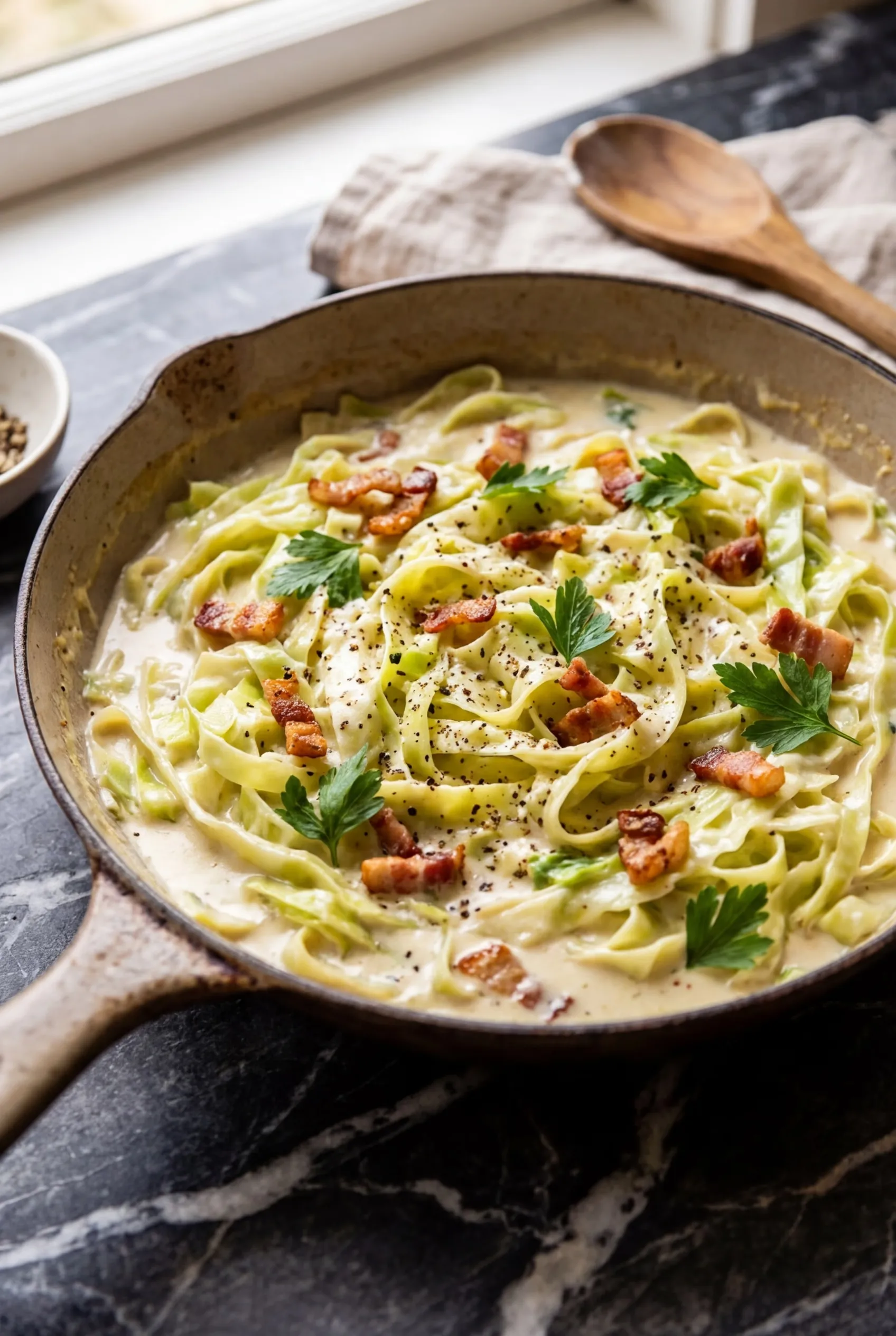
My version bridges the Portuguese soul of this technique with the Italian pantry I’ve worked in for the past decade. I cook the cabbage in rendered pancetta fat until it’s soft and lightly caramelized, then build a proper alfredo sauce around it — butter, garlic, cream, and real Parmigiano-Reggiano, never the stuff from the green can. A squeeze of lemon at the end brightens everything and keeps the dish from feeling heavy, even though it’s absolutely decadent. I toss it with fettuccine because the wide noodles catch the sauce and cradle the cabbage ribbons, but here’s the secret the internet doesn’t tell you: the cabbage-to-pasta ratio matters. You want enough cabbage that it feels like a co-star, not a garnish. This is a dish where the vegetable is the point, and the pasta is the vehicle.
Before You Start
- Slice the cabbage thin and uniform. You want ribbons about 1/4 inch wide — roughly the width of the fettuccine. This ensures they cook evenly and integrate seamlessly with the pasta. A sharp chef’s knife works better than a food processor here — the processor can bruise the cabbage and create uneven pieces.
- Use real Parmigiano-Reggiano and grate it fresh. Pre-grated Parmesan contains cellulose (an anti-clumping agent) that prevents it from melting smoothly into a cream sauce. You’ll end up with a grainy, broken sauce instead of the silky emulsion you want. Buy a wedge and grate it on a microplane right before using.
- Reserve your pasta water before draining. This starchy liquid is the secret to a glossy, cohesive sauce. Scoop out at least a full cup before you drain the fettuccine — you probably won’t use all of it, but you’ll be glad you have it.
- Have everything prepped before you start cooking. The sauce comes together quickly once the cabbage is done, and there’s no time to slice garlic or grate cheese mid-stream. Mise en place is your best friend here.
Instructions
Step 1: Render the Pancetta
Set a large, deep skillet or Dutch oven (at least 12 inches) over medium heat. Add olive oil and diced pancetta. Cook, stirring occasionally, for 6-8 minutes until the pancetta is golden brown and crispy and has rendered most of its fat. The kitchen will smell incredible — smoky, porky, and warm. Remove the crispy pancetta with a slotted spoon and set it aside on a paper towel-lined plate. Leave all the rendered fat in the pan — this is your flavor base.
Step 2: Cook the Cabbage Low and Slow
Add 2 tablespoons of butter to the rendered pancetta fat. When the butter melts and foams, add all of the sliced cabbage. It will look like an absurd amount — the pan will be overflowing. Don’t worry. Season with a generous pinch of kosher salt and toss to coat the cabbage in the fat.
Cook over medium heat, tossing every 2-3 minutes, for 12-15 minutes. The cabbage will wilt dramatically, reducing to about one-quarter of its original volume. It will go from pale green and crunchy to soft, translucent, and lightly golden at the edges. Some pieces will get a little caramelized and slightly browned — these are the best bites. You’ll notice the raw, sulfurous cabbage smell transform into something sweet and almost nutty. That’s when it’s ready.
Step 3: Cook the Fettuccine
While the cabbage cooks, bring a large pot of heavily salted water to a boil — it should taste like the sea. Add fettuccine and cook 1 minute short of the package directions (usually about 9-10 minutes). The pasta will finish cooking in the sauce. Before draining, scoop out at least 1 cup of the starchy pasta water and set it aside. Drain the fettuccine.
Step 4: Build the Alfredo Sauce
Push the wilted cabbage to the edges of the skillet to create a clearing in the center. Add the remaining 2 tablespoons of butter to the center. When it melts, add sliced garlic and red pepper flakes. Cook for 60-90 seconds, stirring constantly, until the garlic is fragrant and just barely turning golden — not brown. The garlic should smell toasty and sweet, not acrid.
Pour in the heavy cream and stir everything together, incorporating the cabbage back into the center. Bring the cream to a gentle simmer — you’ll see small, lazy bubbles at the edges. Simmer for 2-3 minutes until the cream thickens slightly and coats the back of a spoon.
Step 5: Bring It All Together
Reduce heat to low. Add the drained fettuccine directly to the skillet and toss vigorously with tongs, lifting the pasta high to help the sauce coat every strand. Add the grated Parmigiano-Reggiano a handful at a time, tossing continuously as you add it. The cheese will melt into the sauce, creating that signature silky, emulsified alfredo consistency.
Add pasta water, 2-3 tablespoons at a time, tossing between each addition, until the sauce reaches your desired consistency. It should be glossy and cling to the pasta without pooling at the bottom of the pan. Add the lemon juice and nutmeg. Season with salt and plenty of freshly ground black pepper. Toss once more.
Step 6: Serve
Divide the pasta among warm bowls (warming the bowls keeps the sauce from seizing up on contact). Top each serving with the reserved crispy pancetta, an extra shower of grated Parmigiano-Reggiano, chopped parsley, and a final crack of black pepper.
Serve immediately. This pasta waits for no one — the sauce will continue to thicken as it sits, and the magic of alfredo is in that first moment when it’s still glossy and flowing.
Ingredient Substitutions
| Ingredient | Substitute | Notes |
|---|---|---|
| Pancetta | Thick-cut bacon or guanciale | Bacon adds a smokier flavor that works well here. Guanciale is the most authentic Italian option and renders beautifully. For vegetarian, omit entirely and start with olive oil and butter — add a pinch of smoked paprika for depth. |
| Fettuccine | Pappardelle, tagliatelle, or rigatoni | Any wide, flat pasta or tube shape that catches sauce works well. Avoid thin pasta like angel hair — it doesn’t have enough surface area to hold the chunky sauce. |
| Heavy cream | Half-and-half or full-fat coconut cream | Half-and-half will produce a lighter sauce that’s less rich. Coconut cream makes it dairy-free (skip the Parmesan or use a vegan alternative) but adds a subtle coconut flavor. |
| Parmigiano-Reggiano | Pecorino Romano or Grana Padano | Pecorino is saltier and sharper — use about 3/4 of the amount. Grana Padano is the most similar to Parmigiano and works as a 1:1 swap. |
| Green cabbage | Savoy cabbage or napa cabbage | Savoy has more delicate leaves that cook down faster and have a milder flavor. Napa is even more tender and will need about half the cooking time — watch carefully. |
| Lemon juice | White wine vinegar | Same brightening effect. Use half the amount since vinegar is more acidic than lemon juice. |
Chef’s Tips
- Don’t rush the cabbage. This is the most important step. Underdone cabbage still has a raw, crunchy bite that fights with the silky sauce. You want it completely soft and slightly caramelized — when in doubt, cook it another 2-3 minutes. It should feel tender enough that it offers no resistance when you pinch a piece between your fingers.
- The lemon juice is essential. A squeeze of lemon transforms this dish from heavy to balanced. It cuts through the richness of the cream and Parmesan and makes the whole thing taste brighter and more alive. Don’t skip it — it’s the difference between a good alfredo and a great one.
- Warm your serving bowls. This sounds fussy but it matters. A cold bowl drops the temperature of the sauce instantly, causing the cheese to seize up and the sauce to become thick and clumpy instead of silky and flowing. Run the bowls under hot water for 30 seconds and dry them, or place them in a 200F (93C) oven for 5 minutes.
- Pasta water is your safety net. If the sauce looks too thick at any point, a splash of starchy pasta water will loosen it back up without diluting the flavor. Add it a tablespoon at a time and toss — you can always add more, but you can’t take it away.
- Save the Parmesan rind. If you have a Parmigiano-Reggiano rind, drop it into the cream while it simmers. It will release incredible umami flavor into the sauce. Fish it out before tossing with the pasta.
- Finish with your best olive oil. A drizzle of high-quality extra-virgin olive oil right before serving adds a fruity, peppery note that ties the Italian flavors together. Use the good stuff — you’ll taste the difference.
Meal Prep & Storage
- Storage: Leftovers keep in an airtight container in the fridge for up to 3 days. The sauce will thicken and absorb into the pasta as it sits — this is normal.
- Reheating: Reheat gently in a skillet over medium-low heat with a splash of cream or pasta water (if you saved some) to re-emulsify the sauce. Stir frequently and keep the heat low — high heat will cause the cheese to separate and become grainy. The microwave works in a pinch with a wet paper towel draped over the bowl, but the stovetop produces a far better result.
- Freezing: This dish does not freeze well. The cream sauce breaks when frozen and thawed, resulting in a grainy, separated texture. If you want to prep ahead, cook the cabbage and make the sauce separately, then freeze the cabbage portion (it freezes beautifully). Make fresh pasta and sauce when ready to serve.
- Batch cooking: Double the cabbage and pancetta components — they reheat well and can be used throughout the week as a base. Toss with fresh pasta and a quick cream sauce for a 15-minute dinner on busy nights.
Pairing Suggestions
- Wine: A crisp, unoaked Chardonnay or a Vermentino from Sardinia. The mineral freshness cuts through the cream, and the subtle fruit notes complement the sweet caramelized cabbage. Avoid heavy, oaky wines — they’ll fight the dish instead of complementing it.
- Side: Garlic bread with a thin, shattering crust. Nothing fancy — good bread, real butter, fresh garlic, and a hot oven. It’s the perfect vehicle for scooping up any sauce left in the bowl.
- Salad: A peppery arugula salad with shaved Parmesan, toasted pine nuts, and a simple lemon vinaigrette. The bitterness and acid balance the richness of the pasta beautifully.
- Wildcard: Roasted cherry tomatoes on the vine. Toss a bunch with olive oil and salt, roast at 400F (205C) for 15 minutes until they burst, and serve them alongside the pasta. The acidity and sweetness cut through the cream and add a pop of color to the plate.
Frequently Asked Questions
Does cabbage alfredo actually taste good, or is it just a weird internet trend? It tastes genuinely delicious — and I say that as someone who has been cooking Italian food for decades. The key is cooking the cabbage long enough that it loses all rawness and develops a sweet, almost nutty flavor. At that point, it integrates seamlessly into the cream sauce and actually adds body and texture that makes the dish more interesting than a standard alfredo. The internet got this one right.
Can I make this without pasta for a low-carb version? Absolutely. The cabbage-in-alfredo-sauce component is a complete dish on its own. Simply increase the cabbage to a full head (about 3 pounds) and double the sauce. The result is like a rich, creamy cabbage gratin that’s satisfying enough to be a main course without any pasta at all. Many people who’ve gone low-carb say this is their favorite comfort food swap.
My sauce broke and turned grainy. What went wrong? This usually happens for one of three reasons: the heat was too high when you added the cheese (always add Parmesan off or on very low heat), you used pre-grated Parmesan (the anti-clumping agents prevent smooth melting), or the sauce got too hot after the cheese was added. If it happens, remove from heat immediately, add a splash of cold cream or pasta water, and whisk vigorously. Often you can bring it back.
Can I use a different type of cabbage? Yes. Savoy cabbage has more delicate, crinkly leaves that cook down faster and have a milder flavor — it’s lovely in this dish. Napa cabbage works but cooks very quickly (about 6-8 minutes instead of 12-15) and has more moisture, so you’ll need to cook off the extra liquid before adding the cream. Red cabbage will work flavor-wise but will turn the sauce a purple-gray color that some people find unappealing.
Is this better with or without the pancetta? Both versions are excellent. The pancetta adds smokiness, crunch, and depth — it makes the dish feel more substantial and “finished.” Without it, the dish is lighter and lets the sweet cabbage and cream flavors shine more purely. For a dinner party, I’d include the pancetta. For a quick weeknight meal where I want something simple and soothing, I sometimes skip it and just use butter and garlic.
How do I prevent the pasta from getting gummy when I toss it with the sauce? Cook the fettuccine 1 minute short of the package time so it’s still slightly firm. It finishes cooking in the sauce, absorbing flavor as it does. When you add the pasta to the skillet, toss it vigorously with tongs — lifting it high above the pan — rather than stirring gently. This aerates the sauce and keeps it from clumping. And always keep pasta water nearby to loosen things up if the sauce starts to tighten.