
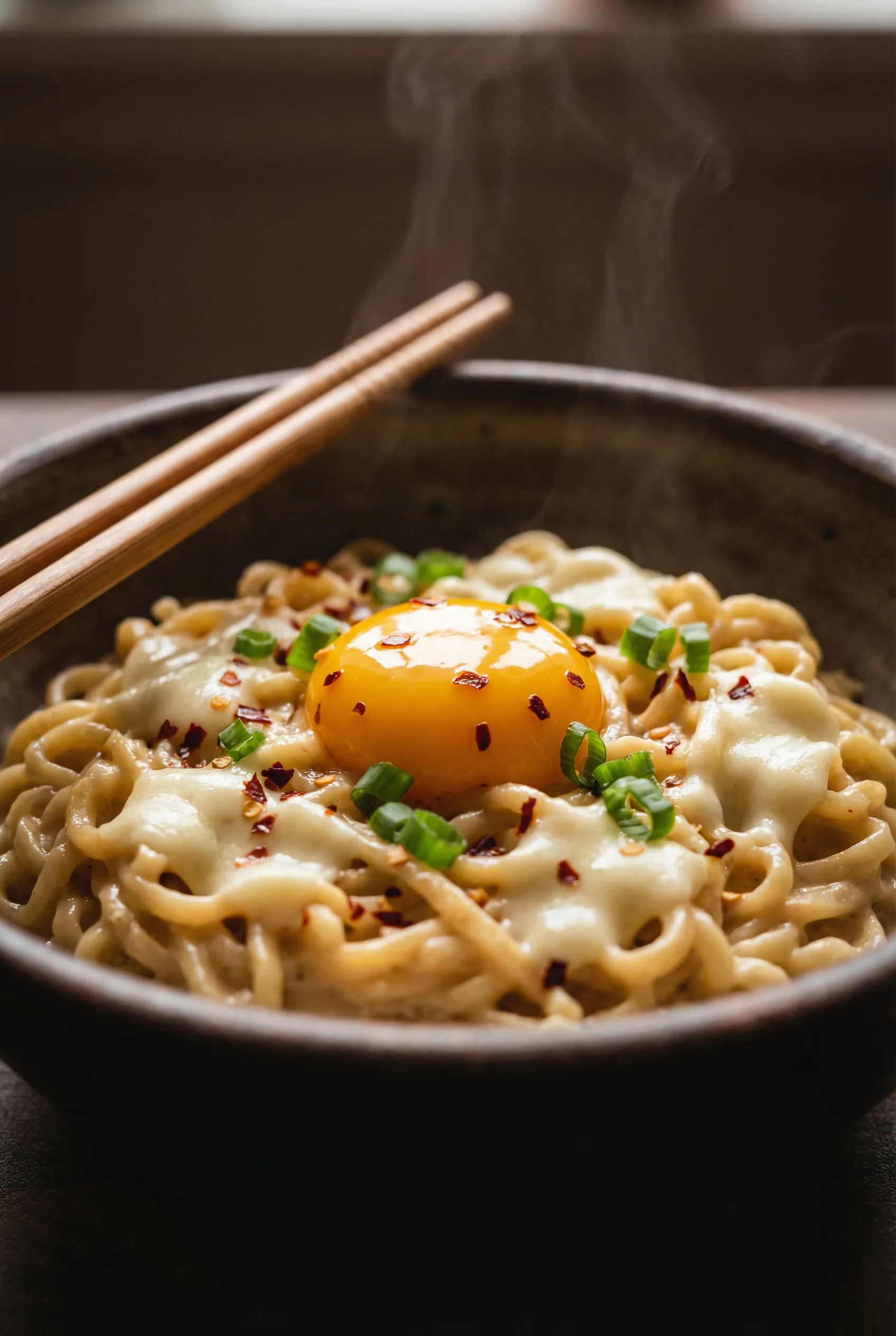
The Story Behind This Recipe
I grew up in my family’s restaurant in San Francisco’s Chinatown, and one of the things that shaped me as a cook was the neighborhood itself — this incredible collision of cultures where a dumpling shop sat next to an Italian deli, and the smells of char siu and fresh basil mingled on the same block. That’s where I first learned that the best food doesn’t respect borders.
This recipe was born from a late-night craving that turned into an obsession. I’d been experimenting with buldak noodles — those fiery Korean fire noodles that had taken over the internet — and I kept thinking about how the carbonara version already hinted at Italian flavors with its creamy cheese sauce. What if I took that further? What if I treated it like an actual carbonara, with a proper egg and cheese emulsion, rendered bacon fat, and that silky, cling-to-every-strand sauce that makes Roman pasta so legendary?
After dozens of late-night experiments in my kitchen, I landed on this version. It keeps the addictive heat and chewy bounce of buldak noodles but layers in the richness of a true carbonara — crispy bacon, a glossy egg yolk sauce, and two kinds of cheese that melt into something genuinely extraordinary. My stage at Narisawa in Tokyo taught me that restraint is key even when flavors are bold, and that principle guides every element of this dish. It’s fast, it’s loud, and it’s the kind of recipe that makes people put down their phones and pay attention.
Before You Start
- Room temperature eggs are essential. Cold egg yolks will seize when they hit the hot noodles and give you scrambled eggs instead of a silky sauce. Pull them out 20 minutes before cooking.
- Pre-measure everything. This recipe moves fast once the bacon is in the pan. Have your garlic minced, cheese grated, and egg mixture ready to go before you turn on the stove.
- Reserve that noodle water. Before draining the noodles, scoop out at least half a cup of the starchy cooking water. This is your secret weapon for building a smooth, emulsified sauce.
- Don’t use pre-shredded cheese. Pre-shredded cheese contains anti-caking agents that prevent it from melting smoothly. Grate your Parmesan fresh from a block for the best results.
Instructions
Step 1: Prepare the Carbonara Egg Mixture
In a medium bowl, combine the egg yolks, whole egg, Parmesan cheese, Kewpie mayonnaise, and black pepper. Whisk vigorously until the mixture is completely smooth and homogeneous — it should look like a thick, pale yellow paste. The mayonnaise acts as an emulsifier that helps the sauce stay creamy and prevents the eggs from curdling. Set this bowl aside within arm’s reach of the stove.
Step 2: Cook the Bacon
Place the bacon pieces in a cold, large skillet or wok (at least 12 inches) and set it over medium heat. Starting in a cold pan allows the fat to render slowly, giving you crispier, more evenly cooked bacon. Cook for 5-6 minutes, stirring occasionally, until the bacon is golden and crispy and the pan is coated in rendered fat. You should hear a steady, gentle sizzle — if it’s popping aggressively, reduce the heat slightly.
Remove the bacon with a slotted spoon and set it on a paper towel-lined plate. Leave the rendered bacon fat in the pan.
Step 3: Cook the Noodles and Toast the Garlic
While the bacon cooks, bring a medium pot of water to a rolling boil. Add the ramen noodle blocks (reserve all seasoning packets) and cook for 3-4 minutes, stirring occasionally to separate the strands. You want the noodles slightly firmer than al dente — they’ll continue cooking in the pan. Before draining, scoop out the reserved noodle cooking water and set it aside. Drain the noodles.
In the same skillet with the bacon fat, add the garlic over medium-low heat. Stir constantly for 30-45 seconds until the garlic is fragrant and just barely golden — the aroma should shift from sharp and raw to sweet and nutty. Do not let it brown past light gold or it will taste bitter.
Step 4: Build the Sauce
Add the drained noodles to the skillet with the garlic. Toss them in the bacon fat for 30 seconds to coat every strand. Add the contents of one carbonara sauce packet and the sesame oil, tossing continuously with tongs or chopsticks.
Now here’s the crucial moment: remove the pan completely from the heat. Add the egg and cheese mixture to the noodles along with a splash (about 3 tablespoons) of the reserved noodle water. Toss vigorously and constantly for 60-90 seconds. The residual heat will gently cook the eggs into a silky, glossy sauce that clings to every noodle. If the sauce looks too thick, add more noodle water one tablespoon at a time. If it looks too loose, return the pan to low heat for just a few seconds while tossing.
Scatter the mozzarella over the noodles and toss until it melts into stretchy, gooey strands — about 20-30 seconds.
Step 5: Finish and Serve
Add the butter and the reserved crispy bacon to the noodles, tossing until the butter melts and everything is combined. Taste and adjust — add more of the second seasoning packet if you want more heat, or more noodle water if you want a looser sauce.
Divide between two warmed bowls. Top each serving with green onions, gochugaru, a generous shower of extra Parmesan, and toasted sesame seeds. Serve immediately — this dish waits for no one, as the sauce will continue to thicken as it cools.
Ingredient Substitutions
| Ingredient | Substitute | Notes |
|---|---|---|
| Buldak carbonara ramen | Any instant ramen + 1 tbsp gochujang + 1 tbsp heavy cream | You’ll lose some of the signature buldak flavor, but it still works beautifully. |
| Bacon | Pancetta or guanciale | Guanciale is the traditional carbonara choice and adds incredible richness. Turkey bacon works for a lighter option. |
| Kewpie mayonnaise | Regular mayonnaise + pinch of MSG | Kewpie is richer due to using only egg yolks. Regular mayo works but the sauce will be slightly less silky. |
| Parmesan | Pecorino Romano | Traditional in Roman carbonara and adds a sharper, saltier bite. A 50/50 blend is ideal. |
| Mozzarella | Provolone or fontina | Both melt beautifully. Fontina adds a nuttier flavor. |
| Gochugaru | Aleppo pepper or crushed red pepper | Aleppo is the closest match for fruity, moderate heat. Crushed red pepper is sharper. |
| Egg yolks | 3 tbsp heavy cream (for egg-free) | You’ll lose the authentic carbonara texture but still get a creamy sauce. |
Chef’s Tips
- The off-heat technique is non-negotiable. Adding the egg mixture to a pan over direct heat will give you scrambled eggs in seconds. Removing the pan from the heat and using only residual warmth is the key to a velvety, emulsified sauce — this is the same principle behind authentic Roman carbonara.
- Use the second seasoning packet strategically. Buldak ramen comes with two packets. I use one in the main sauce and keep the second as a finishing drizzle for anyone who wants extra heat. It gives you control over the spice level.
- Upgrade your noodle texture. For even chewier noodles, cook them 30 seconds less than the package suggests and finish them in the pan. The starch on slightly undercooked noodles also helps the sauce emulsify better.
- Add a splash of pasta water, not cream. Starchy noodle water is what creates that glossy, restaurant-quality sauce. Cream makes it heavy and one-dimensional. The starch molecules act as tiny emulsifiers that keep the fat, eggs, and cheese in perfect suspension.
- Make it a complete meal. Wilt a handful of baby spinach or thinly sliced napa cabbage into the noodles during Step 4 for some greenery without changing the character of the dish.
Meal Prep & Storage
- Best eaten fresh. Like all carbonara, this dish is at its absolute peak the moment it’s finished. The sauce will thicken and the noodles will absorb moisture as it sits.
- Refrigerator storage: Store leftovers in an airtight container for up to 2 days. The texture will change — expect thicker, less silky noodles.
- Reheating: Add 2-3 tablespoons of water or chicken broth to a skillet over medium-low heat. Add the noodles and toss gently for 2-3 minutes until heated through and the sauce loosens. Do not microwave — it will turn the eggs rubbery.
- Not recommended for freezing. The egg-based sauce does not freeze well and will break upon thawing.
- Prep ahead: You can pre-cook the bacon, mix the egg-cheese blend, and grate the cheese up to a day ahead. Store separately in the fridge and bring the egg mixture to room temperature before using.
Pairing Suggestions
- Drink: An ice-cold Korean lager like Hite or Cass cuts through the richness and heat perfectly. For non-alcoholic, try a sparkling yuzu soda or cold barley tea.
- Side: Quick-pickled cucumbers with rice vinegar, sesame, and a pinch of sugar provide a crisp, refreshing counterpoint to the creamy noodles.
- Appetizer: Crispy gyoza or mandu (Korean dumplings) with a soy-vinegar dipping sauce make this feel like a complete Asian comfort food spread.
- Wildcard: A small bowl of kimchi on the side. The tangy, fermented crunch is the perfect palate cleanser between bites of rich, cheesy noodles.
Frequently Asked Questions
Is this really spicy? The carbonara version of buldak ramen is the mildest in the lineup at about 2,600 Scoville Heat Units — noticeably less intense than the original buldak flavor. Combined with the egg, cheese, and butter in this recipe, the heat is further tempered into a warm, pleasant tingle rather than a burn. If you’re sensitive to spice, start with half the seasoning packet and taste as you go.
Can I make this with regular ramen instead of buldak? Absolutely. Use any instant ramen you like and add 1 tablespoon of gochujang (Korean red pepper paste) plus 1 tablespoon of heavy cream to mimic the buldak carbonara flavor. The noodle texture will be slightly different, but the sauce technique works with any instant or fresh ramen noodle.
Why did my sauce turn into scrambled eggs? The pan was too hot when you added the egg mixture. The key is to remove the pan completely from the heat before adding the eggs, and to toss constantly so the heat distributes evenly. If this keeps happening, try pouring the cooked noodles into the bowl with the egg mixture instead of adding eggs to the pan.
Can I add vegetables to this? Yes — just keep them light so they don’t dilute the sauce. Baby spinach, thinly sliced scallions, corn kernels, or blanched broccolini all work well. Add heartier vegetables (like mushrooms) to the pan with the garlic in Step 3 so they have time to cook through.
What makes this different from just cooking the packet normally? Everything. The standard packet method has you boil the noodles and stir in the sauce powder, which gives you a one-note flavor and a sauce that’s more coating than emulsion. This recipe builds a proper carbonara — rendered bacon fat, a tempered egg-cheese emulsion, reserved starchy water for body, and layers of umami from Parmesan, mozzarella, and sesame oil. It takes the same noodles to an entirely different level.
Is Kewpie mayonnaise necessary? It’s not strictly necessary, but it makes a noticeable difference. Kewpie is made with only egg yolks (not whole eggs like American mayo) and contains MSG, which gives it a richer, more umami-forward flavor. It acts as an emulsifier that helps the sauce stay smooth and creamy. Regular mayo works as a substitute — just add a tiny pinch of MSG or a dash of soy sauce to compensate.