
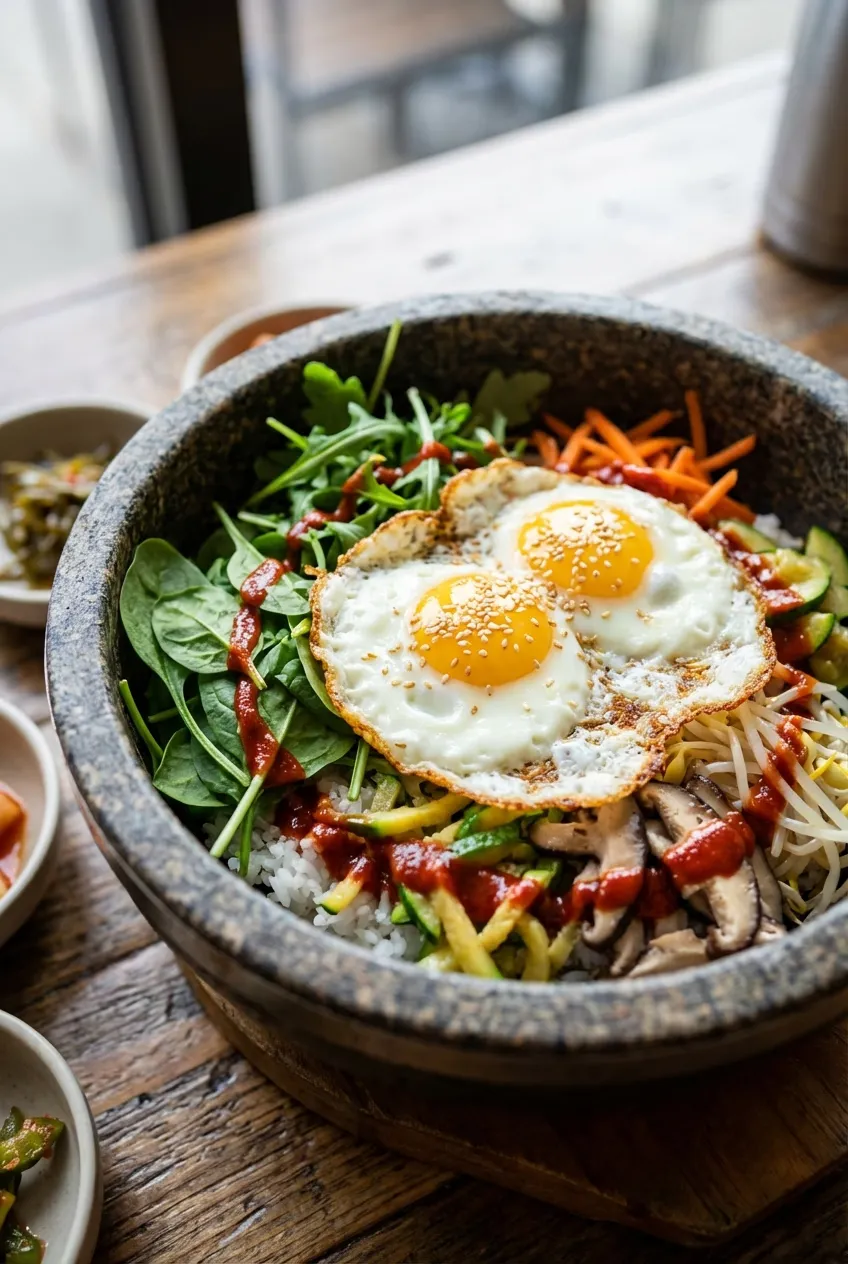
The Story Behind This Recipe
I first encountered bom-dong during a spring trip to Seoul’s Gwangjang Market — one of those trips where I told myself I was going for research, but really I just wanted to eat everything in sight. It was late March, that transitional moment when winter’s grip finally loosens and the first spring produce starts flooding the market stalls. A vendor was selling these impossibly tender, bright green cabbage leaves that looked like a cross between napa cabbage and butter lettuce. She called them bom-dong — literally “spring” plus “dong,” the neighborhood where they were first cultivated. I bought a bag, and she told me to make bibimbap with it. Nothing complicated, she said. Just tear the leaves, dress them simply, put them on hot rice with an egg.
That night in my rented apartment, I followed her advice and was completely floored. Bom-dong has this remarkable sweetness and crunch that regular cabbage can’t match — it’s almost juicy, with a mild peppery finish that plays beautifully against the heat of gochujang and the nuttiness of sesame oil. Growing up in my family’s restaurant in San Francisco’s Chinatown, I was trained in Cantonese and Japanese techniques, but Korean cuisine has always fascinated me because of how it balances raw freshness with bold fermented flavors. This bibimbap became my go-to spring ritual. Every year when the first tender greens appear at the farmers market, I make this bowl — it’s my way of welcoming the season. The recipe I’m sharing is the refined version after years of tinkering: a little rice vinegar for brightness, a touch of fish sauce for depth, and always a fried egg with edges so crispy they shatter when you break the yolk.
Back home in San Francisco, bom-dong is harder to find, so I use the innermost, most tender leaves of napa cabbage or even butterhead lettuce in a pinch. But if you can get your hands on the real thing — from a Korean market or a spring farmers market — the difference is unmistakable. This is the kind of dish that reminds you why eating with the seasons matters.
Before You Start
- Use warm rice, not hot. Freshly cooked rice that’s cooled for 5 minutes is ideal. Piping hot rice will wilt the greens too fast; cold rice won’t absorb the sauce properly.
- Prep all your vegetables before cooking. Bibimbap comes together fast once you start — have everything julienned, sliced, and measured before the first pan heats up.
- If you can’t find bom-dong, use the pale inner leaves of napa cabbage or butterhead lettuce. Avoid regular green cabbage — it’s too tough and peppery for this application.
- Get your egg game right. You want a crispy-edged fried egg with a runny yolk. That means hot oil and patience — don’t flip it. The yolk is your built-in sauce.
- Toast your sesame oil. Make sure you’re using toasted (dark) sesame oil, not regular sesame oil. The flavor difference is night and day.
Instructions
Step 1: Prepare the Spring Cabbage Dressing
In a medium mixing bowl, combine gochugaru, soy sauce, rice vinegar, sugar, minced garlic, toasted sesame oil, sesame seeds, and fish sauce if using. Whisk everything together until the sugar dissolves completely. Taste it — you should get a wave of sweet, salty, spicy, and tangy all at once. Adjust the vinegar or sugar by half-teaspoon increments if needed. Set aside.
Step 2: Prep and Dress the Bom-dong
Separate the bom-dong leaves and tear them into bite-sized pieces, roughly 2 to 3 inches across. Wash them thoroughly under cold running water 3 to 4 times — spring greens can hold grit — and drain well in a colander or spin dry in a salad spinner. Excess water will dilute your dressing. Add the torn leaves to the dressing bowl and toss gently with your hands, massaging the dressing into every leaf for about 30 seconds. The leaves should glisten and look vibrant red-orange. Set aside to marinate while you prepare the other components — the leaves will soften slightly and absorb the flavors.
Step 3: Blanch the Vegetables
Bring a medium pot of salted water to a rolling boil. Blanch the julienned carrot for 1 minute, then remove with a slotted spoon and transfer to an ice bath. Blanch the bean sprouts for 45 seconds — just until they lose their raw crunch but stay snappy — and transfer to the ice bath. Blanch the zucchini slices for 30 seconds and ice them immediately. Drain all the blanched vegetables thoroughly and pat dry with a clean kitchen towel. Season each vegetable lightly with a pinch of kosher salt and a few drops of sesame oil.
Step 4: Fry the Eggs
Set a non-stick or well-seasoned cast iron skillet over medium-high heat. Add vegetable oil and let it shimmer — you’ll see faint wisps of smoke, about 375°F (190°C). Crack the eggs directly into the pan, leaving space between them. Let them cook undisturbed for 2 to 3 minutes until the whites are fully set and the edges are golden brown and lacy, almost like a thin crisp. The yolks should still be completely runny — jiggle the pan to check. If the oil is splattering too aggressively, lower the heat slightly. Remove the eggs with a thin spatula and set them on a plate.
Step 5: Assemble the Bibimbap
Divide the warm rice between two bowls. Arrange the dressed bom-dong leaves on one section of the rice. Place the blanched carrots, bean sprouts, and zucchini in separate neat piles around the bowl — think of it as a clock face with each vegetable getting its own wedge. Drop gochujang in the center of each bowl. Top each bowl with a fried egg. Scatter torn seaweed strips and an extra sprinkle of sesame seeds over the top.
Step 6: Mix and Devour
This is the most important step. Take your spoon and break the yolk — watch that golden liquid cascade over the rice and vegetables. Now mix everything together aggressively. You want every grain of rice coated in that combination of runny yolk, spicy gochujang, and the bright sesame-chili dressing from the bom-dong. The beauty of bibimbap is in the mixing. Eat immediately while the rice is warm and the egg yolk is still flowing.
Ingredient Substitutions
| Ingredient | Substitute | Notes |
|---|---|---|
| Bom-dong (spring cabbage) | Inner napa cabbage leaves or butterhead lettuce | Napa is closest in texture. Butterhead works for a milder version. Avoid regular cabbage. |
| Gochujang | Sriracha mixed with 1 teaspoon miso paste | Not identical, but gives you heat and fermented depth. Use a 2:1 ratio of sriracha to miso. |
| Gochugaru | Aleppo pepper flakes or mild red pepper flakes | Aleppo has a similar fruity heat. Standard red pepper flakes are hotter — use half the amount. |
| Short-grain rice | Sushi rice or medium-grain calrose rice | Any sticky, slightly starchy rice works. Avoid long-grain like basmati — it won’t cling to the sauce. |
| Fish sauce | Extra 1/2 teaspoon soy sauce | Loses the umami depth but keeps the salt balance. |
| Bean sprouts | Shredded daikon radish or cucumber matchsticks | Both add crunch. Daikon brings a peppery bite; cucumber stays cool and refreshing. |
| Toasted sesame oil | Perilla oil (deulgirum) | Traditional Korean alternative with a nuttier, more herbaceous flavor. |
Chef’s Tips
- Don’t skip the massage. When you toss the bom-dong with the dressing, really work it in with your hands. This isn’t a gentle salad toss — the light pressure breaks down the cell walls just enough to let the seasoning penetrate while keeping that essential crunch intact.
- Make your rice a little wetter than usual. When cooking the rice, add about a tablespoon extra water per cup. Slightly softer rice absorbs the sauces better and creates that sticky, cohesive bite that makes bibimbap so satisfying.
- Fry the egg in sesame oil for extra flavor. Replace half the vegetable oil with toasted sesame oil when frying the eggs. The edges will get nuttier and more fragrant, and the aroma is incredible.
- Add a crispy rice layer. For the restaurant-style experience, press the warm rice into a hot stone bowl (dolsot) brushed with sesame oil and let it sit for 3-4 minutes before adding toppings. You’ll get that coveted golden, crunchy rice crust (nurungji) at the bottom.
- Build a protein upgrade. This recipe is vegetarian as written, but thinly sliced bulgogi beef or seasoned ground pork cooked with a splash of soy sauce and garlic makes it a heartier meal without changing the overall preparation time.
Meal Prep & Storage
- Rice: Cook a big batch and refrigerate for up to 4 days. Reheat with a splash of water in the microwave or steam for 2 minutes.
- Blanched vegetables: Store separately in airtight containers for up to 3 days in the fridge. They hold their texture well when cold.
- Dressing: Make a double or triple batch of the gochugaru dressing and refrigerate for up to 1 week. Whisk before using as the sesame oil may separate.
- Bom-dong: Do NOT dress the leaves ahead of time — they’ll wilt. Keep leaves washed, dried, and stored in a ziplock bag with a paper towel for up to 3 days. Dress immediately before serving.
- Assembly: Prep all components individually, then assemble fresh bowls in under 5 minutes for quick weeknight dinners.
Pairing Suggestions
- Drink: A cold Korean barley tea (boricha) is the traditional pairing — nutty, slightly sweet, and refreshing against the spice. For something stronger, a crisp dry Riesling or a light lager like Hite cuts through the gochujang beautifully.
- Side: Quick cucumber kimchi (oi-sobagi) adds a cool, crunchy contrast. Slice a cucumber, salt it, and toss with gochugaru, garlic, and a splash of vinegar.
- Soup: A simple Korean egg-drop soup (gyeran-guk) made with dashima broth, beaten eggs, and scallions rounds out the meal without competing with the bibimbap’s bold flavors.
- Snack: Crispy Korean fried dumplings (mandu) on the side turn this into a feast. Frozen ones from the Korean market, pan-fried in sesame oil until golden, are perfectly acceptable.
Frequently Asked Questions
What exactly is bom-dong and where can I find it? Bom-dong is a young spring variety of napa cabbage harvested early in the season before the heads fully form. The leaves are flatter, more tender, and sweeter than mature napa cabbage. Look for it at Korean grocery stores (H Mart, Lotte, or Zion Market) in late February through April. It’s typically sold as loose leaves or small bundles in the produce section. If unavailable, the innermost, lightest-colored leaves of a napa cabbage head are the closest substitute.
Can I make this with brown rice or cauliflower rice? Brown rice works well — just note that its firmer texture changes the overall mouthfeel. The sauces won’t cling as tightly, so consider adding an extra teaspoon of sesame oil to the rice before assembling. Cauliflower rice is an option for low-carb diets, but sauté it first with a little oil and salt so it doesn’t taste raw or waterlogged.
How spicy is this dish? Can I make it milder for kids? As written, it has moderate heat. To make it family-friendly, reduce the gochugaru to 1 teaspoon and use half the gochujang, or swap the gochujang for a mild doenjang (Korean soybean paste) mixed with a touch of honey. The dish still tastes delicious with less heat — the sesame, garlic, and vinegar do a lot of heavy lifting on the flavor front.
Why do I need to blanch the vegetables separately? Each vegetable has a different ideal blanching time. Carrots need a full minute to soften while bean sprouts only need 45 seconds and zucchini just 30 seconds. Blanching them together means some will be mushy while others are still raw. The extra 2 minutes of effort makes a noticeable difference in the final texture of the bowl.
Can I make this ahead for meal prep? You can absolutely prep all the components in advance — blanched vegetables, cooked rice, and dressing each store well for 3-4 days in the fridge. But assemble each bowl fresh right before eating. The dressed bom-dong wilts within an hour, and the fried egg needs to be made to order for that runny yolk. Think of it as a 5-minute assembly job rather than a grab-and-go meal.
Is this dish traditionally vegetarian? Traditional bibimbap usually includes seasoned beef (bulgogi), but bom-dong bibimbap is commonly served as a vegetarian spring dish in Korea, celebrating the fresh seasonal greens as the star of the bowl. The version I’ve shared is vegetarian-friendly (omit the fish sauce for strict vegetarian), but feel free to add sliced bulgogi, a handful of seasoned ground pork, or even crispy fried tofu if you want extra protein.