
The Story Behind This Recipe
When you’ve spent thirty years feeding a family of seven in Warsaw, you learn a few things about stretching a meal and making something extraordinary out of patience. Short ribs were what I cooked when the weather turned bitter and the apartment windows frosted over from the inside. In Poland, we braise beef differently — usually with root vegetables, beer, and a heavy hand of marjoram — but when I first tasted balsamic vinegar at a friend’s dinner party in Kraków in the early 2000s, something clicked. That dark, syrupy sweetness, that tangy depth — it was everything my braised beef had been missing.
I spent the next several years perfecting this recipe. The trick, I learned, is not to be stingy with the balsamic, and to invest in a decent bottle. Cheap balsamic is basically red wine vinegar with caramel coloring — it’ll taste harsh and one-note in a braise. A good aged balsamic, the kind with a thick, almost syrupy consistency, does something magical when it meets the rich fat of a short rib. It cuts through the heaviness, adds a sweet acidity that keeps every bite interesting, and reduces into a sauce so glossy and dark it looks like liquid mahogany.
The polenta underneath is non-negotiable in my house. I know mashed potatoes are the traditional pairing, and I love them too, but creamy polenta has this gentle corn sweetness that plays beautifully against the tangy balsamic sauce. My grandchildren call this “Babcia’s special dinner,” and they have no idea it’s one of the simplest things I make. Set it, forget it, and let three hours of low heat do what no amount of fussing can. That’s the kind of cooking I believe in — the kind that rewards patience, not perfection.
Before You Start
- Season the short ribs ahead of time. If you can salt them and leave them uncovered in the fridge for 4-24 hours before cooking, the seasoning penetrates deeper and the surface dries out for a better sear. If you’re short on time, season them at least 30 minutes before cooking.
- Invest in quality balsamic vinegar. Look for bottles labeled “Aceto Balsamico di Modena” with an aging statement (at least 2-3 years). It should coat the back of a spoon. This is not the time for the $3 bottle from the salad dressing aisle.
- Use a heavy Dutch oven. Cast iron or enameled cast iron distributes heat evenly and maintains a steady braise temperature. A thin pot will create hot spots that can scorch the bottom.
- Pat the short ribs bone-dry before searing. Moisture is the enemy of a good sear. Use paper towels and press firmly on all surfaces. Wet meat steams instead of browning.
- Don’t rush the wine reduction. Raw alcohol creates a harsh, bitter taste in the final braise. Let the wine simmer until it reduces by about half and the sharp alcohol smell has mellowed before adding the broth.
Instructions
Step 1: Season and Sear the Short Ribs
Preheat your oven to 325°F (165°C). Pat the short ribs thoroughly dry with paper towels — every surface, including the sides and between the bones. Season generously on all sides with kosher salt and freshly ground black pepper.
Heat the olive oil in a large Dutch oven over medium-high heat until the oil shimmers and just begins to smoke. Working in batches of two to avoid crowding the pan, sear the short ribs for 3-4 minutes per side — that’s all four sides, plus the top and bottom — until each surface develops a deep, dark brown crust. You should hear an aggressive sizzle the entire time. If the sizzle fades, the pan has cooled too much — let it recover between pieces. Transfer the seared ribs to a plate. This step takes 12-15 minutes total and is the foundation of the entire dish’s flavor.
Step 2: Build the Aromatics
Pour off all but about 1 tablespoon of the rendered fat from the pot (save it — it’s liquid gold for roasting vegetables later). Reduce the heat to medium and add the diced onion. Cook for 4-5 minutes, stirring occasionally, until the onion is soft and translucent. Scrape the bottom of the pot with a wooden spoon as you stir — those dark brown bits (the fond) are concentrated beef flavor and you want them dissolved into the sauce.
Add the carrots and celery and cook for another 3-4 minutes until they begin to soften. Push the vegetables to the sides and add the smashed garlic to the center of the pot. Let it sizzle for 45-60 seconds until intensely fragrant — you’ll know it’s ready when the raw garlic smell transforms into something rich and nutty. Add the tomato paste directly to the center of the pot and stir it into the garlic. Cook the paste for 1-2 minutes, stirring constantly, until it darkens from bright red to a deep rust color. This caramelizes the sugars in the tomato paste and removes the raw, tinny taste.
Step 3: Deglaze and Build the Braising Liquid
Pour in the balsamic vinegar and stir vigorously, scraping up every last bit of fond from the bottom of the pot. Let the vinegar simmer for 1-2 minutes — it will thicken slightly and the sharp acidity will mellow. Add the red wine and bring to a strong simmer. Let the wine reduce for 4-5 minutes, or until it’s reduced by roughly half. The harsh alcohol smell should be gone, replaced by a deep, fruity aroma.
Add the beef broth, brown sugar, rosemary, thyme, and bay leaves. Stir to combine and bring the liquid to a gentle simmer. Nestle the seared short ribs back into the pot, bone-side up. The liquid should come about two-thirds of the way up the sides of the ribs — if it doesn’t quite reach, add a splash more broth. You don’t want them fully submerged; the exposed tops will develop a beautiful glaze as they braise.
Step 4: Braise Low and Slow
Cover the Dutch oven with a tight-fitting lid and transfer to the center rack of the oven. Braise for 3 to 3.5 hours, checking once at the 2-hour mark to ensure the liquid is maintaining a bare, lazy simmer — just a bubble breaking the surface every few seconds. If it’s bubbling vigorously, reduce the oven temperature by 10 degrees.
The short ribs are done when they yield to a fork with almost no resistance. The meat should be pulling away from the bone and practically falling apart when nudged. The braising liquid will have reduced and intensified into a rich, glossy sauce.
Step 5: Make the Creamy Polenta
About 40 minutes before the short ribs finish, start the polenta. Bring the water and milk to a boil in a medium saucepan over medium-high heat. Slowly whisk in the polenta in a thin, steady stream while stirring constantly — this prevents lumps. Reduce the heat to low, cover, and cook for 30-35 minutes, stirring vigorously every 5 minutes. The polenta is ready when it’s thick, creamy, and pulls away from the sides of the pan.
Remove from heat and stir in the butter and Parmigiano-Reggiano until melted and fully incorporated. Season with salt and pepper to taste. The polenta should be the consistency of soft mashed potatoes — if it’s too thick, stir in a splash of warm milk.
Step 6: Finish and Serve
Remove the Dutch oven from the oven. Carefully transfer the short ribs to a plate. Discard the rosemary sprigs, thyme sprigs, and bay leaves. If the sauce seems thin, set the pot over medium-high heat on the stovetop and simmer for 5-8 minutes until it coats the back of a spoon. Taste the sauce and adjust seasoning — a final drizzle of balsamic vinegar (about 1 teaspoon) at this stage brightens everything up.
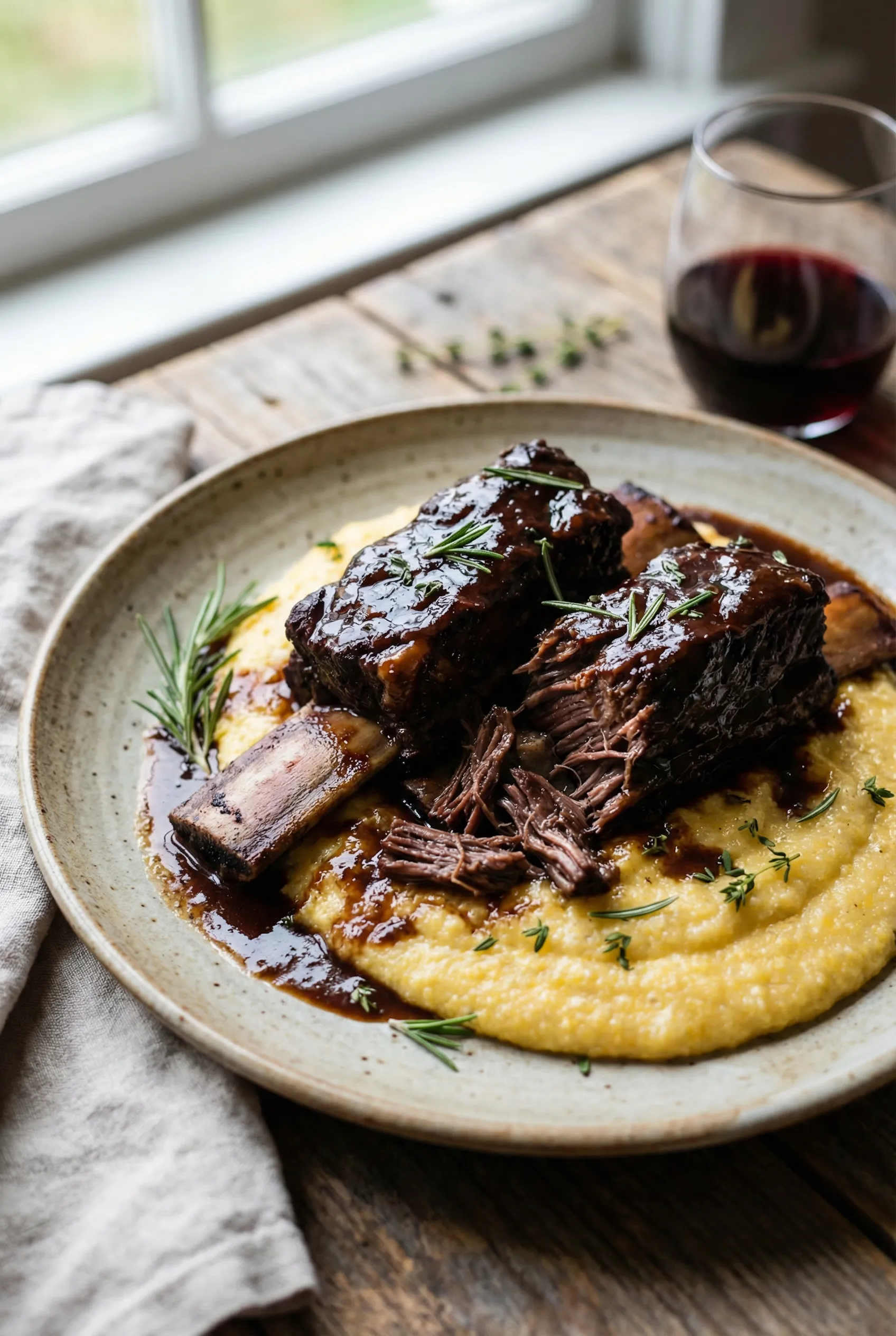
Spoon a generous mound of creamy polenta into each wide, shallow bowl. Place a short rib on top, bone-side up for presentation. Spoon the rich balsamic sauce generously over the meat and around the polenta. Garnish with chopped fresh parsley and serve immediately. The contrast of the dark, glossy sauce against the pale, creamy polenta is stunning.
Ingredient Substitutions
| Ingredient | Substitute | Notes |
|---|---|---|
| Bone-in short ribs | Boneless short ribs or chuck roast | Boneless cooks about 30 minutes faster. Chuck roast works but won’t be as rich — short ribs have more intramuscular fat and connective tissue. |
| Balsamic vinegar | Sherry vinegar with 1 teaspoon honey | Sherry vinegar is drier and sharper. The honey bridges the gap toward balsamic’s natural sweetness, but the flavor will be lighter. |
| Red wine | Beef broth with 2 tablespoons red wine vinegar | If you don’t cook with alcohol, this approximation provides the acidity and depth. The result is good, though less complex. |
| Polenta | Creamy mashed potatoes or buttered egg noodles | Both are classic braise companions. Mashed potatoes are richer; egg noodles are lighter and soak up more sauce. |
| Parmigiano-Reggiano | Pecorino Romano or Gruyère | Pecorino is saltier and more pungent. Gruyère is nuttier and melts beautifully. |
| Tomato paste | Sun-dried tomato paste or 2 tablespoons ketchup | Sun-dried tomato paste is more intense. Ketchup works in a pinch — it adds sweetness and acidity. |
| Fresh rosemary and thyme | 1 teaspoon each dried rosemary and thyme | Fresh is always better for a long braise, but dried herbs will work. Add them earlier in the cooking process so they have time to rehydrate and release their oils. |
Chef’s Tips
- The overnight dry-brine is a game-changer. Salting the short ribs a day ahead and leaving them uncovered in the fridge seasons the meat all the way through and dries the surface for a superior sear. It’s the single biggest improvement you can make to this recipe.
- Sear in batches, never all at once. Crowding the pot drops the temperature and the meat steams instead of browning. You lose the Maillard reaction, which means you lose half the flavor of the final dish. Take your time — those extra 10 minutes of searing pay dividends for three hours.
- The sauce should coat a spoon. If you pull the ribs out and the braising liquid is thin and watery, reduce it on the stovetop. A great braise sauce should be glossy and have enough body to cling to the meat. Don’t skip this step.
- Save the bone marrow. As the ribs braise, the marrow inside the bones partially melts into the sauce, enriching it with collagen and fat. When serving, the remaining marrow in the bone is a delicacy — spread it on crusty bread.
- This dish is better the next day. Like all braises, the flavors deepen overnight as the meat sits in the sauce. Make it on Saturday, reheat on Sunday. The sauce tightens, the meat absorbs more flavor, and the whole thing becomes more unified.
- Finish with fresh balsamic. A tiny drizzle of good balsamic vinegar over the finished plate — just a teaspoon — adds a bright, sharp contrast to the deeply cooked flavors of the braise. It’s a small touch that makes a big difference.
Meal Prep & Storage
- Refrigerator: Store the short ribs in their sauce in an airtight container for up to 5 days. The solidified fat on top actually acts as a seal, keeping the meat moist. Skim the fat before reheating.
- Reheating: Reheat gently in a covered pot over low heat for 15-20 minutes, adding a splash of broth if the sauce has thickened too much. You can also reheat in a 300°F (150°C) oven for 25-30 minutes. Avoid the microwave — it dries out the meat unevenly.
- Freezing: The braised short ribs freeze exceptionally well for up to 3 months. Cool completely, then freeze in portions with plenty of sauce. Thaw overnight in the fridge before reheating. The polenta does not freeze well — make it fresh.
- Batch cooking: This recipe doubles easily. Use a larger Dutch oven or divide between two pots. A double batch provides four meals for two people — one of the best investments of a Sunday afternoon you’ll ever make.
Pairing Suggestions
- Wine: A bold, structured red wine that can stand up to the richness — a Barolo, Brunello di Montalcino, or a full-bodied Cabernet Sauvignon. The tannins cut through the fat while the dark fruit echoes the balsamic.
- Bread: A thick slice of crusty sourdough or ciabatta is mandatory for mopping up every last drop of that glossy sauce. Toast it lightly and rub with a raw garlic clove for extra flavor.
- Vegetable: Roasted broccolini or sautéed Swiss chard with garlic and lemon. You need something green and slightly bitter to balance the richness of the braise and the sweetness of the polenta.
- Salad: A peppery arugula salad dressed with lemon juice, olive oil, and shaved Parmigiano. The sharp, fresh flavors reset your palate between bites of the rich, unctuous short ribs.
Frequently Asked Questions
Can I make this in a slow cooker? Absolutely — and it’s how I make it most often during the week. Sear the ribs and build the braising liquid on the stovetop as described, then transfer everything to a slow cooker. Cook on low for 8-10 hours or high for 5-6 hours. The result is equally tender, though you won’t get quite the same sauce reduction. You may need to transfer the sauce to a saucepan and reduce it on the stovetop for 10 minutes at the end.
Why is my sauce too thin? The most common reason is too much liquid in the pot. Short ribs release a lot of moisture and fat as they braise, so the braising liquid actually increases in volume during cooking. After removing the ribs, simply simmer the sauce uncovered over medium-high heat for 5-10 minutes until it reaches a syrupy, spoon-coating consistency.
Can I use instant polenta instead of traditional? You can, and it’ll be ready in 5 minutes instead of 35. The texture will be slightly grainier and less creamy, but it’s a perfectly acceptable shortcut for a weeknight dinner. Use the same liquid-to-polenta ratio and add extra butter and cheese to compensate for the texture difference.
What’s the best cut of short ribs for braising? English-cut bone-in short ribs (one bone per piece, cut across the rib) are the gold standard for braising. Flanken-cut (thin strips across multiple bones, common in Korean cooking) cook much faster and are better for grilling. Ask your butcher for English-cut, about 2-3 inches thick — the thicker the better for a long braise.
My balsamic vinegar tastes too sharp. What should I do? If your vinegar is very acidic, add an extra teaspoon of brown sugar to the braising liquid to balance it. You can also let the sauce simmer uncovered for a few extra minutes — heat mellows vinegar’s sharpness. For the best results, invest in a balsamic that’s been aged at least 2-3 years. It should taste sweet and complex on its own, not harsh.
Can I braise these on the stovetop instead of in the oven? Yes, but you’ll need to monitor the heat more carefully. Keep the burner on the lowest possible setting and check periodically to ensure a very gentle simmer. The oven is more consistent because it heats the pot from all sides, but a patient stovetop cook can achieve the same results. Expect the same cooking time of 3 to 3.5 hours.